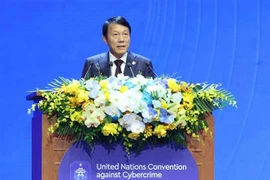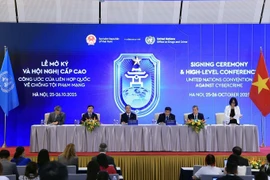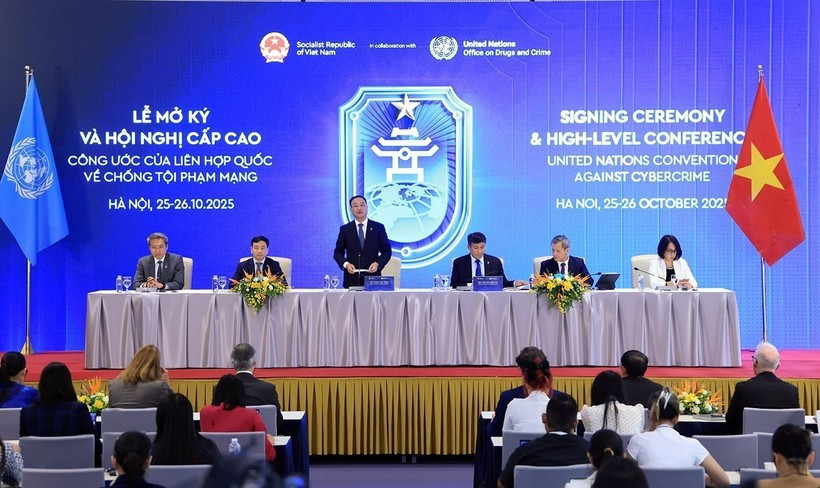
Hanoi (VNA) – The most significant outcome of the Signing Ceremony and High-Level Conference of the United Nations Convention Against Cybercrime (known as the Hanoi Convention) was that Vietnam and participating countries have laid the groundwork for its early ratification and implementation, Deputy Minister of Foreign Affairs Nguyen Minh Vu said at an international press conference on October 26, shortly after the closing session of the two-day event in Hanoi.
Strengthening digital capacity for developing countries
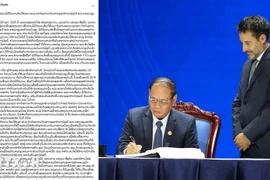
According to Vu, the convention will take effect once at least 40 countries have signed and ratified it. Remarkably, the event hosted by Vietnam witnessed 72 countries signing within two days, far exceeding expectations and marking an important milestone toward the Convention’s early enforcement.
This strong engagement shows the international community’s determination to build a more effective global mechanism for combating cybercrime, he emphasised.
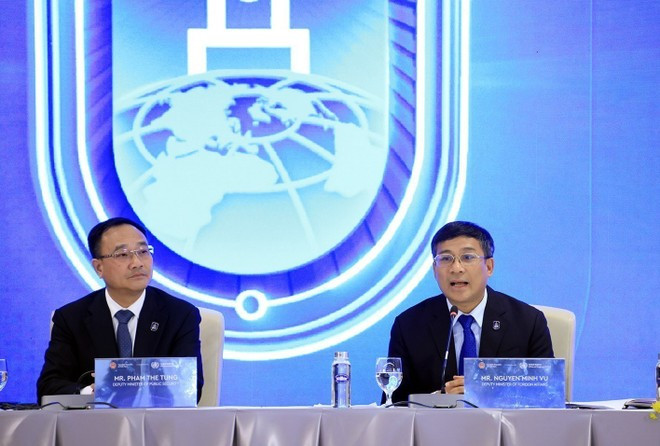
Beyond the signing, the high-level conference and thematic workshops also brought about many practical results, with many opinions appreciating the role of international cooperation and the need to quickly implement the Convention in the context of increasingly complex and widespread cybercrime on a global scale.
Vu underscored that the success of the event held in a developing nation like Vietnam carried special significance.
“It demonstrates Vietnam’s strong commitment to helping enhance the digital capabilities of developing countries, bridging the digital divide, and improving their resilience to cybercrime,” he said.
Vietnam not only acted as a professional and responsible host but also embodied a spirit of cooperation and knowledge-sharing. Through exchanges and discussions, Vietnam and international partners agreed to promote training programmes, share resources, and strengthen collaboration toward a safer, fairer, and more sustainable digital environment for all nations.
“The Hanoi Convention reinforces Vietnam’s global standing. Hanoi is not only a ‘City for Peace’ but also a symbol of international unity against shared global challenges. This event reflects our Party and State’s consistent policy: Vietnam not only participates but also helps shape key multilateral agendas,” Vu noted.
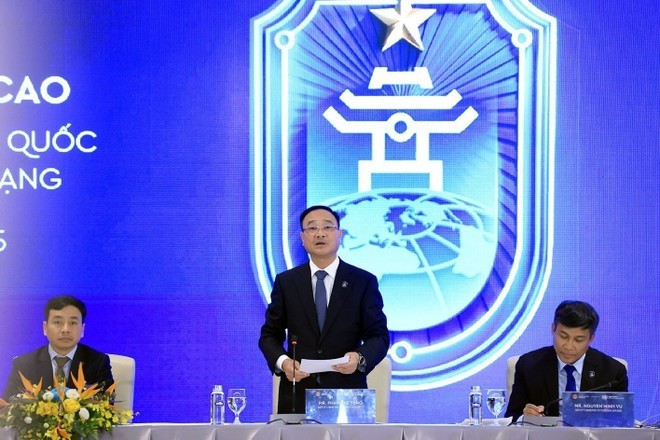
Representing the organising committee, Senior Lieutenant General Pham The Tung, Deputy Minister of Public Security, said the event exceeded all expectations.
Over 2,500 delegates attended, representing 110 national delegations, 150 international and regional organisations, and 50 research institutions. The ceremony also attracted more than 400 journalists from 189 media agencies worldwide.
“This was the first time Vietnam hosted the opening of a global UN convention, and the high level of participation demonstrates strong international confidence in Vietnam’s capacity and credibility,” he said.
The entire programme was broadcast live on the UN Web TV system in all six official UN languages, an unprecedented achievement for Vietnam in hosting a global event.

According to Tung, 72 countries signed the Convention on October 25–26, including 64 during the plenary session. The signatories spanned all regions, comprising19 in Asia-Pacific, 21 in Africa, 19 in the European Union, and 12 in Latin America, making it one of the largest UN convention signings in the past decade.
The plenary sessions recorded 71 speeches by representatives of nations, international organisations, and technology corporations, while more than eight workshops and 37 side events were held in an open, constructive atmosphere.
On the sidelines, heads of delegations also held high-level meetings with Vietnamese leaders, including General Secretary To Lam, President Luong Cuong, and Prime Minister Pham Minh Chinh, who chaired the international press conference.
“Delegations praised Vietnam’s vision, determination, and leadership in promoting innovation and sustainable development in cyberspace,” General Pham The Tung said.
He added that the event’s success reflected effective coordination among the Ministry of Public Security, the Ministry of Foreign Affairs, Hanoi authorities, and relevant agencies - “a model example of how Vietnam can successfully organise large-scale international events.”
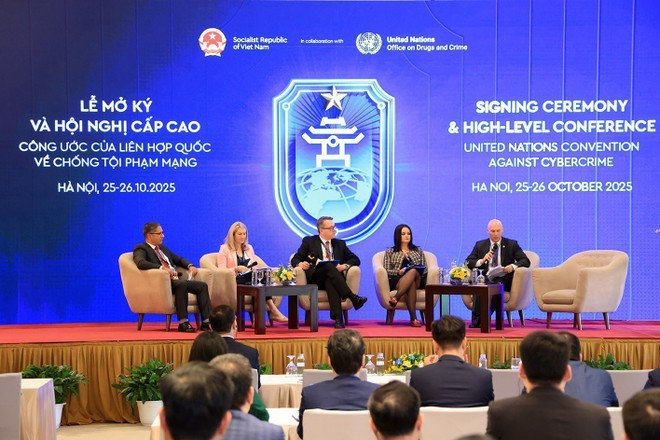
While the successful signing marks a major step forward, Vu noted that the greater challenge lies ahead: ensuring that the Hanoi Convention is implemented effectively.
Together with other signatory nations, Vietnam is committed to turning the Convention’s principles into action, ensuring that no one is left behind in building a safe, humane, and trusted cyberspace, he affirmed.
He also revealed that one of the Convention’s key provisions calls for 24/7 information-sharing mechanisms, enabling national cybersecurity focal points to coordinate more closely both legally and operationally.
Major General Le Xuan Minh, Director of the Department of Cybersecurity and High-Tech Crime Prevention (A05), said Vietnam will continue to demonstrate its responsibility as a member of the international community by protecting human rights online and fostering a secure digital environment that supports innovation and growth.
“Vietnam will work closely with the United Nations and partner countries to bring the Hanoi Convention into everyday life, so that governments, businesses, and internet users can jointly contribute to its effective implementation,” he said./.