Vietnam needs to leverage soft power to enhance global standing: Argentine expert

With a long-term vision toward 2045, Vietnam is building a comprehensive development strategy that combines strengthening hard power in the economy and defense with enhancing soft power through culture, history, and international integration.

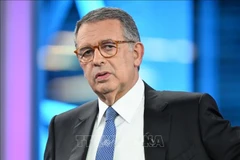
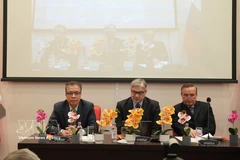
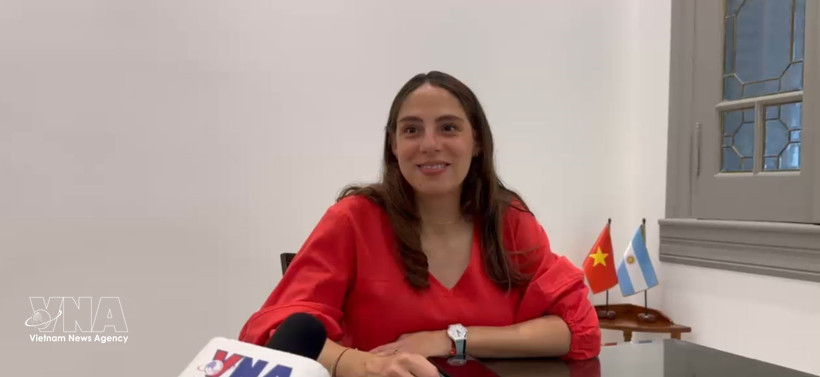
Dr. Nadia Radulovich, an international relations expert and lecturer at the Faculty of Oriental Studies of the under the University of Salvador (USAL) (Photo: VNA)

Buros Aires (VNA) - To enhance its international standing, Vietnam needs to strengthen its soft power by promoting its cultural, historical, scenic, tourism, and culinary values, while affirming its development model as a success story of a nation that has overcome numerous hardships to become a dynamic and deeply integrated economy.

The suggestion was made by Dr. Nadia Radulovich, an international relations expert and lecturer at the Faculty of Oriental Studies of the under the University of Salvador (USAL), in an interview with Vietnam News Agency correspondents in Buenos Aires regarding the implementation of the orientations adopted at the 14th National Congress of the Communist Party of Vietnam (CPV).

According to Dr. Radulovich, in recent years the leadership role of the CPV has continued to be clearly demonstrated through strategic adjustments, particularly in the areas of national defence and security.

She emphasised that amid an increasingly complex regional and international environment, Vietnam has prioritised safeguarding national interests and sovereignty, modernising its armed forces, and maintaining an appropriate defensive posture suited to new circumstances.

In foreign affairs, the Argentine expert commended Vietnam for consistently pursuing a foreign policy of independence, self-reliance, diversification and multilateralisation, being a good friend and a reliable partner to all countries, maintaining flexible balance among major powers, and steadily upgrading relations with key partners. This, she noted, reflects Vietnam’s adaptability and strategic thinking in the process of deep international integration.

In the economic sphere, Dr. Radulovich praised Vietnam’s goal of achieving an average annual GDP growth rate of 10% or more during the 2026–2030 period. She observed that Vietnam is emerging as one of the most dynamic growth economies in Southeast Asia, playing an important role in global supply chains. Improving conditions for export-oriented manufacturing - an industry that employs around 30% of the workforce and contributes approximately 35 percent of GDP - is therefore understandable. This explains the policy of increasing investment in innovation and enhancing production capacity.

Vietnam has also attracted significant foreign direct investment (FDI) inflows not only from regional partners such as Singapore, Hong Kong (China), China, Japan, and the Republic of Korea, but also from many other countries, particularly the United States, in sectors like electronics, high technology, and green energy. Attracting FDI and strengthening support for the domestic private sector have been identified as key to achieving development goals.

According to Dr. Radulovich, setting ambitious growth targets for the coming years, promoting innovation and digital transformation, and strongly attracting FDI capital reflect the determination of Vietnam’s leadership to move the country into the group of upper-middle-income countries by 2030. She also highlighted that since the launch of the Doi Moi (Renewal) process, Vietnam has achieved remarkable progress in poverty reduction, despite ongoing challenges related to regional development disparities.

The Argentine expert underscored the importance of advancing key pillars, including scientific and technological innovation, digital transformation, and international integration.

She noted that the “New Era – the Era of National Rise,” initiated by Party General Secretary To Lam and oriented toward 2045, represents a long-term vision aimed at marking the 100th anniversary of President Ho Chi Minh’s reading of the Declaration of Independence, which gave birth to the Democratic Republic of Vietnam (now the Socialist Republic of Vietnam), affirming the country’s comprehensive development.

Regarding the 14th National Party Congress, Dr. Radulovich affirmed that it is a political event of special importance, not only setting the direction for socio-economic development and foreign affairs in the next five years, but also demonstrating stability and unity within the Party. According to her, the continued affirmation of the central role of General Secretary To Lam reflects leadership continuity and consistency in the goals of “solidarity, democracy, discipline, breakthrough, and development.”

With a long-term vision toward 2045, she stressed, Vietnam is building a comprehensive development strategy that combines strengthening hard power in the economy and defense with enhancing soft power through culture, history, and international integration.

The orientations adopted at the 14th National Congress, she concluded, align with national interests and lay a solid foundation for Vietnam’s next stage of development./.

VNA

See more

Prime Minister Pham Minh Chinh holds phone talks with the Prime Minister and Minister of Foreign Affairs of the State of Qatar, Sheikh Mohammed bin Abdulrahman bin Jassim Al-Thani. (Photo: VNA)

Vietnamese PM holds phone talks with Qatari counterpart

Emphasising Vietnam's opposition to the use of force against sovereign states, especially against civilian infrastructure that results in numerous casualties, PM Chinh called for a peaceful solution to the region based on respect for international law, the United Nations Charter, and ensuring the legitimate rights of all parties.

Prime Minister Pham Minh Chinh in the phone talks with Kuwaiti Prime Minister Sheikh Ahmed Abdullah Al-Ahmad Al-Sabah on March 9 (Photo: VNA)

Vietnamese, Kuwaiti PMs hold phone talks

PM Pham Minh Chinh commended Kuwait’s efforts and called on Kuwait and relevant countries to continue exercising restraint, promoting de-escalation efforts and seeking peaceful solutions based on respect for international law and the United Nations Charter, while ensuring the legitimate interests of all parties.

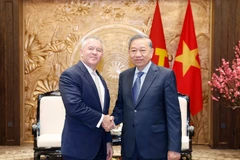
General Secretary of the Communist Party of Vietnam Central Committee To Lam (right) receives Scott Strazik, President and CEO of GE Vernova, in Hanoi on March 9, 2026. (Photo: VNA)

Party leader receives President and CEO of US’s GE Vernova

Vietnam always values and creates favourable conditions for US energy corporations to invest and operate in the country, bringing tangible benefits to the people and businesses of both nations while contributing to the development of bilateral ties, said Party leader To Lam.

NA Vice Chairman Tran Quang Phuong (first, right) examines election preparations at Polling Station No. 1 in Kenh Dao hamlet, Dat Mui commune, Ca Mau province, on March 9. (Photo: VNA)

NA Vice Chairman urges Ca Mau to ensure safe elections

Ca Mau was asked to give special attention to ethnic minority communities, residents in remote and disadvantaged areas, the elderly living alone, and people with disabilities, so they can fully take part in voting.

An overview of the conference to announce a decision of the Politburo and the Secretariat. (Photo: VNA)

Politburo, Secretariat announce inspection of Party Committee of Central Party Agencies

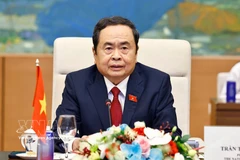
NA Chairman Tran Thanh Man said the inspection and supervision aim to comprehensively evaluate the leadership and direction of the Standing Board of the Party Committee of Central Party Agencies in implementing the Resolution of the 14th National Party Congress – a resolution carrying special significance, as it provides strategic orientation for the country’s development in the new phase.

The 55th session of the National Assembly Standing Committee on March 2, 2026. (Photo: VNA)

📝OP-ED: Streamlining state apparatus: A foundation for rapid, sustainable development

The election is unfolding as Vietnam presses ahead with sweeping administrative reforms, including efforts to streamline the state apparatus and implement a two-tier local government model from the central level to grassroots authorities. Amendments to key laws are also aimed at strengthening decentralisation, improving the management of public assets and accelerating digital transformation, enabling citizens to access information more easily while fostering a leaner, more transparent governance system that better upholds people’s rights.

Prime Minister Pham Minh Chinh (L) at the working session with leaders of the Dien Bien provincial People’s Committee on March 8. (Photo: VNA)

PM asks Dien Bien province to make greater efforts for prosperity, people’s happiness

PM Chinh highlighted Dien Bien’s strategic location, sharing long borders with Laos and China, as well as its large natural area and rich cultural heritage of 19 ethnic groups, and strong growth potential for agriculture, industry, renewable energy, services and tourism, calling for greater efforts to create new momentum for sustainable development.

National Assembly Vice Chairman Tran Quang Phuong (right) inspects election preparations at Polling Station No. 1 in Kenh Dao hamlet, Dat Mui commune, Ca Mau province. (Photo: VNA)

NA Vice Chairman inspects election preparations in southernmost Ca Mau province

The delegation noted that local authorities had launched preparations early and in a well-organised manner, reflecting strong determination and a high sense of responsibility. Communication activities have been carried out in various forms to disseminate official information and create a positive atmosphere ahead of the election.

Mobile loudspeaker vehicles and banners used to promote the upcoming election in Vinh Vien commune, Can Tho city. (Photo: VNA)

Final-week tasks stressed ahead of NA, People’s Council election

Special attention must be given to groups such as workers in industrial parks, university students, the elderly, people with disabilities, ethnic minority communities and voters living in specific or remote areas, ensuring that all eligible citizens can fully exercise their voting rights.

Voters in Truong Sa special zone cast their ballots to elect deputies to the 16th National Assembly and People’s Councils at all levels for the 2026–2031 term. (Photo: VNA)

Truong Sa voters cast early ballots for NA, local council elections

Voters at 20 out of the 22 polling stations in Truong Sa (Spratly) special zone in the central province of Khanh Hoa cast their ballots on March 8 in early voting for deputies to the 16th National Assembly and People’s Councils at all levels for the 2026–2031 term, one week ahead of the nationwide election day on March 15.