Hanoi (VNA) – Vietnam and Pakistan have officially kicked off negotiations on a Preferential Trade Agreement (VPPTA), marking an important step forward in deepening economic and trade ties between the two countries.
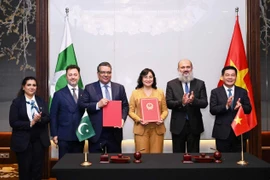
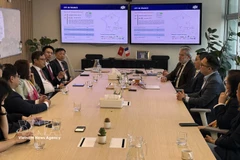
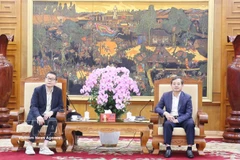
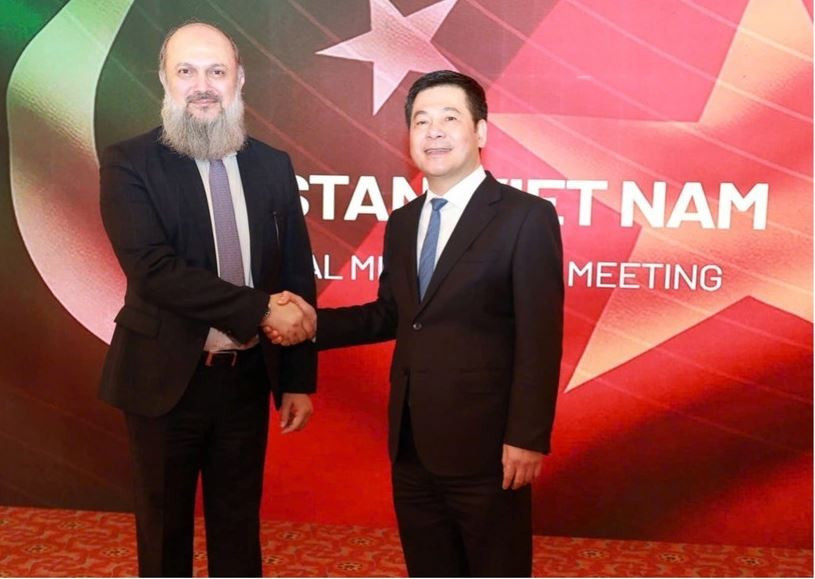
The move was made during talks between Vietnamese Minister of Industry and Trade Nguyen Hong Dien and Pakistani Minister of Commerce Jam Kamal Khan on October 14 in Islamabad. The two ministers discussed ways to strengthen economic cooperation, towards more sustainable development in the coming time
At the meeting, Dien said Vietnam considers Pakistan a key and promising partner in South Asia, given its strategic position linking Southeast Asia, South Asia, and the Middle East.
Despite this potential, two-way trade remains modest. Bilateral trade turnover reached around 705 million USD in 2023, increased to 850 million USD in 2024, and nearly 600 million USD in the first nine months of 2025.
To realise the full potential of cooperation, the minister proposed that both countries accelerate the removal of tariff and non-tariff barriers, strengthen transport and logistics connectivity, and promote trade facilitation measures to help Vietnamese goods access the Pakistani market more easily.
He also encouraged greater investment collaboration in textiles and garments, leather and footwear, Halal food and agricultural products, engineering, processing and manufacturing, industrial materials and energy, pharmaceuticals, and digital technology. These are areas, he said, where both sides have complementary strengths rather than direct competition.
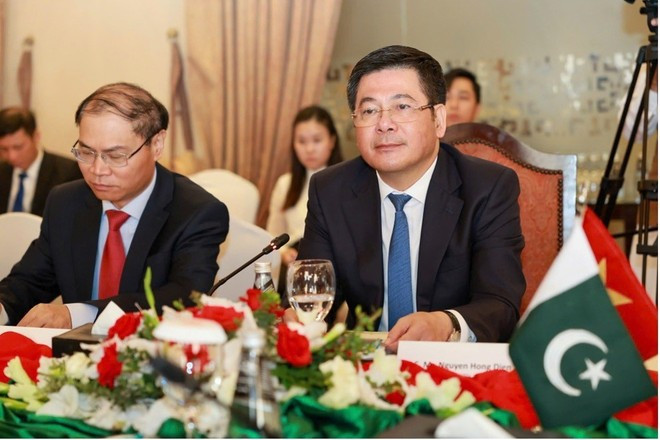
Dien also pointed out that Vietnamese exporters still face difficulties related to quarantine regulations, technical standards, and import licensing procedures. Several Vietnamese products remain subject to high tariffs and technical barriers.
He urged Pakistan to review and consider lowering tariffs to create more favourable conditions for Vietnamese goods.
Starting negotiations on the VPPTA
The Vietnamese minister stressed that launching negotiations on the Vietnam–Pakistan Preferential Trade Agreement is a strategic and practical step, reflecting the strong political will of both governments to elevate bilateral cooperation in a substantive and sustainable manner.
The VPPTA will directly address existing trade obstacles, paving the way for more efficient market access. Selective tariff reductions combined with simplified customs procedures and rules of origin will help businesses cut costs, enhance competitiveness, and expand their operations.
Once concluded, the agreement will provide a stable, transparent legal framework for enterprises, allowing them to invest confidently, boost exports and imports, and participate more deeply in bilateral and regional supply chains.
It also marks a shift from aspirations for cooperation to a binding, measurable mechanism reflecting the two governments’ strong commitment to advancing economic relations.
Dien added that the VPPTA will help both countries diversify their export markets, reduce reliance on a few major partners, and improve resilience against global trade disruptions, while promoting more independent and sustainable growth.
For his part, Pakistani minister Jam Kamal Khan welcomed Vietnam’s proposals, acknowledging the sincerity and constructive spirit of the Vietnamese side. He expressed Pakistan’s desire to expand cooperation beyond goods trade to include services, investment, the Halal industry, banking, civil aviation, and healthcare.
He highlighted the longstanding friendship between Pakistan and Vietnam based on mutual respect and understanding, noting that the partnership has expanded across multiple sectors.
He praised Vietnam’s strong economic growth and industrial progress in recent years, saying it serves as an inspiration for developing economies. He also emphasised that Pakistan, with its growing industrial base, strategic location, and emerging investment opportunities, offers vast potential for collaboration, especially in trade diversification, industrial cooperation, and technology transfer.
Both ministers agreed to begin formal negotiations on the Preferential Trade Agreement immediately, aiming to conclude and sign the deal by the end of this year.
The agreement will provide preferential tariffs and streamlined customs procedures, enhancing the competitiveness of goods from both sides and opening a new chapter in Vietnam–Pakistan economic relations.
The two sides also agreed to strengthen business connectivity, promote trade and investment promotion activities, particularly in textiles and garments, Halal industry, processed agricultural and aquatic products, consumer goods, building materials, energy, minerals, and logistics.
They further committed to working together to resolve existing bottlenecks in bilateral trade such as limited air and logistics connectivity, as well as non-tariff barriers and technical standards that continue to hinder businesses./.