Vietnam places people at heart of governance: official

Vietnam's removal of intermediary and district-level units, restructuring of ministries and agencies, organisation of a two-tier local government model, clear delegation of authority to the grassroots level, and shift from pre- to post-audit mechanisms aim to enhance efficiency and better serve the public.

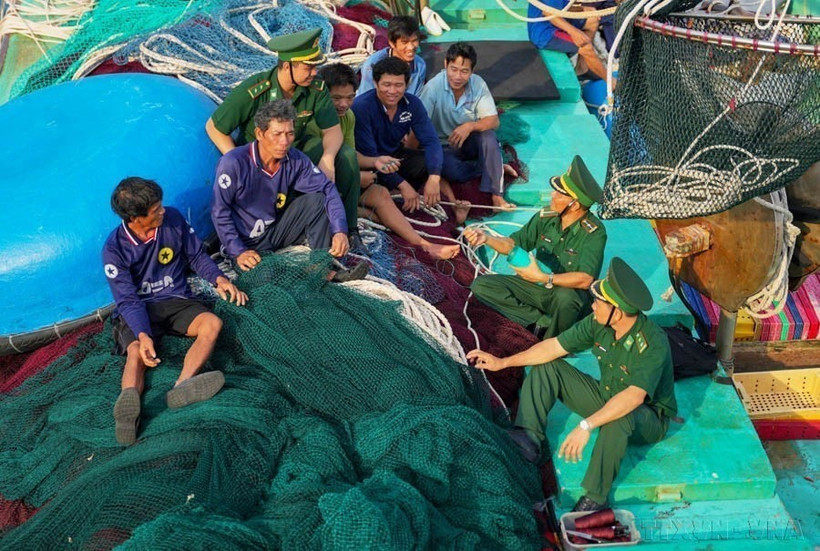
Officers and soldiers of Truong Sa border post conduct a legal education session for local fishermen. (Photo: VNA)

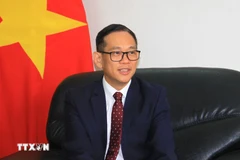
Hanoi (VNA) – All activities of the Vietnamese Party and the State are centred around the people, who are regarded as the ultimate recipient of service, Deputy Minister of Justice Nguyen Thanh Tinh told the Vietnam News Agency following his participation in the United Nations Human Rights Committee session in Switzerland on July 7-8.

The session saw the committee reviewing Vietnam’s fourth periodic report on the implementation of the International Covenant on Civil and Political Rights (ICCPR).

According to the official, Vietnam’s engagement with the committee demonstrated the country’s ongoing commitment to fulfilling its reporting obligations on the implementation of international commitments.

He affirmed that the two-day dialogue was successful. Notably, many of the issues raised by committee members were areas that Vietnam has also prioritised in recent years, including efforts to reform, improve legal institutions and policy frameworks, alongside related implementation. A shared concern highlighted by the committee, also a focus of Vietnam’s agenda, is the consistent pursuit of economic development in tandem with social progress.
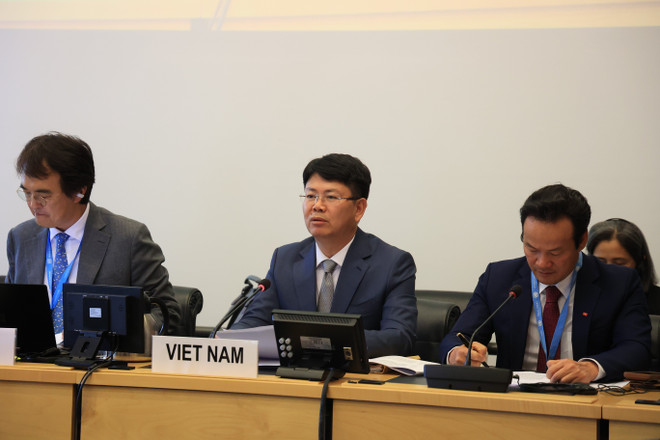
nguyen-thanh-tinh.jpg
Deputy Minister of Justice Nguyen Thanh Tinh speaks at the United Nations Human Rights Committee session in Switzerland (Photo: VNA)

The deputy minister stressed that Vietnam’s ongoing administrative streamlining reforms have clarified the country’s strategic governance approach. Specifically, the removal of intermediary and district-level units, restructuring of ministries and agencies, organisation of a two-tier local government model, clear delegation of authority to the grassroots level, and shift from pre- to post-audit mechanisms aim to enhance efficiency and better serve the public.

These reforms, he noted, align with the UN committee’s recommendations that Vietnam strengthen law enforcement and narrow the gap between legislative development and practical implementation.

The ICCPR, adopted by the UN General Assembly in 1966 and in force since 1976, encompasses a wide range of civil and political rights for individuals. Since acceding to the ICCPR on September 24, 1982, Vietnam has achieved significant progress. The country’s 2013 Constitution marked a major milestone in evolving understanding of human rights and affirmed the responsibilities of organisations and individuals to recognise, respect, protect and guarantee these rights across all spheres of life./.
VNA

See more

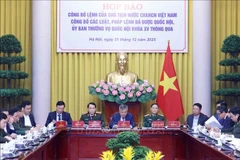
An overview of the press conference (Photo: VNA)

Fourteen new laws, one ordinance made public

The Presidential Office held a press conference on December 31 to announce the State President’s order promulgating 14 laws and one ordinance adopted by the 15th-tenure National Assembly and its Standing Committee.

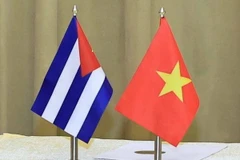
The flags of Vietnam and Cuba (Photo: VNA)

Vietnamese leaders send congratulations on Cuba’s 67th National Day

Also on this occasion, Prime Minister Pham Minh Chinh cabled a congratulatory message to Cuban Prime Minister Manuel Marrero Cruz, while National Assembly Chairman Tran Thanh Man extended congratulations to Esteban Lazo Hernández, President of the National Assembly of People’s Power of Cuba.

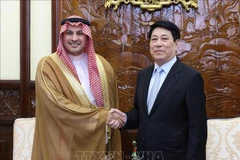
State President Luong Cuong (R) receives Saudi Arabian Ambassador Mohammed Ismaeil A. Dahlwy in Hanoi on December 31. (Photo: VNA)

State President meets outgoing Saudi Arabian, Philippine ambassadors

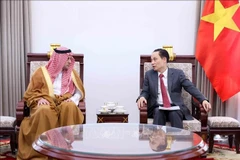
Receiving Saudi Arabian Ambassador Mohammed Ismaeil A. Dahlwy, the President affirmed that Saudi Arabia is an important partner of Vietnam in the Middle East. He noted that the two countries share many similarities in development goals as well as values of peace, cooperation and development.

Lawmakers pass the Law on Teachers on June 16, 2025. (Photo: VNA)

Major laws to take effect on January 1, 2026

A series of major laws passed in 2025 will take effect on January 1, 2026, spanning employment, education, data protection, taxation, state budget, digital technology, energy, and transport.

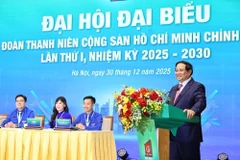
Prime Minister Pham Minh Chinh delivers a keynote address at the first Congress of the Ho Chi Minh Communist Youth Union of the Government for the 2025–2030 term on December 30, 2025. (Photo: VNA)

PM urges enabling environment for youth development

Prime Minister Pham Minh Chinh requested Party committees, authorities, agencies and units at all levels to nurture and create favourable conditions for young union members to develop comprehensively, entrust them with responsibilities, provide opportunities for contribution and maturity, and effectively implement the Vietnam Youth Development Strategy for the 2021–2030 period.

Vice Chairman of the Party Central Committee's Commission for Information, Education and Mass Mobilisation Phan Xuan Thuy speaks at the press training conference in Hanoi on December 30. (Photo: VNA)

Coverage of 14th National Party Congress must be impactful: official

It's now a peak period for communications efforts, aimed at contributing to the successful organisation of the Congress, and strengthening awareness and consensus in both thinking and action within the Party and among the people and the armed forces, an official has said.