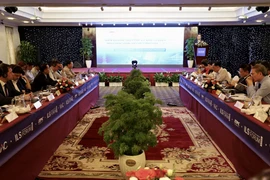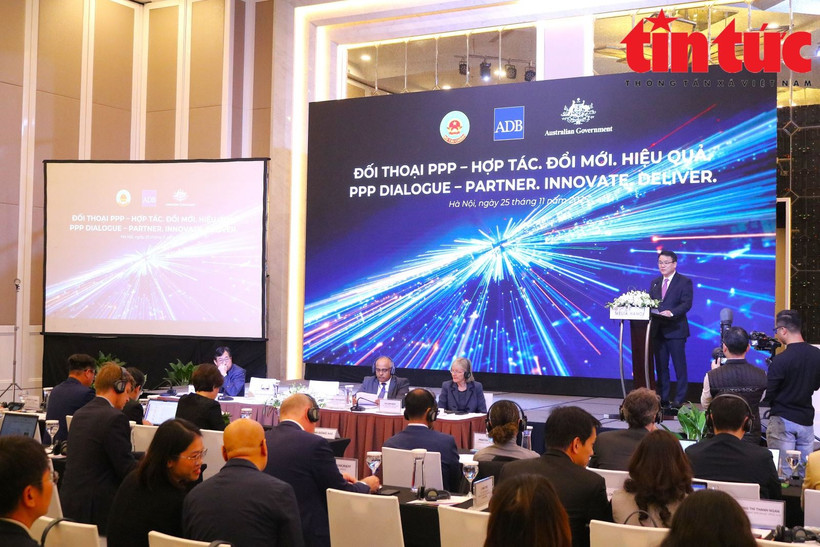
Hanoi (VNA) – Vietnam stands ready to push forward the implementation of high-impact public–private partnership (PPP) projects as the country enters a new phase of institutional reform and project mobilisation, officials underlined at the 2025 High-Level PPP Dialogue, held in Hanoi on November 25.
Co-organised by the Ministry of Finance, the Asian Development Bank (ADB) and the Australian Embassy in Vietnam, the event, themed “PPP Dialogue: Partner. Innovate. Deliver.", provided a platform for government agencies, development partners and private investors to share practical experience and exchange views on emerging cooperation needs. This year’s dialogue focused on priority areas that reflect Vietnam’s strategic infrastructure demands and the evolving partnership between the Government, development partners and the business community.
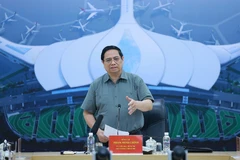
Opening the event, Deputy Minister of Finance Tran Quoc Phuong said Vietnam has made continuous progress in completing its PPP policy framework in recent years. Amendments to the PPP Law and relevant decrees have widened the scope of eligible sectors, enhanced financial and risk-sharing mechanisms, and streamlined procedures to make participation easier and more predictable for investors.

Following major efforts to strengthen its legal framework, Vietnam is now ready to move into a phase of vigorous implementation of PPP projects with broad spillover effects, he affirmed.
ADB Country Director for Vietnam Shantanu Chakraborty highlighted Vietnam’s notable progress over the past 15 years in building the legal and institutional foundations for PPP. Early milestones such as Decree 108/2009 on BOT (build-operate-transfer), BT (build-transfer) and BTO (build-transfer-operate) contracts and Decision 71/2010/QĐ-TTg on pilot PPP investment laid the groundwork for structured private involvement in national infrastructure development. The adoption of the 2020 PPP Law marked a turning point by consolidating earlier regulations into a unified framework, with subsequent amendments in 2024 and 2025 reflecting the Government’s commitment to continuous improvement and learning from practical experience.
Despite these advances, Chakraborty noted that more work is required to bring forward a pipeline of bankable projects capable of attracting long-term private capital.
Vietnam’s recent strong focus on public investment and major infrastructure “mega-projects” will only deliver lasting results, he said, when PPP standards and institutional frameworks are fully operationalised.
According to Chakraborty, Vietnam’s ambitious goals - achieving double-digit growth by 2030 and becoming a high-income nation by 2045 - will require unprecedented levels of capital mobilisation. Financing needs extend beyond economic infrastructure to sustainable development and climate-resilient projects, making it essential to tap both domestic and international private resources.
He stressed that high-quality project preparation must be strengthened, from feasibility studies and risk analysis to packaging projects in line with international standards.
Vietnam’s PPP model will play an increasingly critical role in delivering modern, sustainable and resilient infrastructure. Success will depend on strong leadership, a robust institutional framework, high-quality project preparation capacity and trusted partnerships, he said. Development partners, including ADB and international financial institutions, stand ready to accompany Vietnam if projects are well-designed, transparent and feasible./.