Vietnam seeks stronger cooperation in developing cultural industries: diplomat

As Vietnam enters a new era filled with aspirations and determination - the era of the nation’s rise, the country consistently regards culture as the spiritual foundation of society and an intrinsic strength, and both a goal and a motivation for national development.

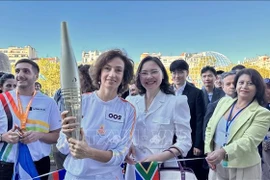
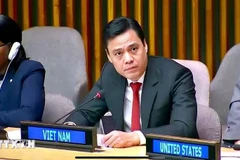
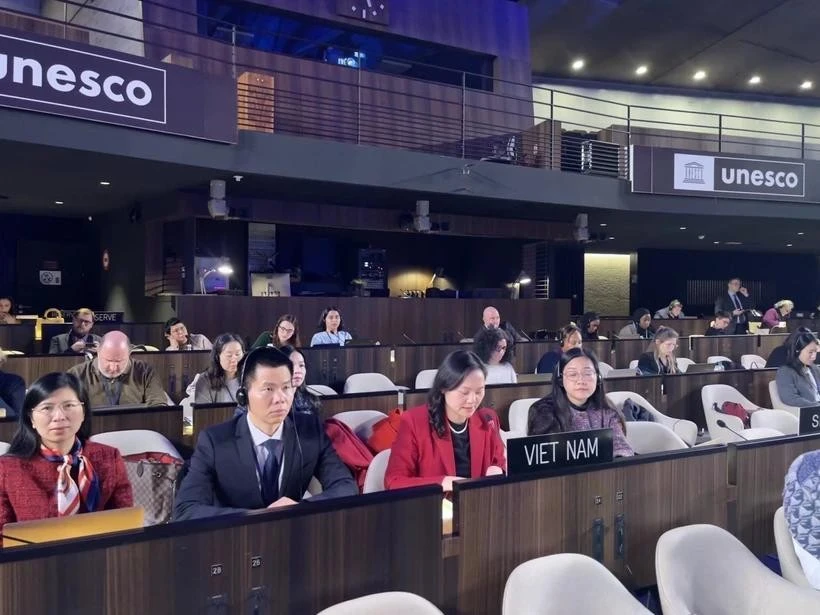
Vietnamese delegates attends the 18th session of the Intergovernmental Committee of the 2005 UNESCO Convention on the Protection and Promotion of the Diversity of Cultural Expressions (2005 Convention) in Paris on February 11, 2025. (Photo: VNA)

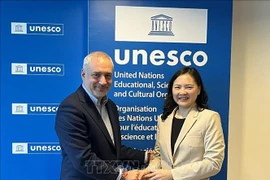
Paris (VNA) - In the digital era, marked by the rapid advancement of technology and artificial intelligence, Vietnam seeks to strengthen cooperation in developing and managing creative cultural products and services in the digital environment in an appropriate and effective manner, aligning with the nation’s sustainable development goals, Ambassador Nguyen Thi Van Anh, Vietnamese Permanent Representative to UNESCO, has said.

Addressing the 18th session of the Intergovernmental Committee of the 2005 UNESCO Convention on the Protection and Promotion of the Diversity of Cultural Expressions (2005 Convention) in Paris on February 11, the diplomat stressed that Vietnam considers culture as equally important as politics, economics, and society.

As Vietnam enters a new era filled with aspirations and determination - the era of the nation’s rise, the country consistently regards culture as the spiritual foundation of society and an intrinsic strength, and both a goal and a motivation for national development, she said.

Highlighting Vietnam’s cultural achievements in 2024, the ambassador emphasised the country's efforts in developing and perfecting the legal framework for cultural development, increasing investment in this area, and focusing on human resources development.

According to Anh, the Vietnamese National Assembly has given in-principle approval to the national target programme on cultural development for the 2025-2035 period, with a total budget of 122.25 trillion VND (5 billion USD).

Additionally, in 2024, the Prime Minister issued Directive No. 30/CT-TTg on the development of cultural industries, she said, adding that Vietnam is also set to introduce a national strategy on developing cultural industries through 2030, with a vision toward 2045.

These initiatives serve as new driving forces to advance the country's cultural industries, the Vietnamese representative noted.

She reaffirmed Vietnam's support and commitment to 2005 Convention, saying that Vietnam is seeking continued support and cooperation from the international community in improving mechanisms and policies for the development of cultural and creative industries, integrating issues related to cultural development and creativity into national target programmes and international development cooperation programmes, and building a national data collection and integration system for cultural industries.

The four-day session saw the participation of Ministers of Culture, Ambassadors to UNESCO, representatives of National Commissions for UNESCO, national focal points for 2005 Convention, and representatives from organisations working in the cultural field.

This annual session aimed at discussing and agreeing on measures to promote the implementation of the Convention. Vietnam participated in the meeting as a member of the Intergovernmental Committee of the 2005 UNESCO Convention in the 2021-2025 tenure, which consists of 24 member countries./.

VNA
See more

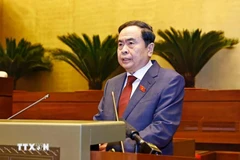
National Assembly Chairman Tran Thanh Man on January 14 presents certificates of merit from the NA Standing Committee to collectives and individuals for their outstanding performance in the legislature’s digital transformation in 2025. (Photo: VNA)

National Assembly steps up digital transformation

Immediately after the Politburo issued Resolution No. 57-NQ/TW on breakthroughs in science and technology development, innovation and national digital transformation, the Party delegation of the NA rolled out an implementation plan.

Party General Secretary To Lam (R) and outgoing Cambodian Ambassador Chea Kimtha (Photo: VNA)

Party chief hosts outgoing Cambodian ambassador

General Secretary Lam stressed that their relationship is rooted in a shared history of solidarity, close bonds and mutual sacrifice in pursuit of each country’s peace, stability and development and ASEAN’s common interests.

Prime Minister Pham Minh Chinh (standing) on January 14 chairs the sixth meeting of the National Steering Committee for the implementation of Vietnam’s commitments at the 26th United Nations Climate Change Conference of the Parties (COP26). (Photo: VNA)

Achieving net-zero emissions by 2050 is a political mission of Vietnam: PM

Bringing Vietnam to net-zero emissions by 2050 is not merely a promise but a commitment to action - a political mission of the nation and a responsibility of the entire political system, the business community, and every citizen. Therefore, all ministries, sectors, localities, businesses, and people must focus on fulfilling this mission effectively.

Ambassador Do Hung Viet (second from right( (Photo: VNA)

Communist Party USA shows confidence in Vietnam’s new development path

The documents of the upcoming 14th National Party Congress continue to reaffirm the guideline of building and defending the Fatherland under a socialist orientation amid rapid and complex international and regional developments, with particular emphasis on closely combining development with national defence, and domestic affairs with foreign affairs.

☕ Afternoon briefing on January 14

☕ Afternoon briefing on January 14

The sixth meeting of the National Steering Committee for the implementation of Vietnam’s commitments at COP26, the final review of organisational arrangements for the 14th National Party Congress, and the inauguration of the congress's press centre are among news highlights on January 14.

The press centre for the 14th National Party Congress is equpped with modern facilities, high-speed internet connectivity, more than 150 computers and a full range of technical equipment. (Photo: VNA)

Press centre for 14th National Party Congress inaugurated

So far, 597 journalists and technicians from 113 domestic media outlets, along with 79 journalists and media assistants from 43 foreign news agencies, overseas Vietnamese media, and political party publications, have registered to cover the congress, marking a significant increase compared to the 13th National Party Congress.

Politburo member and Permanent member of the Party Central Committee’s Secretariat Tran Cam Tu (front, centre) and other officials examine organisational arrangements for 14th National Party Congress on January 14. (Photo: VNA)

Final review of preparations for 14th National Party Congress

After on-site inspections and reports from relevant units on the implementation of the assigned tasks following the preliminary review on January 13 morning, Politburo member and Permanent member of the Party Central Committee’s Secretariat Tran Cam Tu commended agencies and units for their strong sense of responsibility, close coordination, and timely completion of tasks.

A delegation of the Central Military Commission pays tribute to General Le Van Dung. (Photo: VNA)

State-level funeral held for General Le Van Dung

A delegation of the Party Central Committee led by Politburo member and Standing Vice Chairman of the National Assembly Do Van Chien paid respects to General Dung and conveyed condolences to his family.

Prime Minister Pham Minh Chinh chairs meeting of National Steering Committee for International Integration. (Photo: VNA)

PM urges shift towards deeper, more effective international integration

PM Pham Minh Chinh emphasised integration serves three key goals: enhancing Vietnam’s stature, capacity, position and credibility on the global stage; strengthening strategic proactiveness in international relations; and improving the material and spiritual well-being of the people.