Vietnam taps ASEAN halal market for agricultural exports

The ASEAN region's growing demand, combined with geographic proximity that reduces transportation costs, creates a substantial competitive edge for Vietnamese enterprises.

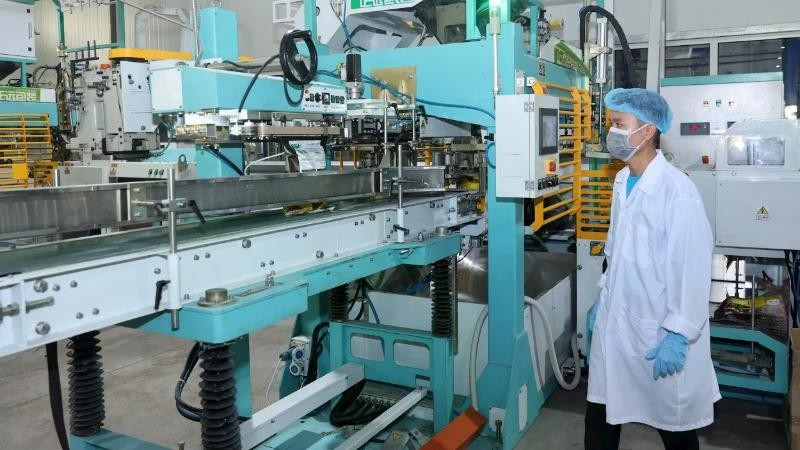
Vietnam Rice Compay Limited in Dong Thap province has invested in a modern rice packaging line for export. (Photo: nhandan.vn)

Hanoi (VNA) – With a population of over 240 million Muslims, ASEAN has become a fertile ground for Vietnamese businesses looking to tap into the potential of halal product exports, particularly farm produce and processed foods.

The region is seen as a gateway for made-in-Vietnam products to better integrate into the international halal supply chain.

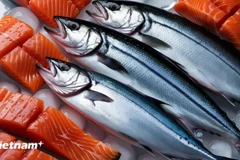
Currently, Indonesia, Malaysia, the Philippines, and Singapore represent the largest importers of halal agricultural products and foods in ASEAN, with key commodities including rice, vegetables, fruits, cashews, coffee, cocoa, and seafood.

Opportunities from consumers’ needs

Within the halal ecosystem, agricultural products and processed foods form the foundation, accounting for a significant proportion of the global halal market value. The ASEAN region's growing demand, combined with geographic proximity that reduces transportation costs, creates a substantial competitive edge for Vietnamese enterprises.

Vietnamese Trade Counsellor in Indonesia Pham The Cuong said Indonesia, with 87% of its population being Muslims, is the largest halal consumer in ASEAN. Indonesia's market is projected to reach 282 billion USD by 2025, or 11.34% of global halal consumer spending.

Vietnamese goods have already made headway in Indonesia, with rising export turnover over the recent past, creating a significant advantage for businesses seeking deeper inroads into the halal product segment. Direct flight connections between Vietnam and Indonesia also facilitate smoother trade of perishable agricultural goods, helping preserve product quality.

In Malaysia, the Vietnamese Trade Office said Vietnamese exports like rice, fruits and vegetables, and coffee experienced impressive growth in 2024. While halal certification is not mandatory for imports, many Malaysian importers favour certified goods to cater to local consumer expectations. Over the past years, the country has been very active in developing its halal industry, with the renowned JAKIM certification system.

Meanwhile, Singapore represents a niche but high-potential market for halal agricultural products, driven by quality consumption demands and its position as a regional transshipment hub. The demand for halal food not only comes from Muslims but extends to the consumer group interested in quality, food safety, and ethical consumption. Singapore also serves as a gateway for Vietnamese halal products to enter regional and global Halal distribution systems.

In the Philippines, the third-largest Muslim population in Southeast Asia, Vietnamese Trade Counsellor Phung Van Thanh said the archipelago nation imported over 100 million USD worth of halal standard products annually during 2020–2024 from such major suppliers as the US, New Zealand, and India. Notably, only 2% of the imports came from ASEAN member states, signaling a significant untapped opportunity for Vietnamese firms.

Expanding halal presence in retail systems

Vietnam's Trade Office in Indonesia suggested exporters partner with local distributors to access both traditional stores and supermarkets like Hypermart, Carrefour Transmart, Giant, Lotte Mart, Superindo, Food Mart, Hero, and Food Hall to enter deeper into this market. Better engagement in e-commerce is also key as Indonesia is among the ASEAN leaders in online retail, with major platforms including Shopee, Tokopedia, Lazada, and TikTok Shop.

In the Malaysian market, Trade Counsellor Le Phu Cuong advised Vietnamese enterprises to set up trade connections with halal-certified food importers and large retail chains such as NSK Trade City, Mydin, and Ecoshop. Besides, regular participation in annual trade fairs presents prime opportunities for business matchmaking and market exposure.

Sharing this perspective, Vietnamese Trade Counsellor in Singapore Cao Xuan Thang laid stress on the importance of participating in trade fairs to boost halal trade with partners in ASEAN./.

VNA

See more

An Phát Complex Industrial Park in Hai Phong City is one of the eco-friendly industrial parks. (Photo: VNA)

Green industrial parks become new magnet for FDI

Statistics show that about 80% of FDI enterprises prioritise investing in industrial parks with green energy infrastructure, reflecting a growing shift in investment preferences amid tightening global environmental standards.

Wood panel production at the Thuan An Wood JSC in Ho Chi Minh City (Photo: VNA)

Vietnamese businesses ride wave of investment in green manufacturing

Recent developments in private investment show that as confidence in the private sector has grown and is a key driver of economic development, investors are strengthening support for enterprises not only through capital but also management expertise and market connectivity.

Officers and soldiers of Son Tra Border Guard Station, Da Nang City Border Guard Command tell local fishermen about IUU fishing. (Photo: VNA)

Fishing solidarity groups help Vietnam with IUU “yellow card” warning removal

Over the years, coastal authorities in Da Nang have intensified efforts to educate fishermen about regulations, particularly the need to avoid illegal fishing in foreign waters. Local administrations and competent forces have also strengthened vessel registration and inspection procedures, installed vessel monitoring systems and ensured transparent declarations of catches at ports.

Representatives of Central Retail Vietnam and Lotte Plaza Market sign a distribution cooperation agreement at the networking event in Ho Chi Minh City on March 13. (Photo: VNA)

Vietnamese firms step up cooperation with international distribution chains

Connecting Vietnamese businesses with international distribution networks has been a key component of government-led trade promotion programmes for many years, which are designed to help domestic companies place goods directly into global retail systems rather than exporting solely through intermediaries.

Direct Hanoi–Amsterdam flights by Vietnam Airlines to begin on June 16. (Photo: Vietnam Airlines)

Vietnam Airlines to launch direct Hanoi–Amsterdam service on June 16

Under the plan, the Hanoi–Amsterdam route will commence operations on June 16, 2026, with an expected frequency of three return flights per week using modern wide-body Airbus A350 aircraft. This will be the first direct air link between Vietnam and the Netherlands, helping to shorten travel time and enhance connectivity between Vietnam and one of Europe’s key economic, logistics and aviation transit hubs.

Farmers harvest the 2025 Winter–Spring rice crop in An Giang province. (Photo: VNA)

An Giang accelerates export shift to meet green consumption trends

To enhance competitiveness, authorities are assisting businesses in obtaining globally recognised certifications such as GlobalG.A.P., Organic and HACCP, enabling key exports including rice, seafood and clean agricultural products to strengthen their position in global markets, according to Quang Xuan Lua, Director of the An Giang Centre for Trade and Investment Promotion.

Motorcycle riders refill their vehicles at a petrol station in Hanoi (Photo: VNA)

E5 RON92 biofuel price falls in latest adjustment

Since the beginning of this year, domestic fuel prices have undergone 14 adjustments, including five decreases and nine increases for RON95 and six declines and eight hikes for E5 RON92. Meanwhile, diesel price has fallen three times and risen 11 times.

A French customer is tasting Vietnamese lychee. (Photo: VNA)

Vietnamese agricultural products boost global brand recognition

Vietnam aims to achieve about 74 billion USD in agro-forestry-fishery export turnover this year. Expanding value-added products, improving quality standards and strengthening brand building, especially through international supermarket systems, will be key to enhancing the competitiveness and global recognition of Vietnamese agricultural products.

An apartment building developed by BCONS in Binh Duong (Photo: VNA)

Resolution 68 boosts businesses entering market

By the end of 2025, Vietnam had more than one million active enterprises. In the first two months of 2026, about 64,500 enterprises entered or re-entered the market, up 29.4% year-on-year, averaging 32,200 newly established or returning businesses per month.

A Vinh Long official introduces signature local products to Korean guests. (Photo: VNA)

Vinh Long courts Korean investment in key sectors

Vice Chairman of the provincial People’s Committee Nguyen Truc Son vowed to accompany investors and provide them with optimal conditions, while building a transparent and stable business environment to secure long-term engagement from foreign enterprises, particularly those from Daejeon.