Hanoi builds Halal-friendly future to attract Muslim travelers

In recent years, with increasing cultural exchanges, Muslim tourists have been visiting Vietnam, and Hanoi in particular, in growing numbers.

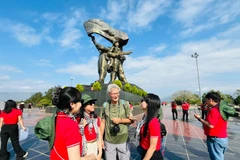
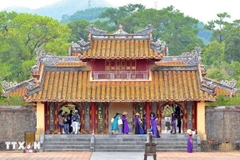
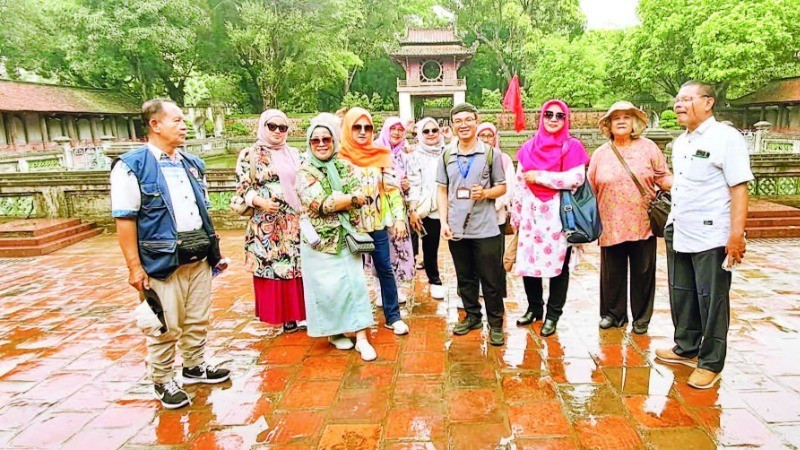
Tourists at the Temple of Literature, Hanoi (Photo: Nhandanonline)

Hanoi (VNA) - Recognising the great potential of Muslim tourists from the Middle East, the capital city of Hanoi is preparing the necessary conditions to proactively attract this unique market segment.

Halal tourism, also known as Muslim-friendly tourism, caters specifically to the needs of Muslim travellers. Due to cultural and religious differences, this group has distinct lifestyles, practices, and dietary requirements. Muslims abstain from certain meats, particularly pork, carnivorous animals, several amphibians, as well as alcoholic beverages.

In recent years, with increasing cultural exchanges, Muslim tourists have been visiting Vietnam, and Hanoi in particular, in growing numbers. Most of these travellers come from Indonesia, Malaysia, India, and some Middle Eastern countries. A recent example is a group of 200 Iranian tourists who chartered an entire flight to Hanoi, demonstrating the strong potential of the Halal tourism market.

According to Trinh Thi Thu Ha, Rector of the Hanoi College of Commerce and Tourism, Halal tourism is emerging as a global trend. With over 1.9 billion Muslims worldwide, Halal tourism is expected to contribute nearly 350 billion USD to the global travel industry by 2030. This is a highly promising market that we need to actively tap into, she noted.

The concept of Halal goes far beyond simply serving meals without pork or alcohol. It encompasses accommodations, prayer times, worship services, hospitality styles, and even respect for religious beliefs. However, the number of accommodations and restaurants in Hanoi that meet Halal standards remains limited, and travel businesses face challenges in serving this group. In Southeast Asia, countries like Thailand and Singapore, despite not having large Muslim populations, have developed a Halal tourism "ecosystem" with compatible restaurants, hotels, shopping centres, and entertainment services.

Hanoi possesses many advantages to become a Halal tourism hub, potentially transforming this market into a powerful catalyst for the city’s tourism sector. Building a Halal-friendly ecosystem is now an essential step. Dang Huong Giang, Director of the Hanoi Department of Tourism, said tapping into the Halal market is not just about aligning with a global trend, but also a sustainable growth strategy that helps Hanoi expand its reach into the Muslim world.

To welcome this market, Director of the National Halal Certification Centre (HALCERT) Ramlan Bin Osman suggested that hotels and restaurants offer dedicated Halal food and coffee areas. Entertainment venues need separate spaces for men and women. Attractions must meet Muslim-friendly standards. Since Muslims pray at specific times daily, airports and hotels should also provide dedicated prayer areas.

Giang emphasised that the Department of Tourism will step up awareness campaigns among tourism businesses about the characteristics of Muslim travelers. The department will also work with airports and accommodation providers to prepare Halal-friendly zones and suitable dining services. Hanoi plans to collaborate with embassies and international organisations to boost cultural exchange with Muslim countries and train human resources for this market. The goal is to build a comprehensive Halal tourism ecosystem by 2030, with priority given to establishing Muslim-friendly areas in the city centre.

Several travel businesses are also intensifying their strategies to attract Halal tourists. Chairman of the Hanoi UNESCO Travel Club Truong Quoc Hung said the club has signed a cooperation agreement with the Halal Training Centre to raise awareness and train personnel for this market. They are also working to develop a complete Halal-standard tourism product chain, covering ground services, dining, hotels, sightseeing, communication, and marketing./.
VNA

See more

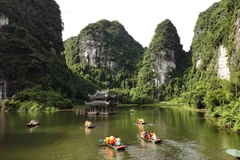
The Trang An Scenic Landscape Complex is a major attraction for visitors to Ninh Binh. (Photo: VNA)

Vietnam tourism accelerates green transition to power 2026 growth

Looking ahead to 2026, the tourism sector targets about 25 million international arrivals, 150 million domestic holidaymakers and total revenue of around 1.12 quadrillion VND (approximately 43 billion USD), reflecting its ambition to develop tourism into a spearhead economic sector in line with the Government's goals.

Fireworks illuminate the Han River during the 2025 Da Nang International Fireworks Festival. (Photo: VNA)

Da Nang announces theme of signature international fireworks festival

The Da Nang International Fireworks Festival 2026 will feature two Vietnamese teams and eight international teams from China, Italy, Germany, Portugal, France, Japan, Macao (China) and Australia. Four of these teams will be participating in the festival for the first time, promising fresh highlights and surprises.

Built in 1895, the stone church has been carefully restored and preserved in its original state, and remains an iconic symbol of the misty town of Sa Pa. (Photo: VNA)

Sa Pa listed fastest-growing destination in Asia: Agoda

Based on Agoda’s comparison of accommodation bookings between January-November last year and the same period in 2024, Sapa climbed 15 places in the rankings of Asia’s top 100 destinations, making it the fastest-growing destination in the region.

Tourists visit the Dien Bien Phu Victory Monument, which was built to commemorate the 50th anniversary of the Dien Bien Phu Victory. (Photo: VNA)

Positive signal for Dien Bien’s tourism sector in 2026

Tourism in the north-western province of Dien Bien is showing clear signs of revival in the opening days of 2026, reflecting efforts to realise the resolution of the 15th Provincial Party Congress, which identifies tourism as a spearhead economic sector.

Tourists enjoy exploring Ho Chi Minh City by Vespa. (Photo: VNA)

Ho Chi Minh City tourism pivots to quality-driven growth

Tourism development is being steered towards a multi-product, multi-space model that closely links the city centre with riverside, coastal and ecological forest areas, within the broader vision of a post-merger mega-city.

Foreign tourists in Vinh Long. The Mekong Delta locality welcomed nearly 9.5 million visitors in 2025, with a total revenue of 8 trillion VND. (Photo: VNA)

Vinh Long tourism gears up for breakthrough in New Year

The Mekong Delta locality has enhanced tourism promotion activities with an emphasis on sustainability and eco-friendliness, steadily building the brand of Vinh Long as a safe, hospitable, and high-quality destination.

In Dong Van, the beauty of karst formations formed hundreds of millions of years ago remains the soul of the journey. (Photo: VNA)

Dong Van transforms advantages into smart tourism

Dong Van is opening a new journey, where each scan by visitors is not only a marker on their travel map but also a stream of live data helping the highland region step into the era of smart tourism.

Quang Ninh province welcomes first foreign visitors on the occasion of the New Year holiday. (Photo: baoquangninh.vn)

Quang Ninh sees tourism surge during New Year holiday

From December 31, 2025 to January 2, 2026, Quang Ninh welcomed around 530,000 visitors, including 44,400 foreign tourists. The number of overnight guests was estimated at 158,000, while total tourism revenue reached approximately 1.28 trillion VND (over 48.55 million USD).

Visitors at a tourist site in Hue (Photo: VNA)

Hue tourism set for further breakthrough in 2026

Favourable weather on the first day of the New Year helped attract a large number of visitors to Hue via air, sea, road and rail. The Complex of Hue Monuments remained the city’s most popular attraction, with more than 8,700 tickets sold on January 1 alone, generating nearly 1.5 billion VND in revenue.