Vietnamese businesses need upgrade to harness full EVFTA potential

Despite global trade fluctuations, Vietnam – EU import and export activities remained robust in the first nine months of 2025, with total turnover approaching 55 billion USD, of which exports accounted for nearly 41 billion USD (up 9.3%) and imports 13 billion USD (up 4.3%).

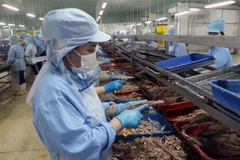
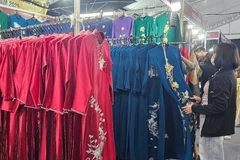
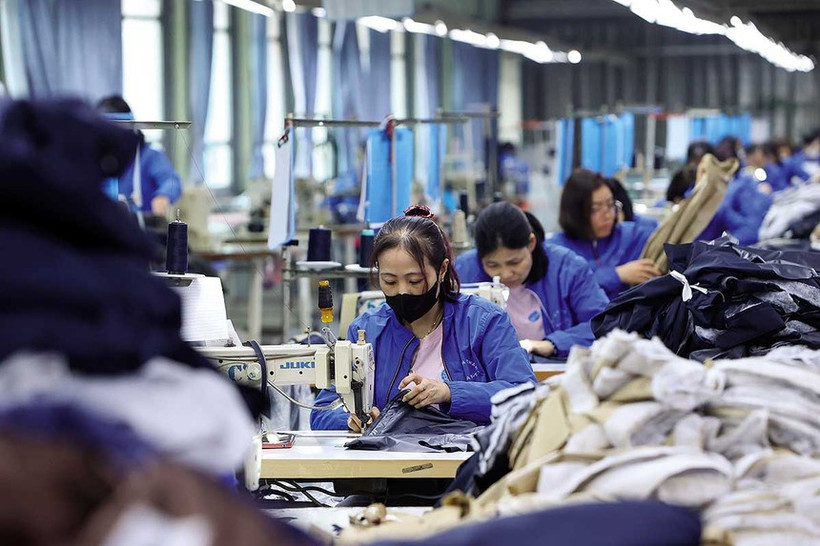
The garment-textile sector is among the industries that have made the most of the EVFTA to boost exports to Europe. (Photo: baodautu.vn)

Hanoi (VNA) – Since the EU – Vietnam Free Trade Agreement (EVFTA) came into force in August 2020, it has emerged as one of the most effectively implemented trade pacts, significantly expanding the scale of bilateral trade between the two sides.

In 2024, total trade reached nearly 70 billion USD, bringing the five-year cumulative figure to around 300 billion USD.

Despite global trade fluctuations, Vietnam – EU import and export activities remained robust in the first nine months of 2025, with total turnover approaching 55 billion USD, of which exports accounted for nearly 41 billion USD (up 9.3%) and imports 13 billion USD (up 4.3%).

The share of goods granted preferential certificates of origin (C/O) under the EVFTA has risen sharply from 14.8% in 2020 to 35.1% in 2025, demonstrating that Vietnamese enterprises have swiftly adapted to rules of origin to benefit from tariff preferences.

According to the Ministry of Industry and Trade (MoIT), as the agreement enters its sixth year, tariff elimination schedules between the two sides have neared completion. This marks a “golden window” for Vietnamese firms to fully capitalise on the EVFTA, while also representing a crucial turning point for aligning with Europe’s green and sustainable development trends.

The MoIT and the Vietnam Chamber of Commerce and Industry (VCCI) regard the EVFTA as one of the EU’s most high-standard and successful free trade agreements, offering strong support for bilateral trade. For Vietnam, key export sectors such as electronics, textiles and garments, footwear, machinery, agricultural-seafood products have effectively leveraged this opportunity to deepen their presence in the European market.

In parallel, the EVFTA has spurred European investment in Vietnam, particularly in supporting industries, processing and manufacturing, renewable energy, and high technology. Many EU firms have shifted their operations to Vietnam to take advantage of a stable business environment and preferential tariffs while restructuring their post-pandemic supply chains.

Vietnamese companies, for their part, have been upgrading via enhancing production standards, diversifying product ranges, and meeting green criteria, to enter the EU market more deeply.

A case in point is the Indochina Creative Investment and Development Joint Stock Company, which has seen over 20% export growth in handicrafts to the EU over the past three years, despite global market volatility. The company’s products have gained ground in France, Germany, Denmark, Belgium, Spain, and Italy.

Director of the company Hoang Thi Thanh Tam explained that the EVFTA has enabled most of their export items to enjoy tariff cuts to 0% or just 2-3%, giving them a price advantage and helping the business sustain export momentum.

Tran Ngoc Quan, Vietnam’s Trade Counsellor in Belgium and the EU, noted that the EU will have eliminated nearly all tariffs on Vietnamese goods. With an import market worth over 2.64 trillion USD, this offers a tremendous opportunity.

However, he said the more open the market, the stricter the requirements. As tariffs lose their role as a protective measure, trade defence instruments such as anti-dumping, anti-subsidy, and safeguard investigations are becoming more prevalent.

Therefore, to fully leverage the free trade pact, Vietnamese enterprises must transition from a mindset of “selling what we have” to “producing what the market demands”, while making strategic investments in branding, green certification, and supply chain management to remain competitive in the long term./.

VNA
See more

The International Agriculture Trade Fair AgroViet 2025 opens on November 12 in Hanoi. (Photo: VNA)

AgroViet 2025 promotes Vietnamese agriculture in digital era

The exhibition features nearly 250 booths showcasing a wide variety of agricultural products. Key highlights include Vietnam’s major export items in agriculture, forestry, and fisheries, OCOP products rated three stars or higher, regional specialities, handicrafts, and organic and eco-friendly goods. It also includes modern machinery, equipment, and materials for agricultural production and post-harvest processing.

At the Vietnam Foodexpo 2025 in Ho Chi Minh City. (Photo: VNA)

Vietnam Foodexpo 2025 hosts nearly 400 local, foreign exhibitors

Products span fresh agricultural goods like fruits, tea, coffee, pepper, cashews, plus seafood, processed and functional foods, beverages, confectionery, and dairy products. Manufacturers are also showcasing processing equipment, preservation and packaging technology, and food safety innovations.

At the opening ceremony of the Vietnam Industry and Technology Week 2025. (Photo: VNA)

Vietnam Industry and Technology Week 2025 kicks off

For the first time, the five largest industry and technology trade shows have been brought together in a premium exhibition space, creating a platform for strategic trade promotion and connecting knowledge, technology, and the business community, driving forward the journey of innovation and global integration.

Vietnam launches first homegrown mini electric truck GIO Tano 250 (Photo: VNA)

Vietnam unveils first locally made mini electric truck GIO Tano 250

The Tano 250, Vietnam’s first multifunctional mini electric truck designed and manufactured entirely domestically, promotes low-emission, low-noise mobility in urban and agricultural settings. With an estimated retail price starting at 35 million VND ( nearly 1,330 USD), it aims to make green transport more accessible to everyday users.

Deputy Prime Minister Bui Thanh Son speaks at the US-Vietnam Business Summit 2025. (Photo: VNA)

Vietnam highly values win-win economic, commercial cooperation with US: Deputy PM

Son expressed his confidence that with a 30-year foundation of cooperation and increasingly high political trust, along with the support of the business communities, Vietnam and the US will continue to write a brighter new chapter in the Comprehensive Strategic Partnership for peace, cooperation, and prosperity of both nations and the world.

Competent forces of Ninh Binh province inspect a fishing vessel at Ninh Co fishing port (Photo: VNA)

Ninh Binh province strictly deals with IUU violations

Local authorities have strictly prohibited “three-no” fishing vessels — those without registration, technical inspection or licences — from setting sail, while intensifying enforcement against other violations in fishing.

An overview of the workshop (Photo: VNA)

Project empowers women entrepreneurs to tap into global e-commerce market

Overall, more than 600 women-led enterprises benefited from the project’s training, while 13 partner organisations enhanced their expertise in supporting women in e-commerce. Between June and September 2025, the 32 participating firms recorded over 455,000 buyer searches and 85,000 page views, indicating increased visibility and growing confidence in the global digital marketplace.

A booth at the trade promotion fair. (Photo: VNA)

Red River Delta trade promotion fair opens in Hung Yen

A trade promotion fair for localities in the Red River Delta opened on November 10 in the northern province of Hung Yen, aiming to foster regional connectivity, promote sustainable development and enhance brand of regional products.

Tan Thuan Export Processing Zone, Ho Chi Minh City (Photo: VNA)

Foreign investors ready to pour capital into HCM City

Administrative reform remains HCM City’s top priority. The city aims to cut at least 30% of procedures, reduce processing times and costs, and shift from a “management mindset” to a “service mindset” to better support the business community.