Vietnamese enterprises eye Middle Eastern market

With the right preparations, strategic investment, and government backing, the Middle East holds strong potential as a long-term destination for Vietnamese exports.

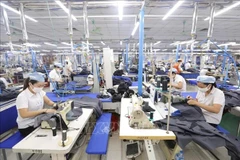
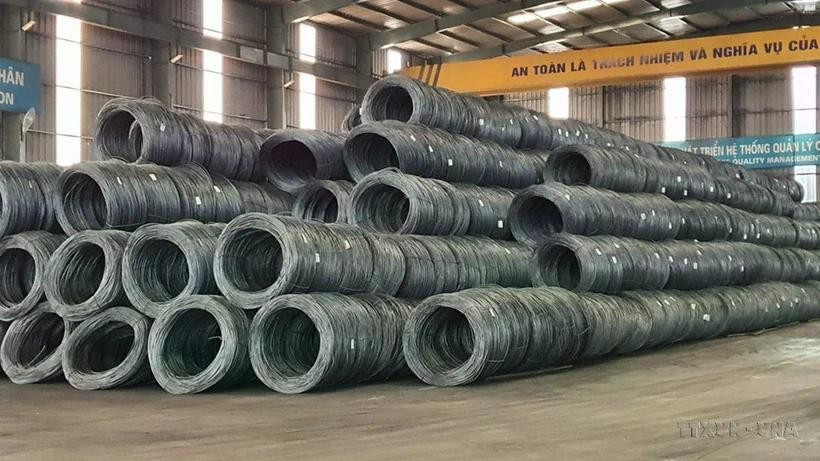
A factory of the Viet Duc Steel JSC in Vinh Phuc province (Photo: VNA)

Hanoi (VNA) - As global trade faces growing uncertainties and tariff risks, particularly from the US, Vietnamese businesses are increasingly turning to the Middle East as a stable, untapped export market.

Untapped potential

According to Pham Binh An, Deputy Director of the Ho Chi Minh City Institute for Development Studies, the US’s new tariff policies are adding pressure on countries like Vietnam, prompting many firms to seek markets that are less exposed, such as the Middle East.

Vietnamese steel exporters alone faced 32 trade defence investigations from 12 markets in 2024, nearly double the figure in 2023. Additionally, the EU’s Carbon Border Adjustment Mechanism (CBAM), which came in force in October 2023, demands strict carbon reporting from exporters.

Against this backdrop, businesses like Secoin, a leading manufacturer of premium decorative products, are diversifying away from traditional markets.

The US once accounted for over 50% of the company’s export revenue, but it is no longer a top priority, said Secoin CEO Vo Thi Lien Huong, adding that Secoin is restructuring to spread risks and avoid putting all eggs in one basket.

Secoin now sees the Middle East as a key growth market, given its strong demand for artistic, highly personalised products - an area where the company excels.

According to Huong, Secoin is investing in R&D to develop exclusive high-end lines for the region.

The recently signed Comprehensive Economic Partnership Agreement (CEPA) between Vietnam and the United Arab Emirates (UAE) in October 2024 is expected to further boost trade and investment opportunities in the region.

Other Vietnamese businesses are also gaining presence in the Middle East. Dony Garment Company, for example, has maintained an annual export growth rate of 15–20% to the region, even without formal trade incentives.

Director of the Dony Garment Company Pham Quang Anh noted that in the current volatile climate, diversifying export markets has become essential for business resilience. He added that his company has been actively engaging with partners in the Middle East to develop tailored product designs and offer more competitive prices.

Patience and good preparations needed

Access to the Middle Eastern market yet remains challenging, especially due to Halal requirements, which cover everything from raw materials to packaging and logistics.

Nguyen Ngoc Luan, Director of Global Trading Link, a coffee exporter, highlighted challenges in meeting Halal standards, noting that Halal certification standards vary by country. Meeting one country’s requirements does not guarantee compliance in another.

Luan said his firm has faced high costs, up to 20–30% higher, to upgrade facilities and retrain staff since beginning preparations in 2021. Despite the investment, he estimates the company has only achieved 50% of its market potential in the region.

Likewise, Director of the Dony Garment Company Pham Quang Anh underlined the impact of geopolitical factors, elaborating that during the Red Sea crisis, shipments to the Middle East were delayed by up to four months, with costs surging four to five times.

He urged more proactive market promotion and government support to help Vietnamese exporters gain a firm foothold in the market.

While not overly demanding, the Middle East market has specific requirements rooted in culture and religion. Success requires a deep understanding of local customs and full compliance with Halal standards throughout the production process.

With the right preparations, strategic investment, and government backing, the Middle East holds strong potential as a long-term destination for Vietnamese exports./.

VNA

See more

Hai Phong targets 4.3 billion USD in FDI in 2026 (Photo: VNA)

Hai Phong city targets 4.3 billion USD in FDI in 2026

Hai Phong’s investment appeal is underpinned by a rapidly expanding development space, including the Southern Coastal Economic Zone covering more than 20,000 hectares, a planned free trade zone, deep-water ports at Lach Huyen, and 12 industrial parks newly established in 2025.

The relocation of check-in counters aims to better meet the travel needs of residents and visitors. (Photo: VNA)

Vietjet shifts domestic check-in at Tan Son Nhat from January 13

During the recent New Year 2026 holiday peak, Vietjet added 380 flights, equivalent to nearly 78,000 additional seats, on many key domestic routes linking Hanoi and Ho Chi Minh City with destinations such as Vinh, Thanh Hoa, Hai Phong, Da Nang, Phu Quoc, Nha Trang and Da Lat.

Commercial banks are providing approximately 88% of total green credit outstanding in Vietnam. (Photo: nhandan.vn)

Capital sources expanded for sustainable growth

According to the State Bank of Vietnam (SBV), by the end of November 2025, outstanding green credit was estimated at around 750 trillion VND (28.55 billion USD), with an average growth rate exceeding that of overall credit in the economy.

Customers select goods at a supermarket. (Photo: VNA)

Retail market expands sharply, sustainability challenges persist

According to a report on recently released by the Ministry of Industry and Trade’s Agency for Domestic Market Surveillance and Development, the size of the market reached more than 7 quadrillion VND (about 266 billion USD) in 2025, up around 10% compared with 2024.

Oil rigs at the Bach Ho oil field. (Photo: VNA)

Resolution 79: State economy to lead growth

Resolution 79 is described as a “clear action declaration” by the Politburo, saying the state economy is not only responsible for maintaining macroeconomic stability, but must also become the force leading a new growth model that is green and sustainable.

Workers at Garment 10 Corporation produce apparel for export. (Photo: Nhan Dan)

Vietnam leverages export advantages within RCEP region

In 2025, seafood exports to China alone exceeded 2.2 billion USD, up about 33% compared to 2024. Shipments to Japan fetched nearly 1.7 billion USD, a year-on-year increase of 14.6%, while those to the Republic of Korea and Australia grew by 9.6% and 3.2%, respectively.

Certificates of membership in the Vietnam International Financial Centre in Da Nang are awarded at the conference on January 9. (Photo: VNA)

Da Nang continues targeted investment promotion approaches

According to Chairman of the Da Nang People’s Committee Pham Duc An, the city prioritises building sustainable economic ecosystems and focuses on key breakthrough sectors with strong spillover effects, including high technology and digital transformation, logistics, urban infrastructure, finance, processing and manufacturing industries, high-tech agriculture, and the pharmaceutical and medicinal herb industry.

In 2025, Hyundai sales reached 53,229 vehicles across the Vietnamese market. (Illustrative photo: Yonhap/VNA)

Hyundai sales in Vietnam rise almost 23% in December

In 2025, sales reached 53,229 vehicles across the market, a result considered a testament to the efforts by TC Group, Hyundai Thanh Cong, and the entire Hyundai dealership network nationwide amidst a volatile market.

Hydroponic vegetable cultivation model at the High-Tech Agricultural Park (Photo daibieunhandan.vn)

HCM City accelerates shift toward ecological urban agriculture

​The city’s agricultural sector is undergoing a strong transformation, restructuring toward higher value-added and sustainable development. In recent years, the sector has maintained steady growth, with agricultural, forestry and fisheries output rising by an estimated 2.5% annually.