Vietnamese firms in Laos embrace development with a social focus

In Sepon, a remote mountainous district of Savannakhet province in central Laos, the investment of Vietnamese businesses has contributed to boosting the local economy, thus improving the livelihoods of residents, creating jobs and promoting sustainable agricultural development across the region.
Thiphakesone Saysangoan, a worker at Sepon Tapioca Starch Processing Sole Co., Ltd. – a Vietnamese-invested company, in an interview with the Vietnam News Agency's correspondents in Laos. (Photo: VNA)

Vientiane (VNA) – As the Vietnam–Laos friendship continues to deepen across sectors, the growing presence of Vietnamese enterprises in Laos reflects a shift toward an investment model closely tied to community development.

In Sepon, a remote mountainous district of Savannakhet province in central Laos, the investment of Vietnamese businesses has contributed to boosting the local economy, thus improving the livelihoods of residents, creating jobs and promoting sustainable agricultural development across the region.

bot-san-2.jpg
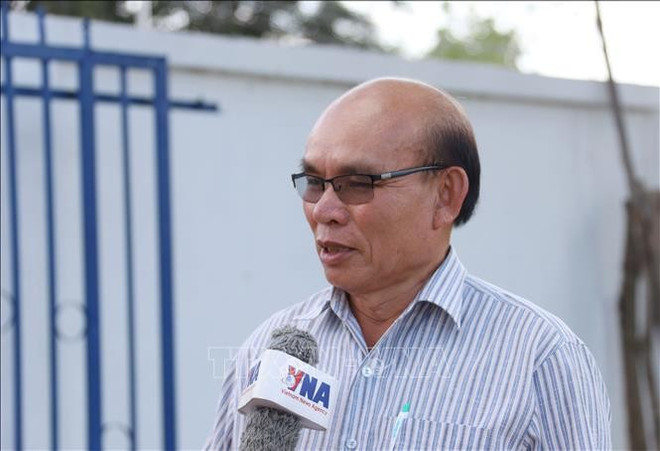
Sombat Itthavong, Vice Chairman of Sepon district. (Photo: VNA)

The stories of local workers and authorities stand as powerful testimony to a unique "two-in-one" investment model led by Vietnamese enterprises, which balances business development with deep social responsibility.

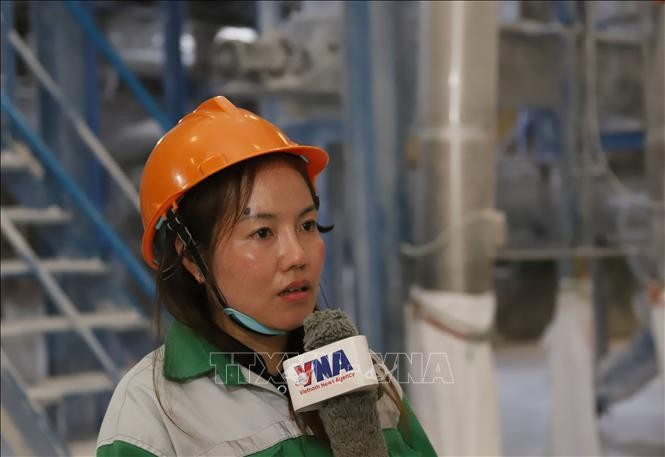
Thiphakesone Saysangoan, a worker at Sepon Tapioca Starch Processing Sole Co., Ltd. – a Vietnamese-invested company, shared that she made the switch to the firm four years ago and now enjoys a stable monthly income, health insurance, and proper sick leave policies.

What Thiphakesone values most is not just a steady income, but the company’s real commitment to the community. Alongside hiring locals, it supports cassava farming—Sepon’s key crop—by offering free seedlings, covering cultivation costs, and guaranteeing purchases. This has helped many households expand production without taking loans.

Nguyen Van Hiep, Director of Sepon Tapioca Starch Processing Sole Co., Ltd, said that since 2012, his company has pursued a dual mission – focusing on production and business operations, while actively contributing to local social welfare efforts.

He said the company offers free cassava seedlings, farming support, and technical training. Each year, it also provides rice for cassava growers, worth nearly 2 billion LAK (over 92,000 USD) in 2024, and contributes to public welfare funds, including support for local schools and infrastructure development.

The company’s long-term goal is to develop a stable raw material zone and expand its factory capacity to fully absorb cassava output from local farmers.

“We are operating in line with the guidance of the Vietnamese Party and State, while also meeting the demands of sustainable development in Laos,” Hiep stressed.

Sombat Itthavong, Vice Chairman of Sepon district, said Vietnamese businesses, especially in cassava processing and rubber cultivation, have helped improve living standards, boost incomes, and create real paths out of poverty. Thanks to Vietnamese investment, the district has developed a cassava farming area spanning over 4,000 ha, generating stable income for local communities.

Thanongthai Soukkhamthat, Head of the Savannakhet Special Economic Zone Authority, said Vietnamese investment plays a key role in boosting socio-economic growth, especially in disadvantaged areas. He noted that Vietnamese firms bring advanced technology and create jobs, while Savannakhet’s tax breaks, free land leases, and labour incentives are helping attract more investors from Vietnam and those from other countries./.
VNA

See more

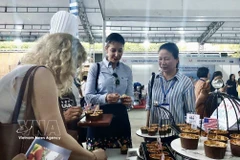
Officials visit a booth at the festival. (Photo: VNA)

Vietnam OCOP Festival 2025 opens in Hanoi

The festival functions as a space to bring together regional OCOP excellence, a forum connecting OCOP stakeholders with distributors, investors, experts and consumers, and a platform to spread pride in indigenous culture, local knowledge, and the aspiration for legitimate prosperity.

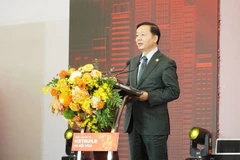
Prime Minister Pham Minh Chinh (third from right) and officials launch the Ministry of Construction’s new information technology systems at the conference on December 21. (Photo: VNA)

Modern, comprehensive infrastructure – a need for fast, sustainable development: PM

The Party and State continue to define infrastructure development as one of the three strategic breakthroughs, with priority given to building comprehensive and modern infrastructure, particularly transport facilities, technological infrastructure, and green – digital transition infrastructure, to help realise the national target of double-digit growth, the PM said.

Prime Minister Pham Minh Chinh addresses he third meeting of the National Steering Committee implementing the Politburo’s Resolution 68 in Hanoi on December 20. (Photo: VNA)

PM pushes trust, breakthroughs to accelerate private sector growth

Prime Minister Pham Minh Chinh noted that since the rollout of Resolution 68, alongside supporting resolutions from the National Assembly (NA) and Government, there has been a marked change in understanding the private sector’s critical position and role in Vietnam’s socialist-oriented market economy.

PM Pham Minh Chinh chairs the meeting (Photo: VNA)

Private sector thrives eight months after Resolution 68’s launch: PM

The private sector has shown marked progress eight months after the launch of Resolution 68, registering about 18,000 new enterprises monthly and pushing the nationwide total to nearly 1.1 million, Prime Minister Pham Minh Chinh told the third meeting of the National Steering Committee in Hanoi on December 20.

Phin Ho Tra – a national five-star OCOP product. (Illustrative photo: VNA)

Hanoi to host Vietnam OCOP Festival 2025

The festival is seen a practical activity celebrating the achievements made by the capital and the country in 2025, affirming OCOP’s role in rural economic development, contributing to realising Vietnam’s aspiration for strong economic growth in the context of deep integration.

The expanded Hoa Binh Hydropower Plant (Photo baochinhphu.vn)

EVN launches major power projects

Among the flagship projects inaugurated was the expanded Hoa Binh Hydropower Plant with a total installed capacity of 480MW per year and average annual output of about 488 million kWh.

An ultra-intensive shrimp farming model linked with environmental protection in Ca Mau province. (Photo: VNA)

Fisheries take the lead in the Mekong Delta’s green transition

Across the Mekong Delta, leading aquaculture producers, processors and exporters, along with suppliers of inputs, are transitioning to circular, high-tech and clean production models that cut greenhouse gas emissions and comply with international certification standards.

A perspective view of the Red River Landscape Boulevard project in Hanoi (Photo: VNA)

Works starts on Hanoi’s Red River Landscape Boulevard Axis project

The project is among the 234 key works and projects being launched, inaugurated or technically opened simultaneously across 34 cities and provinces nationwide to mark the 14th National Party Congress. Its launch contributes to implementing the country’s strategic development orientations while concretising Hanoi’s development goals in the new period.