Vietnamese pomelo in final stage for export to Australia

Australia has completed its risk assessment of Vietnamese pomelo and confirmed that the fruit meets the requirements for importation. This development is opening up major new opportunities for pomelo exports in the near future.

pomelo-1.jpg
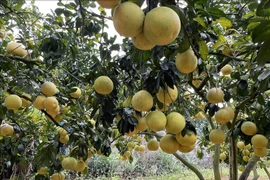
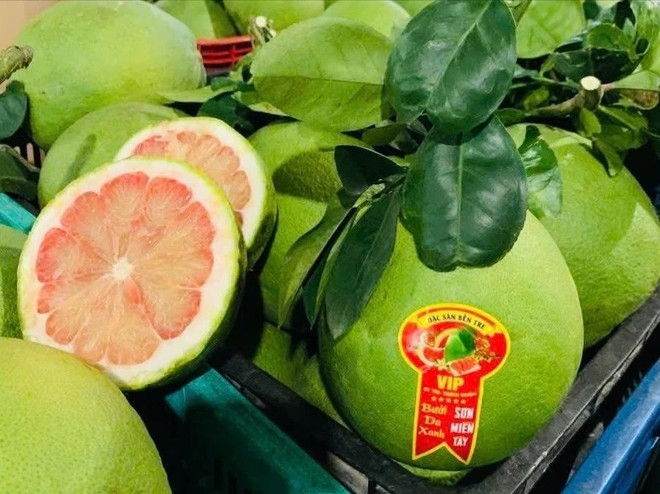
Australia's recognition of Vietnam's ability to meet biosecurity standards opens up significant prospects for Vietnamese pomelo. Photo: Vietnam+)

Hanoi (VNA) - According to Vietnam Sanitary and Phytosanitary Notification Authority and Enquiry Point (SPS Vietnam) under the Ministry of Agriculture and Environment, Australia’s Department of Agriculture, Fisheries and Forestry (DAFF) has officially released the “Final report on the biosecurity import requirements for fresh pomelo fruit from Vietnam.”

The report confirms that Vietnamese pomelo is eligible for import into Australia, provided it meets all pest control measures and phytosanitary procedures.

Immediately following this, the SPS Vietnam Office issued official dispatch to the Department of Crop Production and Plant Protection under the Ministry of Agriculture and Environment to coordinate the next steps towards bringing Vietnamese fresh pomelo into the Australian market.

According to the plan, following the publication of the report, Australian authorities will carry out final verification procedures in Vietnam to ensure the country’s capacity to implement phytosanitary measures. Once complete, the official import conditions will be published on BICON – Australia’s plant import requirement database.

The “Final report on the biosecurity import requirements for fresh pomelo fruit from Vietnam” states that Australia has completed its risk assessment of the entire production, harvest, post-harvest treatment and transport process of pomelo from all commercial production areas in Vietnam.
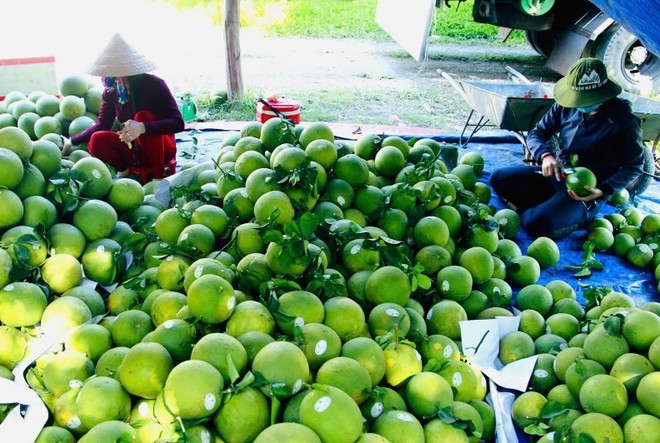
pomelo-2.jpg
Australia has completed its risk assessment of the entire process of production, harvesting, post-harvest treatment, and transport of pomelo from all commercial growing regions in Vietnam. (Photo: Vietnam+)

To safeguard its local ecosystems and agriculture, Australia requires control measures such as Pest Free Area (PFA) certification for production zones, treatment by irradiation or Methyl bromide, and visual inspection prior to export. In the specific case of citrus canker, Australia applies a “Systems Approach,” involving a series of integrated measures from orchard management to post-harvest handling.

Beyond the technical aspects, Australia also sought feedback from seven domestic and international organisations and individuals before finalising the report. Updates to information on production, pest management and new data were all incorporated in the April 2025 version of the report.

It is worth noting that certain pests, such as red spider mites and mealybugs, are still listed as regional quarantine pests in Western Australia. Therefore, while pomelo is permitted for import into the country, additional requirements must be observed when transporting the product between states.

The completion of this report not only marks progress in the market access negotiation process, but also demonstrates the growing capacity of Vietnam’s crop production and plant protection sector in meeting international biosecurity standards.

Australia’s recognition of Vietnam’s compliance with biosecurity standards presents a significant opportunity for the pomelo industry. According to the Ministry of Agriculture and Environment, the national pomelo cultivation area has doubled over the past five years, from 50,000 hectares in 2015 to over 100,000 hectares currently. Annual production is now close to one million tonnes, with the majority concentrated in the Mekong Delta, Red River Delta, and Northern Midlands and Mountainous Region.
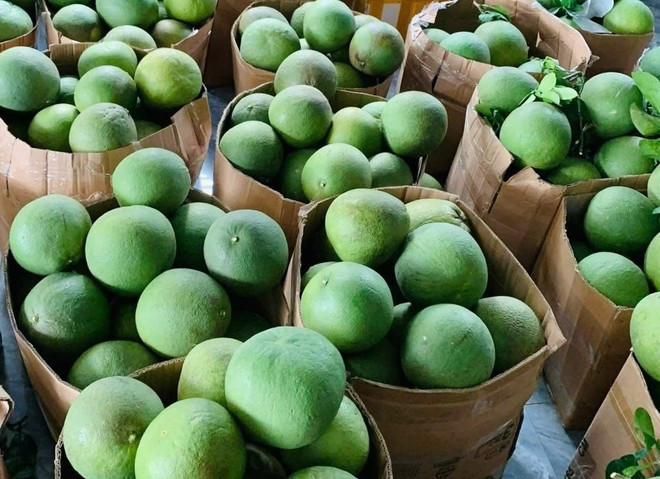
pomelo-3.jpg
Although permitted for import into Australia, pomelo products must still comply with additional regulations when transported between states. (Photo: Vietnam+)

Varieties such as Nam Roi, Green Peel (Da Xanh), Dien, and Tan Lac pomelos have already been exported to demanding markets such as the United States, EU, Canada and Japan. However, annual export volumes remain modest at around 5,000 tonnes, mainly due to limitations in post-harvest handling technology and techniques. Opening the Australian market is expected to provide new momentum for more sustainable development of Vietnamese pomelo in the coming years./.

See more

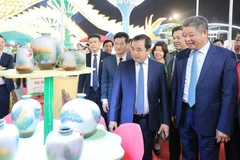
Officials visit a booth at the festival. (Photo: VNA)

Vietnam OCOP Festival 2025 opens in Hanoi

The festival functions as a space to bring together regional OCOP excellence, a forum connecting OCOP stakeholders with distributors, investors, experts and consumers, and a platform to spread pride in indigenous culture, local knowledge, and the aspiration for legitimate prosperity.

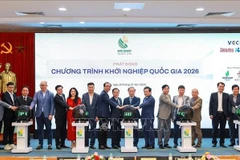
Prime Minister Pham Minh Chinh (third from right) and officials launch the Ministry of Construction’s new information technology systems at the conference on December 21. (Photo: VNA)

Modern, comprehensive infrastructure – a need for fast, sustainable development: PM

The Party and State continue to define infrastructure development as one of the three strategic breakthroughs, with priority given to building comprehensive and modern infrastructure, particularly transport facilities, technological infrastructure, and green – digital transition infrastructure, to help realise the national target of double-digit growth, the PM said.

Prime Minister Pham Minh Chinh addresses he third meeting of the National Steering Committee implementing the Politburo’s Resolution 68 in Hanoi on December 20. (Photo: VNA)

PM pushes trust, breakthroughs to accelerate private sector growth

Prime Minister Pham Minh Chinh noted that since the rollout of Resolution 68, alongside supporting resolutions from the National Assembly (NA) and Government, there has been a marked change in understanding the private sector’s critical position and role in Vietnam’s socialist-oriented market economy.

PM Pham Minh Chinh chairs the meeting (Photo: VNA)

Private sector thrives eight months after Resolution 68’s launch: PM

The private sector has shown marked progress eight months after the launch of Resolution 68, registering about 18,000 new enterprises monthly and pushing the nationwide total to nearly 1.1 million, Prime Minister Pham Minh Chinh told the third meeting of the National Steering Committee in Hanoi on December 20.

Phin Ho Tra – a national five-star OCOP product. (Illustrative photo: VNA)

Hanoi to host Vietnam OCOP Festival 2025

The festival is seen a practical activity celebrating the achievements made by the capital and the country in 2025, affirming OCOP’s role in rural economic development, contributing to realising Vietnam’s aspiration for strong economic growth in the context of deep integration.

The expanded Hoa Binh Hydropower Plant (Photo baochinhphu.vn)

EVN launches major power projects

Among the flagship projects inaugurated was the expanded Hoa Binh Hydropower Plant with a total installed capacity of 480MW per year and average annual output of about 488 million kWh.

An ultra-intensive shrimp farming model linked with environmental protection in Ca Mau province. (Photo: VNA)

Fisheries take the lead in the Mekong Delta’s green transition

Across the Mekong Delta, leading aquaculture producers, processors and exporters, along with suppliers of inputs, are transitioning to circular, high-tech and clean production models that cut greenhouse gas emissions and comply with international certification standards.

A perspective view of the Red River Landscape Boulevard project in Hanoi (Photo: VNA)

Works starts on Hanoi’s Red River Landscape Boulevard Axis project

The project is among the 234 key works and projects being launched, inaugurated or technically opened simultaneously across 34 cities and provinces nationwide to mark the 14th National Party Congress. Its launch contributes to implementing the country’s strategic development orientations while concretising Hanoi’s development goals in the new period.