Hanoi (VNA) – With attractive designs, affordable prices, and improved quality, Vietnamese products are increasingly gaining the trust of domestic consumers.
Notably, on the occasion of the Year of the Snake 2015, businesses launched a wide variety of products, creating strong sales of Vietnamese goods in the domestic market.
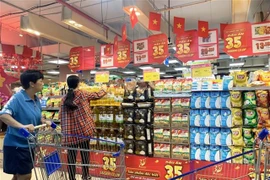
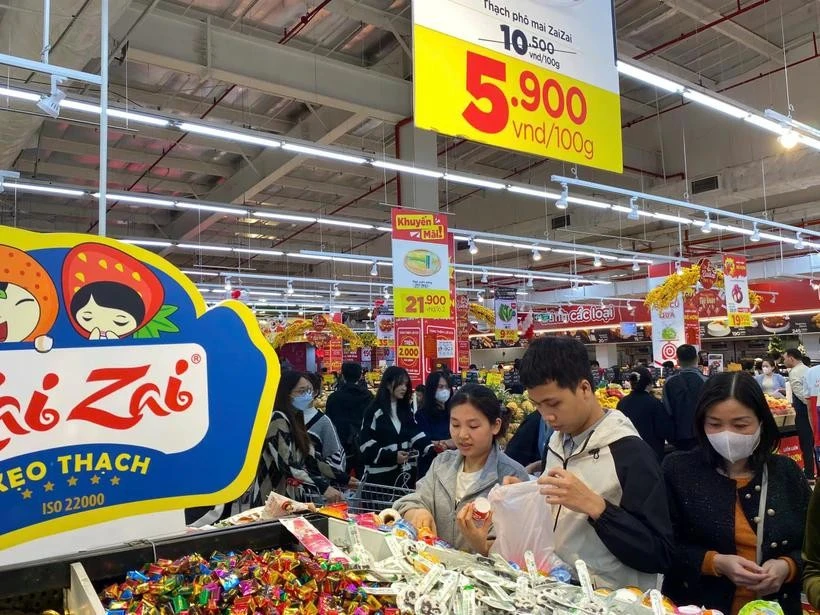
Over the past month, supermarkets and convenience store chains in Hanoi, such as Winmart, Tops Market, and Co.opmart, have shelved a variety of products from Vietnamese brands such as Kinh Do, Huu Nghi, Bibica, Cau Tre, and Vissan.
Le Manh Phong, Regional Director of Tops Market (Central Retail), said that 90% of the products in their supermarketsare high-quality Vietnamese goods. To meet consumer demand for the Lunar New Year (Tet) holiday, in addition to essential consumer goods, Tops Market is also introducing many traditional Vietnamese Tet dishes such as chung cakes (square glutinous rice cakes), pia cakes (a cake filled with durian, shredded lard, salted egg yolk and mung bean paste), lap xuong (Vietnamese pork sausages), and gio lua (steamed pork roll).
Similarly, Nguyen Thi Kim Dung, Director of Co.op Mart Ha Dong, said that to serve consumers during Tet, 800 points of sale in the Saigon Co.op system, including Co.op Mart, Co.opXtra, Co.op Food, Co.op Smile, Finelife, Cheers, Sense City, and Sense Market, will allow customers to experience a traditional Tet atmosphere with OCOP product booths and regional specialties. Notably, this year, Co.op Mart is introducing high-quality Vietnamese gift baskets for Tet.
Dung said Saigon Co.op has been making efforts to be more effective in promoting Vietnamese products to domestic consumers. It actively participates in local trade promotion events, seeks and expands supply sources to meet consumer demand, and provides guidance to businesses on how to quickly bring Vietnamese products, especially OCOP products into their system.
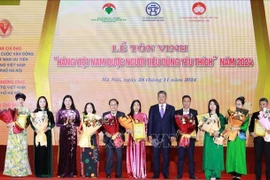
According to assessment by the Ministry of Industry and Trade, since 2009, after 15 years of the campaign "Vietnamese prioritise using Vietnamese goods," the percentage of people using Vietnamese products has significantly increased. Surveys at several supermarkets indicate that Vietnamese goods displayed on shelves are increasingly diverse in design and overwhelmingly outnumber imported goods, with food products being the majority.
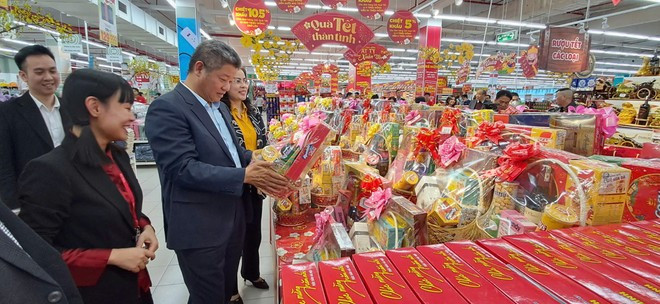
For example, at the GO!/Big C supermarket chain, the proportion of Vietnamese goods exceeds 90%, with approximately 45,000 product codes. Similarly, at WinMart and WinMart+, the proportion of Vietnamese products consistently ranges from 80% to 90% of the total quantity and variety of goods, with revenue from agricultural products accounting for over 30%.
According to a survey by the High-Quality Vietnamese Goods Business Association, most sellers evaluate that products meeting high-quality Vietnamese standards are highly purchased (80%), have reputable brands (60%), offer a diverse range (47%), and have competitive prices (39%). Over 50% of respondents believe that businesses have introduced many new or improved products in the past year. This indicates that consumers are increasingly trusting and accepting Vietnamese goods.
Not only agricultural products and food, but consumer goods made in Vietnam such as textiles, fashion, and electronics are also gradually asserting their position in the domestic market.
Notably, many domestic textile enterprises have developed specific product segments and customer bases, gradually creating value and establishing their position in the domestic fashion market, such as the Vietnam Textile and Garment Group, Nha Be Garment Corporation, Hoa Tho Textile and Garment Corporation, May 10 Corporation, Duc Giang Corporation, Phong Phu Corporation, and Hanoi Textile and Garment Corporation.
Than Duc Viet, General Director of May 10 Corporation, shared that through the campaign, "Vietnamese prioritise using Vietnamese goods," the brand has gained wider recognition among domestic consumers. To date, the brand has grown threefold compared to 15 years ago.
"Products by May 10 are not only trusted by consumers in Vietnam but have also been exported and are trusted by Vietnamese people abroad through cross-border e-commerce channels," said Viet.
Creating distinctive products
The domestic market, valued at approximately 180 billion USD and expected to continue growing in the coming years, not only presents opportunities for retailers but also for Vietnamese goods to enhance their position at home.
Therefore, the notion that exported goods are of higher quality than domestic consumer goods is no longer valid.
Nguyen Van Tuan, Chairman of the Board of Directors of Viet Tiep Lock Company, said domestic consumers are the best "testers" for manufacturers seeking to grow and enter larger markets. Thus, products sold at home must be the same or event better than those exported.
Additionally, continuous innovation and adaptation to consumer habits are essential, he said.
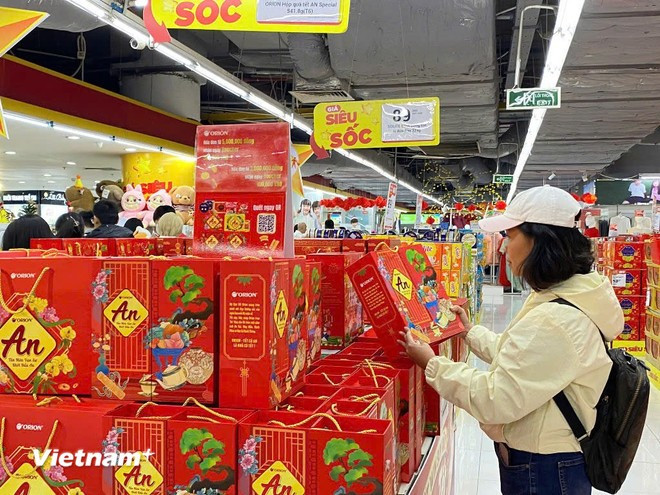
Thanks to this agility, Vietnamese products have become familiar items in "shopping baskets" due to their quality, stable prices, and diverse designs.
According to former President of the Vietnam Retailers Association Vu Thi Hau, to compete with imported goods and gain consumer trust, Vietnamese businesses have increased investments in production lines, making breakthroughs in product quality, diversity, and packaging. Most importantly, they have increasingly competitive prices compared to foreign goods.
She said Vietnamese products are gaining advantages by meeting all three factors - competitive prices, improved quality, and excellent designs. In the context of ongoing economic difficulties, prioritising Vietnamese goods not only helps consumers save costs but also supports the country’s economic development./.