Hanoi (VNA) - French scholar Gustave Dumoutier conducted meticulous research on the symbols found in Vietnamese worship rituals, carefully documenting their presence on religious objects and their significance in local spiritual practices. His findings provide valuable insights into the beliefs and customs that have shaped Vietnam’s traditional faiths for centuries.
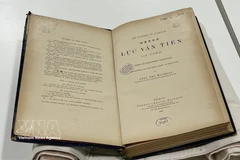
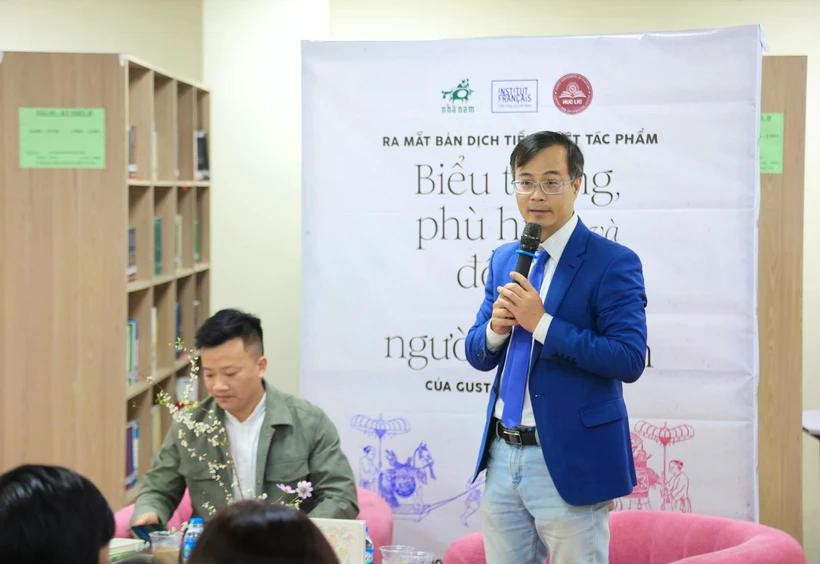
On February 22, Dumoutier’s book, Symbols, Emblems, and Worship Objects of the Annamites, was officially introduced to readers, offering a comprehensive exploration of Vietnamese spiritual life in the 19th century. Through this work, the author presents a detailed depiction of ritual objects and their role in religious practices, allowing modern audiences to gain a deeper understanding of the customs passed down through generations.
Worship spaces in Vietnamese households, particularly ancestral altars, are adorned with a variety of ritual items, each carrying profound symbolic meaning. Objects such as incense burners, candles, offering trays, and other sacred artifacts are not merely decorative but serve as conduits for spiritual connection and reverence for ancestors. Dumoutier carefully documented the most commonly found symbols on these objects, including characters representing good fortune (Phuc) and longevity (Tho), as well as yin-yang motifs, Ha Do, Lac Thu, and other traditional cosmological patterns.
What distinguishes Dumoutier’s work is that he does not limit himself to describing the physical appearance of these objects. Instead, he delves into the deeper cultural and spiritual values embedded in each item, seeking to uncover the beliefs and philosophies that have influenced Vietnamese religious traditions. His study provides not only an inventory of symbols but also an in-depth analysis of their meanings and their connection to broader aspects of Vietnamese thought and identity.
Alongside detailed explanations of the significance of these symbols, Dumoutier also recorded their practical applications in Vietnamese spiritual practices. His research extends to the rituals associated with these objects, the beliefs they embody, and the taboos observed by worshippers. To ensure accuracy, the scholar carefully traced the origins of these symbols, cross-referencing historical texts and providing thorough annotations to facilitate further study. This level of detail makes his book an invaluable resource for researchers, historians, and those interested in Vietnamese cultural heritage.
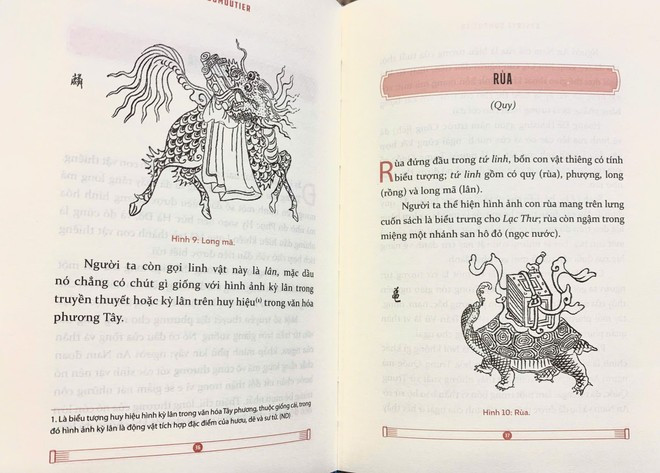
To enhance the authenticity and accessibility of his findings, Dumoutier included one to two illustrations for each symbol, preserving a visual record of these sacred emblems as they appeared hundreds of years ago. By incorporating images alongside his descriptions, the author enables readers from different generations to compare historical artifacts with contemporary interpretations, fostering a deeper appreciation for the continuity and evolution of Vietnamese religious practices.
During the book launch event, cultural researcher Dr. Trần Trọng Dương highlighted the enduring significance of ancestor worship in Vietnam. He noted that this practice is deeply embedded in Vietnamese culture, reflecting the principle of “Drinking water, remember the source” (Uong nuoc nho nguon). The act of honoring one’s ancestors serves not only as an expression of gratitude but also as a way to convey aspirations for peace, prosperity, and familial harmony. Regardless of economic or social circumstances, Vietnamese families traditionally allocate a solemn space within their homes for ancestral altars, underscoring the profound respect for lineage and heritage.
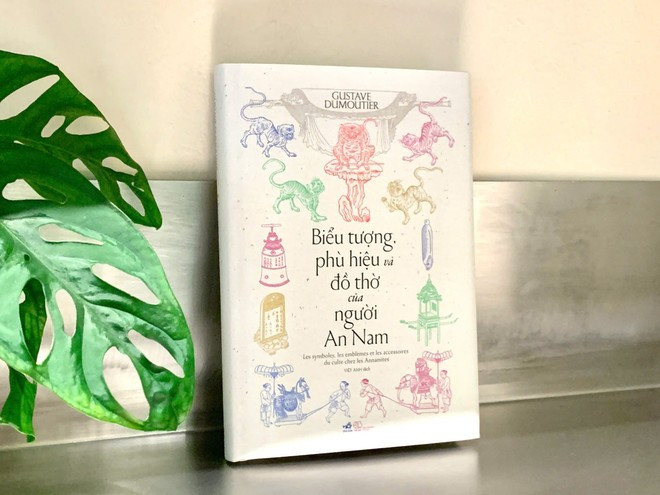
Given the importance of these traditions, a scholarly work such as Symbols, Emblems, and Worship Objects of the Annamites holds immense value. Beyond its academic contributions, the book serves as a key to unlocking a deeper understanding of the Vietnamese spirit, character, and cultural identity. By documenting and analyzing these longstanding customs, Dumoutier’s research offers a bridge between past and present, allowing readers to appreciate the spiritual foundations that continue to influence Vietnamese society.
“Dumoutier’s book is not merely a catalog of worship objects and their origins. It goes further by exploring the spiritual meanings embedded within each symbol,” Dr. Tran Trong Duong remarked. He emphasized that the work’s significance lies not only in its detailed descriptions but also in its ability to illuminate the philosophical and religious underpinnings of these sacred artifacts.
According to the researcher, one of the most valuable aspects of the book is its extensive visual documentation of Vietnamese worship objects from the late 19th century. The rich collection of illustrations provides a tangible link to historical religious practices, allowing future generations to visualize and comprehend the spiritual life of their ancestors. These images serve as an important historical record, offering researchers essential material for studying Vietnam’s religious and cultural heritage.
By compiling and preserving these symbols, Dumoutier’s work contributes to a broader understanding of Vietnam’s spiritual traditions, ensuring that these cultural treasures remain accessible for generations to come. The book stands as a significant academic and cultural resource, shedding light on the depth and complexity of Vietnamese religious practices.
Symbols, Emblems, and Worship Objects of the Annamites was published by Thế Giới Publishers in collaboration with Nha Nam Culture and Media Company./.