Vietnam’s accession to ASEAN marks reform and integration success: Australian scholar

Prof. Hill said that ASEAN membership opened the door for Vietnam to learn and engage with the region, and more importantly, Vietnam knew how to combine regional integration with domestic reforms, noting that the Doi moi (renewal) process launched in 1986 laid a foundation for Vietnam to effectively seize opportunities brought by ASEAN.

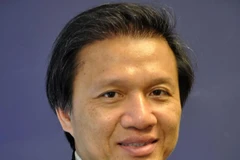
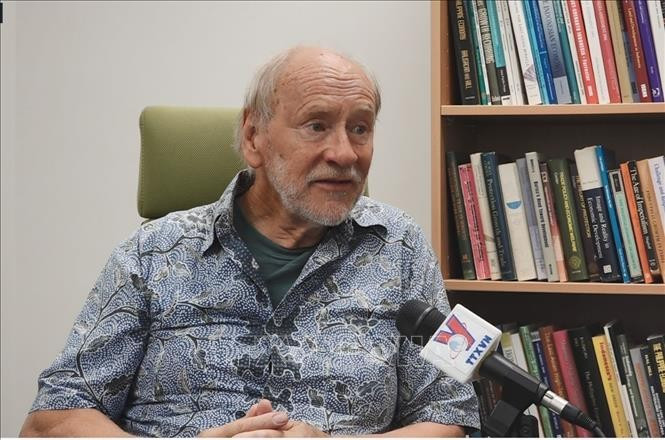
Prof. Hal Hill from the Crawford School of Public Policy at the Australian National University (ANU) in an interview with the Vietnam News Agency (VNA)'s resident reporter in Sydney. (Photo: VNA)

Sydney (VNA) - Vietnam’s accession to the Association of Southeast Asian Nations (ASEAN) three decades ago was a standout success story of reform and integration, said Prof. Hal Hill from the Crawford School of Public Policy at the Australian National University (ANU).

In an interview with the Vietnam News Agency (VNA)'s resident correspondents in Sydney on the occasion of the 30th anniversary of Vietnam’s admission to ASEAN (July 28, 1995 – 2025), Prof. Hill stressed that the event was one of the most important developments in the region’s history.

He said that ASEAN membership opened the door for Vietnam to learn and engage with the region, and more importantly, Vietnam knew how to combine regional integration with domestic reforms, noting that the Doi moi (renewal) process launched in 1986 laid a foundation for Vietnam to effectively seize opportunities brought by ASEAN.

The scholar pointed out that three decades ago, Southeast Asia was far less developed than it is today, and Vietnam was still a poor country, just beginning to integrate into the international economic and political landscape after decades of war. However, by joining ASEAN, Vietnam gained the opportunity to learn a lot from its neighbours, which had more open economies at that time, and gradually aligned itself with the region’s globalisation process.

Vietnam has proactively pushed regional integration while improving its investment climate, expanding economic cooperation, and building its image as a dynamic and responsible member of the region. Once a lagging economy, Vietnam has now emerged as the most dynamic economy in ASEAN in the 21st century.

Vietnam has already overtaken the Philippines in terms per capita income, something that would have been unthinkable 30 years ago, Prof. Hill said, observing that Vietnam is steadily approaching the rank of upper-middle-income countries.

Analysing Vietnam’s current role in ASEAN, Prof. Hill highlighted three key factors, noting that Vietnam’s large population and geographic size give it a natural influence in the region.

Vietnam is the fastest-growing economies in ASEAN, with the potential to become a key growth driver in the next decade, he said, adding that the country is demonstrating its ability in managing relations with major powers, especially China and the US, thanks to its historical experience and skillful and balanced foreign policy. Vietnam has become a model for how to balance its relations with the two world powers while safeguarding national interests - something many Southeast Asian countries are striving to learn from.

Looking to the future, Prof. Hill said by 2045, Vietnam will be a much more important country within ASEAN and the international arena, because it will be a much more prosperous country. With its current growth momentum, combined with political stability and strong foreign investment attraction, Vietnam will remain a key engine of regional development, he said, describing the country as a standout success story of reform and integration.

If the country maintains its rapid and sustainable growth, it is well on track to achieve the high-income status within the next few decades, he said.

For ASEAN, Prof. hill highlighted the importance of promoting intra-bloc cohesion and strengthening institutional capacity as two key factors in navigating today’s volatile global landscape. He emphasised that ASEAN’s central role can only be sustained if the bloc strengthens its internal capacity, enhances its collective voice, and improves the operational effectiveness of the ASEAN Secretariat.

To avoid being divided by individual national interests, ASEAN must continue building a cohesive community with unity in action, he noted, adding that only by doing so can the bloc maintain its position and uphold its central role in the rapidly evolving regional architecture./.
VNA

See more

NA Chairman Tran Thanh Man checks photo display for the award ceremony (Photo: VNA)

NA Chairman attends rehearsal for fourth Dien Hong awards

More than 10 months after the competition’s launch, the organising board received 3,508 entries from 125 media outlets nationwide. After initial screening, 659 works proceeded to preliminary judging, from which a preliminary jury selected 91 entries for the final round. The final jury ultimately selected 64 works for awards.

Illustrative image (Source: VNA)

PM directs tasks to boost economic growth

To fully realise the 2025 socio-economic development plan, while creating momentum for 2026, PM Pham Minh Chinh urged ministers, heads of ministry-level agencies, and chairpersons of People’s Committees of provinces and centrally-run cities to strictly follow resolutions of the Party, the National Assembly and the Government, along with the Prime Minister’s directives.

At the meeting between the Dien Bien Party Committee’s Commission for Information, Education and Mass Mobilisation and the propaganda information and training commissions of the Party committees of the Lao provinces of Phongsaly, Oudomxay and Luang Prabang, held in Vietnam's northwestern mountainous province on December 17. (Photo: dienbientv.vn)

Dien Bien strengthens cooperation, exchanges with three northern Lao provinces

A meeting between the Dien Bien Party Committee’s Commission for Information, Education and Mass Mobilisation and the propaganda information and training commissions of the Party committees of the Lao provinces of Phongsaly, Oudomxay and Luang Prabang was held in Vietnam's northwestern mountainous province on December 17.

Politburo member and permanent member of the Party Central Committee’s Secretariat Tran Cam Tu speaks at the meeting with Lao Cai voters on December 17. (Photo: VNA)

Secretariat’s permanent member meets with Lao Cai voters

Lao Cai must continue to prioritise the building of a truly clean and strong Party and political system, advance the implementation of socio-economic development tasks, and ensure the mobilisation of all available resources to meet growth targets, the Secretariat’s permanent member emphasised.

State President Luong Cuong (in black suite) attends the national political-military conference in Hanoi on December 17. (Photo: VNA)

State President outlines key directions for strengthening national defence

It is necessary to build a modern, elite, and highly capable People’s Army, improve overall combat strength, maintain combat readiness, and adapt training to new operational conditions, President Cuong said, noting that the military must safeguard air, sea, border, domestic, and cyber spaces, and modernise weapons and equipment to meet the requirements of a modern defence force.

Prime Minister Pham Minh Chinh speaks at the meeting between the Government’s standing members and ministries, sectors and localities on December 16 on preparations for the ground-breaking and inauguration ceremonies for projects celebrating the 14th National Party Congress. (Photo: VNA)

PM mandates readiness for project groundbreaking and inauguration ceremonies

VTV is responsible for working with the Voice of Vietnam and the Vietnam News Agency (VNA) in developing a detailed script for the ground-breaking, inauguration ceremonies for projects celebrating the 14th National Party Congress to be sent to the Ministry of Construction, relevant ministries, localities, and corporations for coordination and implementation across all sites.

Deputy Prime Minister Tran Hong Ha meets with ambassadors and chargés d’affaires of the European Union (EU) in Vietnam on December 16. (Photo: VNA)

Deputy PM Tran Hong Ha meets EU diplomats in Vietnam

Given the strong partnership built over the past 35 years, the EU hopes to soon elevate relations with Vietnam to a comprehensive strategic partnership, said Deputy Head of the EU Delegation to Vietnam Rafael de Bustamante Tello.

National Assembly Chairman Tran Thanh Man speaks at the meeting with representatives of the NA’s agencies and the NA Office. (Photo: VNA)

Top legislator calls for strict discipline to further enhance quality of NA operations

Chairman Man clearly outlined key tasks for the time ahead and requested the prompt finalisation and promulgation of newly adopted laws and resolutions, proactive reviews to ensure consistency with new guidelines, and thorough preparations for the upcoming elections of deputies to the 16th NA and People’s Councils at all levels for the 2026-2031 tenure.