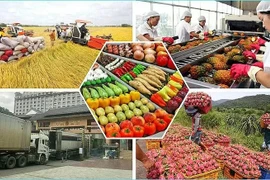
Vietnam’s agro-forestry-aquatic exports eye 65 billion USD in revenue in 2025

The Ministry of Agriculture and Environment (MAE) sketched out a roadmap for the remainder of the year, targeting 14–15 billion USD in Q3 and at least 16 billion USD in Q4, capitalising on the rising demand for agricultural products during the year-end holiday season.

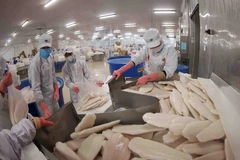
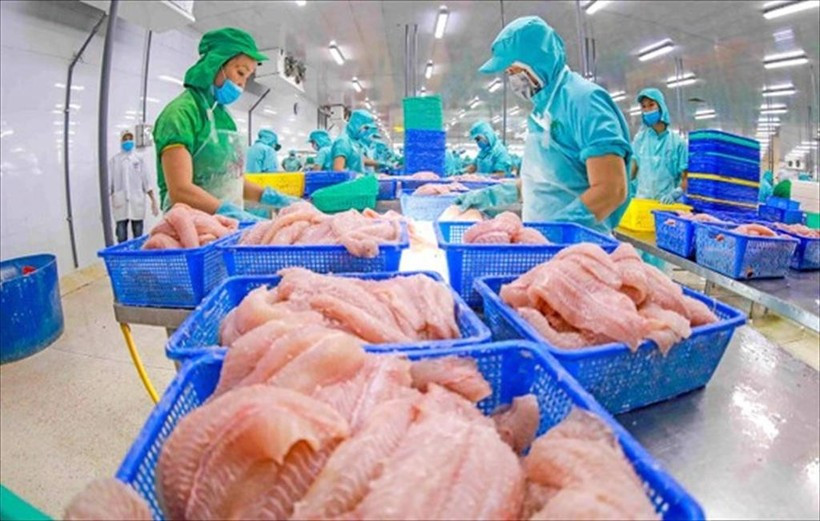
Workers process tra fish for export. (Photo: VietnamPlus)

Hanoi (VNA) – Vietnam’s agricultural sector is facing mounting export challenges in the second half of 2025, with total agro-forestry-aquatic export turnover projected to reach only 31.6 billion USD, down 4.8% year-on-year, according to the Ministry of Agriculture and Environment (MAE).

This represents a decline of around 1.6 billion USD, should retaliatory tariffs come into effect.

In response, the sector is rolling out drastic measures to maintain momentum in traditional markets while diversifying product lines to boost growth in emerging markets, aiming to meet the export target of 65 billion USD for the whole year.

Strong H1 performance despite challenges

Despite global market fluctuations and other headwinds, Vietnam’s agricultural exports delivered a strong performance in the first half of 2025. Total agro-forestry-aquatic exports reached 33.84 billion USD, up 15.5% year-on-year, with a trade surplus of 9.83 billion USD — an increase of 16.5%. These figures reflect the rising global competitiveness of Vietnamese agricultural products.

By export category, agricultural products brought in 18.3 billion USD (up 16.8%), seafood 5 billion USD (up 14.5%), forestry products 8.7 billion USD (up 8.8%), and livestock 264 million USD (up 10.1%).

Nine out of eleven key product groups posted positive growth, including coffee, rubber, pepper, cashew nuts, livestock, seafood, and wood products — a promising signal amid continued global economic volatility.

In contrast, rice exports fell 9.8% to 2.6 billion USD, and fruit and vegetable exports dropped 17.1% to 2.7 billion USD. These categories will require urgent interventions to reverse the downward trend in the months ahead.

xuat-khau-gao-3629.jpg
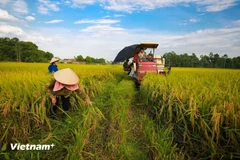
Rice exports in the first six months of the year only reach 2.6 billion USD, down 9.8% compared to the same period last year. (Photo: VietnamPlus)

Deputy Minister of Agriculture and Environment Phung Duc Tien noted a significant shift in export market structures. In 2024, exports to the US and China were nearly equal, accounting for 21.8% and 21.6%, respectively. However, in the first half of 2025, the US led with 7.14 billion USD (21.1%), while China fell to 5.94 billion USD (17.6%). Japan followed with 2.44 billion USD (7.2%).

This trend, according to the Deputy Minister, necessitates a strategic realignment of trade promotion efforts and market expansion. The ministry is actively pursuing new opportunities for key export items such as coffee, rice, fruit, pangasius, and shrimp, including a recent agreement with Brazil on beef exports and the potential for Vietnamese tra (pangasius), coffee, and rice to this South American market.

Market expansion

The Ministry of Agriculture and Environment sketched out a roadmap for the remainder of the year, targeting 14–15 billion USD in Q3 and at least 16 billion USD in Q4, capitalising on the rising demand for agricultural products during the year-end holiday season.
export-market.jpg
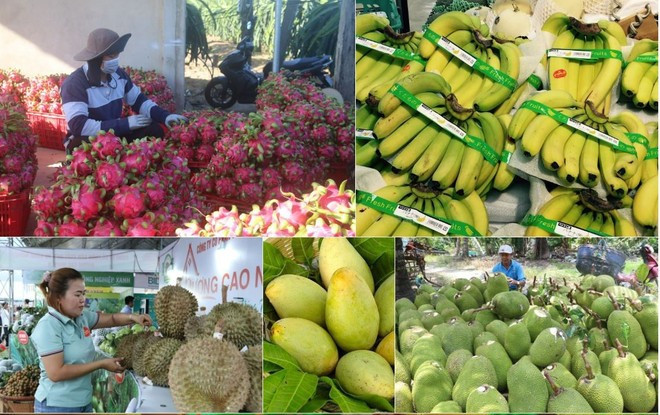
The agricultural sector is expanding markets and diversifying export products. (Photo: VietnamPlus)

The ministry is focusing on market expansion, product diversification, and full utilisation of the country’s 17 signed free trade agreements (FTAs), both bilateral and multilateral. Products with strong growth potential, such as coffee, cashew nuts, shrimp, fish, and specialty fruits, will receive increased support through trade promotion and standardisation of production to meet stringent quality requirements from markets like the US, EU, and China. At the same time, the ministry is encouraging exploration of potential markets in the Middle East, ASEAN, and Latin America.

Looking toward long-term growth, Deputy Minister Tien emphasised the central role of science, technology, and innovation in shifting from extensive to intensive agricultural development models. The sector is committed to sustainability, ensuring environmental protection, economic efficiency, and social equity.

Institutional reform is also being fast-tracked. The government has introduced new decrees to decentralise management and streamline administrative procedures, enabling greater local autonomy and innovation. The MAE is currently reviewing and proposing revisions to specialised laws to institutionalise new development policies and create a more transparent and effective legal framework for agriculture./.
VNA

See more

PM Pham Minh Chinh chairs the meeting (Photo: VNA)

Private sector thrives eight months after Resolution 68’s launch: PM

The private sector has shown marked progress eight months after the launch of Resolution 68, registering about 18,000 new enterprises monthly and pushing the nationwide total to nearly 1.1 million, Prime Minister Pham Minh Chinh told the third meeting of the National Steering Committee in Hanoi on December 20.

Phin Ho Tra – a national five-star OCOP product. (Illustrative photo: VNA)

Hanoi to host Vietnam OCOP Festival 2025

The festival is seen a practical activity celebrating the achievements made by the capital and the country in 2025, affirming OCOP’s role in rural economic development, contributing to realising Vietnam’s aspiration for strong economic growth in the context of deep integration.

The expanded Hoa Binh Hydropower Plant (Photo baochinhphu.vn)

EVN launches major power projects

Among the flagship projects inaugurated was the expanded Hoa Binh Hydropower Plant with a total installed capacity of 480MW per year and average annual output of about 488 million kWh.

An ultra-intensive shrimp farming model linked with environmental protection in Ca Mau province. (Photo: VNA)

Fisheries take the lead in the Mekong Delta’s green transition

Across the Mekong Delta, leading aquaculture producers, processors and exporters, along with suppliers of inputs, are transitioning to circular, high-tech and clean production models that cut greenhouse gas emissions and comply with international certification standards.

A perspective view of the Red River Landscape Boulevard project in Hanoi (Photo: VNA)

Works starts on Hanoi’s Red River Landscape Boulevard Axis project

The project is among the 234 key works and projects being launched, inaugurated or technically opened simultaneously across 34 cities and provinces nationwide to mark the 14th National Party Congress. Its launch contributes to implementing the country’s strategic development orientations while concretising Hanoi’s development goals in the new period.

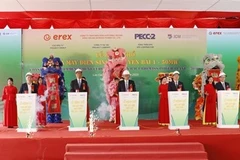
The ground-breaking ceremony of the Yen Bai 1 biomass power plant in Lao Cai province on December 19. (Photo: VNA)

Work starts on 114-million-USD biomass power plant in Lao Cai

The project, developed by Erex Yen Bai Biomass Power Co. Ltd. is located in Dong Cuong commune, Lao Cai province. It is backed by Japan’s Erex Group and falls under the Joint Crediting Mechanism, a bilateral initiative between Vietnam and Japan to reduce greenhouse gas emissions.

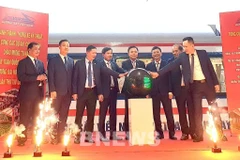
At the inauguration ceremony (Photo: VNA)

Vietnam Railways Corporation unveils upgraded coaches, digital tools

These moves reflect the VNR's commitment to fulfilling six priority tasks set by the Prime Minister, including leading in innovation and digital transformation, applying sci-tech in line with the Politburo’s Resolution No. 57-NQ/TW, and spearheading advances in digital, green and circular economy.

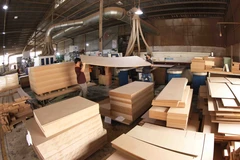
Producing MDF panels for export at Hai Duong MDF Construction and Manufacturing Co., Ltd., in Ho Chi Minh City (Photo: VNA)

HCM City targets 15 billion USD in wood exports by 2035

The merger of HCM City with Binh Duong and Ba Ria – Vung Tau is expected to give the local wood industry a strong boost into a phase of high-quality growth driven by linkages, innovation, sustainability, and deeper integration into global value chains.

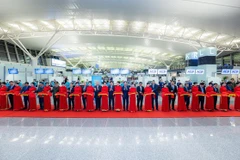
Delegates cut a ribbon to inaugurate the expanded Terminal T2 at Noi Bai International Airport in Hanoi on December 19, 2025. (Photo: VNA)

Expanded Terminal T2 at Noi Bai International Airport makes debut

The project expands the terminal’s floor area to over 200,000 sq.m, increases passenger capacity from 10 million to 15 million, even up to 18 million per year, and boosts operational capacity with boarding gates rising from 17 to 30 and jet bridges from 14 to 27, meeting strong growth in international travel demand.