Hanoi (VNA) - Recent developments in Vietnam’s stock market reflect more than investor enthusiasm. Surging capital inflows signal broader economic ambitions and ongoing reforms designed to advance the country’s capital market to a new height.
Liquidity signals market evolution
Despite sharp fluctuations, the VN-Index has seen robust trading activity, with daily liquidity consistently reaching 2–3 billion USD. High-value transactions have become common, particularly in equities aligned with reform narratives and long-term growth prospects.
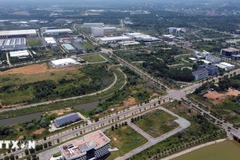
On August 18 and 19, infrastructure construction stocks dominated capital inflows. Many reached their daily ceiling price amid strong liquidity. This rally was fuelled by expectations of increased public investment. On August 19 alone, 250 projects were launched or inaugurated nationwide, totalling 1.28 quadrillion VND (approximately 50 billion USD). The Ministry of Construction expects these initiatives to contribute over 18% of GDP in 2025, rising to above 20% in subsequent years. Investors have been urged to accelerate implementation.
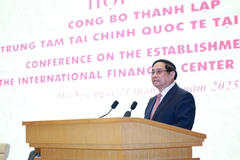
Momentum has also come from the financial sector. Military Bank (MB)’s strategic partnership with Dunamu, the operator of Upbit-the Republic of Korea’s leading digital asset exchange, provided a boost to MBB shares. A pilot resolution for a digital asset trading platform is expected by late August or September 2025, as part of plans to establish an international financial centre.
In addition, new regulations effective October 1, 2025 will allow credit institutions designated as mandatory transferees of specially controlled banks to enjoy a 50% reserve requirement reduction. This has further lifted investor interest in MBB shares.
Meanwhile, IPO activity has supported banking stocks. Techcombank (TCB) and VPBank (VPB) are advancing plans to list their securities subsidiaries. Techcom Securities (TCBS) has achieved favourable IPO pricing, supporting TCB’s share gains since May 2025. VPBank Securities (VPBankS) is also preparing for its IPO. These moves diversify shareholder bases and enhance corporate ecosystems.
Reform as a catalyst
According to experts, this surge reflects more than short-term speculation. Construction activity, IPOs, and investor optimism point to an inflection point for Vietnam’s capital market, both in scale and quality.
Shengyong Goh, Head of Southeast Asia Research at China International Capital Corporation (CICC), viewed Vietnam as one of the fastest-growing economies globally. Beyond headline growth, he said he sees structural progress under what he calls “Doi Moi 2.0” - a new phase of reform.
He highlighted Vietnam’s successful tax negotiations with the US under President Donald Trump’s administration, which secured a 20% reciprocal tax rate, a notable achievement amid global tax policy shifts.
Goh also commended Vietnam’s reform agenda, including administrative consolidation, improved governance, streamlined procedures, and Resolution No. 68-NQ/TW supporting private sector development. These policies are seen as laying a solid legal foundation for capital market sustainability.
According to Pham Luu Hung, Chief Economist at SSI Securities, meeting double-digit growth targets will require investment equivalent to 30–40% of GDP. While previous growth relied heavily on the banking sector, Vietnam must now strengthen its capital market to support more ambitious goals, Hung said.
One major initiative is the creation of an international financial centre, expected to enhance capital access. Legislative reform is also playing a role, he added.
Vietnam’s stock market is anticipated to undergo a classification review by FTSE in this October, with prospects of being upgraded to emerging market status after years on the watch list.
This would mark progress toward a broader goal of achieving an investment-grade sovereign credit rating by 2030. Analysts at VNDirect believed this could reduce capital costs by 2–2.5 percentage points for government and businesses alike—unlocking funding for large-scale projects such as the North–South high-speed railway, regional links with China, expressways, and metro systems.
Achieving this requires continued improvement in transparency, governance, banking sector resilience, and a successful equity market upgrade by FTSE and MSCI between 2025 and 2027. These steps are seen as critical for meeting Vietnam’s 2030 credit rating target.
Hung noted that reform is ongoing, involving both regulatory and market structure upgrades. Improving the quality of listed companies, enhancing corporate governance, accelerating IPOs and divestment, and strengthening the secondary market are long-term objectives. The current resurgence in major IPOs has revived investor expectations for higher-quality investment opportunities.
With strong alignment between reform and investment flows, the foundations are being laid for sustainable market development in the years to come./.