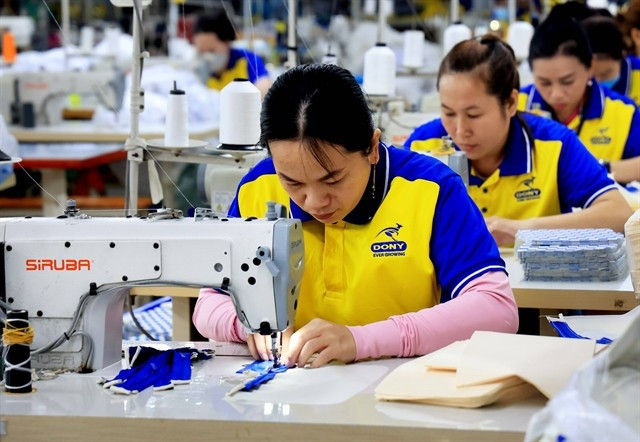
Hanoi (VNS/VNA) - The textile and garment industry has shown clear signs of recovery in 2025, bouncing back after a difficult period of stagnation.
However, businesses in the sector continue to face mounting challenges, from high capital and logistics costs to growing pressure to green their operations and navigate shifting trade policies.
According to Vu Duc Giang, Chairman of the Vietnam Textile and Apparel Association (VITAS), the industry’s export turnover reached 34.75 billion USD in the first nine months of 2025, an increase of 7.7% year-on-year. This marks a robust comeback and highlights the resilience of Vietnam’s textile exports in the global market.
Despite the gains, the industry remains heavily reliant on imported raw materials, with import turnover totalling 16 billion USD, including 11 billion USD for fabric alone. This dependency poses significant risks, particularly as global trade dynamics shift.
Vietnam has now climbed to third place globally in textile and garment exports, a major leap from its earlier role as a low-cost processing hub.
Giang said high-value-added products were becoming a larger share of exports, signalling the industry’s move beyond contract manufacturing to brand-building and innovation.
Vietnamese textile and garment products are now exported to 138 countries, boosted by 16 free trade agreements (FTAs), with that number expected to grow to 22 by 2027.
Emerging markets like the Middle East and Africa offer new growth opportunities, according to Giang. Once overlooked, these regions have become more prominent.
In 2024, exports to Islamic countries alone reached 1 billion USD, and by July 2025, revenue from the Middle East had already hit 700 million USD.
Vietnamese firms are also targeting premium segments, offering products with higher design and technological content – a move that supports long-term competitiveness.
Rising costs
One of the biggest hurdles is production costs, which are about 40-45% higher in Vietnam compared to Indonesia, Malaysia and Myanmar – despite Vietnamese labour being around 40% more productive.
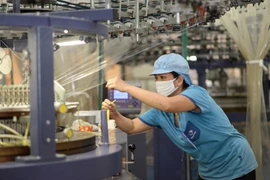
On the upside, the industry is rapidly embracing automation and green technologies, becoming second only to China in regional supply chain modernisation.
However, logistics remain a bottleneck.
According to Dang Thi Minh Phuong, Chairwoman of the Ho Chi Minh City Logistics Association, shipping and warehousing costs have surged. Despite salaries of 35-40 million VND (1,300-1,500 USD) per month, businesses are struggling to recruit container drivers.
She urged firms to restructure supply chains and invest in logistics technology to improve competitiveness.
Besides that, the shift from traditional processing models to FOB (Free on Board) and DDP (Delivered Duty Paid) purchasing methods has changed the financial landscape.
Giang stressed the need for stronger cooperation between banks and exporters, urging banks to offer tailored credit packages aligned with modern contract terms.
“Banks must understand the nature of today’s export contracts and build trust with businesses through transparency,” Giang said, adding that: “Only then can we ensure a stable flow of capital to support growth.”
Trade policy is also a pressing concern. The US imposed a 20% reciprocal tax on Vietnamese textile and garment products (down from an initially proposed 40%), significantly impacting export dynamics.
While the first nine months of 2025 saw steady demand as customers rushed to place orders ahead of the tax implementation, new orders from the US have since dropped sharply.
With buyers now demanding that Vietnamese producers absorb part of the tariff cost, profit margins are shrinking.
Furthermore, US authorities have signalled potential tax hikes on products lacking clear origin documentation, in a bid to prevent transit-based origin evasion – a warning to Vietnamese firms re-exporting goods from China.
Local input gaps
Additionally, Vietnam currently imports 100% of its cotton and up to 95% of its synthetic fibres. Chemicals and dyes are also almost entirely imported. This lack of domestic input production remains a major weakness, especially under tightening origin rules and shifting trade policies.
To mitigate risks, industry leaders are calling for increased localisation of raw materials, ensuring traceability and reducing exposure to foreign supply shocks.
Despite the industry's export success, brand development remains a longstanding weakness.
“Vietnamese fashion brands are still small and in the early stages,” said Vinatex general director Cao Huu Hieu. “Meanwhile, international brands dominate even in our domestic market.”
Major global brands invest heavily in design talent, which is currently lacking in Vietnam, according to Hiếu. Building a strong brand identity, especially in fashion, requires a long-term commitment to training, design, and product differentiation.
While Vietnam has made strides in automation, its overall productivity remains moderate compared to other leading textile producers in Asia and Europe. Investments in modern machinery, smart factories, and automation are seen as essential to maintaining competitiveness.
Hieu noted that Vinatex’s strategic goal was to become a complete solutions provider for green fashion – from yarn and fabric to finished garments. The company planned to focus on sustainable, circular, and recycled products, aligning with global trends in eco-conscious consumption./.
See more
Vietnam Airlines launches first direct service linking Vietnam and Northern Europe
The new route represents a significant step in the national flag carrier’s European network expansion strategy for the 2025–2030 period, responding to rising demand for travel, business, trade and family visits between Vietnam and the Nordic region.
PM calls for stronger efforts to meet housing demand, ensure people's right to housing
PM Chinh noted that the real estate and housing market showed positive changes in 2025. With the engagement of the entire political system and society, Vietnam completed the elimination of temporary and dilapidated housing nationwide with more than 334,000 units, five years ahead of schedule. Nonetheless, continued efforts are needed to ensure no one is left without shelter.
Forum discusses practical solutions to promote sustainable marine development
With a coastline stretching more than 3,260 kilometres, Vietnam possesses significant potential and advantages, underpinned by abundant and diverse marine resources.
Quang Ninh province strengthens fishing vessel controls
In the coming period, Quang Ninh will continue to implement government and ministerial directives on combating IUU fishing, contributing to efforts to meet the EC’s recommendations and move toward the lifting of the yellow card warning against Vietnam’s seafood exports.
Trade poised for new record but sustainability concern persists: Conference
The ministry estimated that the total import-export revenue might reach 920 billion USD this year, a record high that would place Vietnam among the world’s top 15 countries by trade value.
SBV plans to simplify business regulations for banks
Under a draft circular to replace Circular 32/2024/TT-NHNN, now open for public comment, many administrative procedures for establishing and relocating commercial bank branches and transaction offices will be significantly shortened.
Vietnam remains strategic destination for international investment: Sputnik
Vietnam continues to be viewed as a reliable destination for investors, supported by a stable macroeconomic environment, relatively consistent investment policies, and increasingly improved production capacity, Sputnik reported.
Garment-textile sector adjusts development strategy to adapt to global volatility
In 2025, Vietnam’s textile and garment exports are estimated at 46 billion USD, up 5.6% year on year, helping the country remain among the world’s top three textile and garment exporters
Swiss-funded initiative strengthens Vietnam’s export competitiveness
These efforts have contributed to Vietnam’s export turnover rising from 371 billion USD in 2021 to an estimated 480 billion USD in 2025, reinforcing trade’s role as a key driver of economic growth, employment and sustainable poverty reduction.
Vietnam consolidates position as one of Asia’s economic bright spots
Next year, Vietnam is expected not only to maintain a high growth rate relative to the region but also to further reinforce its status as one of Asia’s economic bright spots thanks to macroeconomic stability, a dynamic domestic market, and a clear orientation towards attracting strategic investments.
Reference exchange rate up 5 VND on December 17
With the current trading band of +/- 5%, the ceiling rate applicable for commercial banks during the day is 26,403 VND/USD, and the floor rate 23,889 VND/USD.
IUU fishing combat: Fisheries enters more sustainable, modern development phase
Each fishing vessel is now managed under a unique identification code, with synchronised data across the fisheries management software and VMS devices. Localities have strengthened port departure control and traceability in a digitalised manner.
Decisive moment of fight against IUU fishing violations
Under the close direction of the Prime Minister, coastal localities nationwide, particularly in central Vietnam, are urgently implementing assigned tasks with clear schedules and milestones, delivering tangible weekly progress.
Resolution 57: Tay Ninh, TTC AgriS team up to modernise sugarcane sector
A flagship initiative is the Model Farm/Experimental Farm (DemoFarm) project, which will introduce advanced cultivation techniques tailored to local soil conditions.
Local leaders must be held accountable for IUU fishing violations: PM
PM Chinh requested the Government Inspectorate to promptly identify localities that lack determination or fail to handle violations thoroughly, including cases where vessels not meeting legal requirements are still allowed to leave ports, and to clarify responsibilities and impose sanctions without delay.
Vietnam’s rapid, sustainable development goal is well-grounded, feasible: PM
The PM stressed that Vietnam has clearly identified the dual green transition and digital transformation as an objective necessity, a strategic choice and a top priority. It serves as both foundation and key driving force for rapid and sustainable development.
C.P. Vietnam exports first processed chicken batch to Singapore
The CPV Food Binh Phuoc plant operates a closed-loop system and holds international certifications, including HACCP, BRC, ISO 22000, and Halal. Before reaching Singapore, the company’s processed chicken was already exported to Japan, Hong Kong (China), Cambodia, and Laos, with Japan alone importing 10,000 tonnes by November 2025.
Forum highlights untapped potential for Vietnam’s circular economy
A UNDP representative said Vietnam still has substantial room to improve resource efficiency, cut waste, and promote industries that create green value.
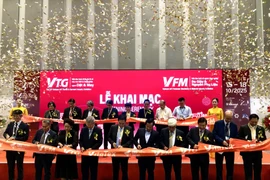
HanoiTex & HanoiFabric 2025 kicks off
Running until December 18, HanoiTex & HanoiFabric is expected to contribute to sustainable development and stronger international integration of Vietnam’s textile and garment industry.
Vietnam economic forum 2025: balancing high growth and sustainability
At the thematic session on finance and banking, delegates focused on solutions for financial resources and economic growth targets in the 2026-2030 period. The effective mobilisation of financial resources was identified as a key prerequisite for Vietnam to realise its target of double-digit economic growth during this phase.