Vietnam’s housing policy: From social security to market driver

Over the past four decades of Doi Moi (Renewal), Vietnam has made a significant shift in housing policy, transitioning from a centrally planned, subsidised system to a dynamic, market-oriented real estate sector.

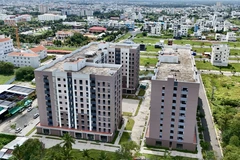
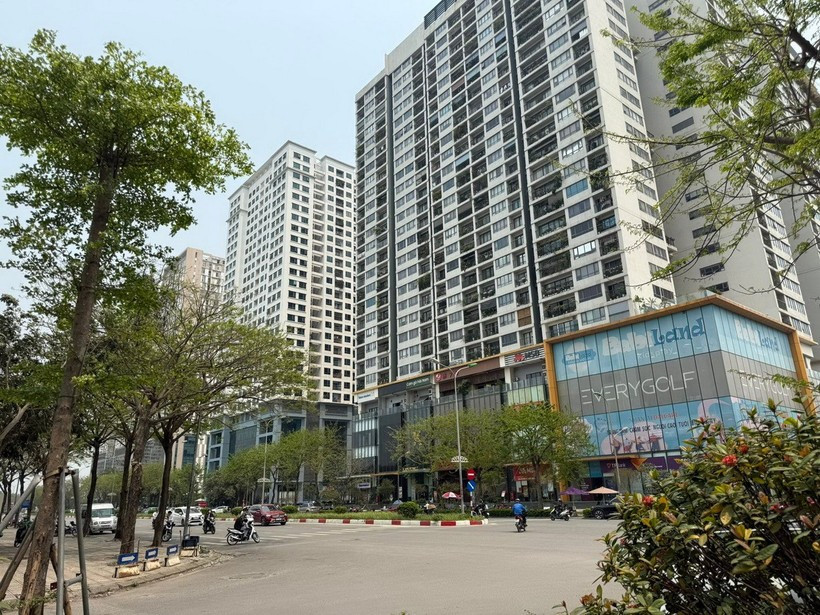
Vietnam’s per capita housing floor area now averages 27 square metres. (Photo: VNA)

Hanoi (VNA) - Over the past four decades of Doi Moi (Renewal), Vietnam has made a significant shift in housing policy, transitioning from a centrally planned, subsidised system to a dynamic, market-oriented real estate sector.

During this transformation, the State has remained a guiding force, with robust social housing policies to ensure low-income and vulnerable groups can access stable, affordable houses.

From subsidy to market

Since economic reforms began in 1986, especially from the 1990s onward, Vietnam has increasingly opened its housing market to private investment. The old system of State-allocated housing gave way to market-driven buying and selling, with commercial apartments, terraced houses, and villas emerging nationwide. This has mobilised large amounts of capital into construction and real estate, fuelling economic growth.

However, speculative activity also drove prices beyond the reach of many, highlighting the limitations of a purely market-driven approach. In response, the Government implemented a comprehensive social housing policy in the early 2000s, positioning housing security as a core component of social welfare and equity.

Social housing projects, often developed through public-private partnerships, are rented or sold below market rates, supported by preferential credit packages from the Vietnam Bank for Social Policies and commercial banks. These packages offer low interest rates and extended repayment periods, easing the financial burden on low-income buyers.

To attract private developers, authorities have introduced land use incentives, tax exemptions, and reduced input costs for social housing projects. This support enables lower home prices for end-users.

Prime Minister Pham Minh Chinh has consistently called for accelerated social housing development, especially in industrial and export-processing zones. The real estate market must serve both commercial and social needs, he stated, urging all levels of government to treat social housing as a shared responsibility and political priority.

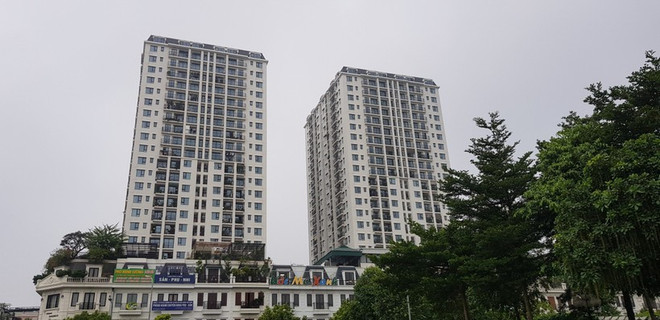
The Government has set a target of delivering at least 100,000 social housing units by the end of 2025. Authorities are directed to allocate land, recover delayed projects, and enhance investment incentives to meet this goal.

The State as market regulator

Despite operating in a market context, the social housing segment remains under State regulation to ensure equitable outcomes. The Government oversees planning, permits, pricing, and quality standards, supported by national housing programmes and development funds.
housing.jpg
The Government has set a target of delivering at least 100,000 social housing units by the end of 2025. (Photo: VNA)

Vietnam’s per capita housing floor area now averages 27 square metres. Major cities like Hanoi, Ho Chi Minh City, Da Nang, and Hai Phong have seen the completion of many social housing projects. Hundreds of thousands of households, especially low-income workers, have secured affordable, stable homes, often with concessional loans enabling home ownership.

As of the end of July, 59.6% of the goal of the project to build 1 million social housing units had been achieved. Of 692 ongoing projects, with a total of 633,559 units, 146 were completed, supplying 103,717 units, 124 projects with 111,622 units are under construction, and 422 with 418,220 units are approved.

Challenges remain, especially mismatches between demand and supply. High land costs, limited land availability, and complex administrative procedures continue to hamper progress. Soaring commercial property prices also impact middle-income earners.

To address this, authorities are prioritising land allocation in urban and industrial zones and streamlining administrative procedures. Developers seek faster approvals, easier land clearance, and better credit access, while citizens want quality, well-located housing with adequate infrastructure.

The Ministry of Construction plays a key role in translating policies into legislation and overseeing implementation. It has submitted the amended Housing Law, a new decree on social housing, and national development programmes. The Ministry also monitors project compliance nationwide and urges coordinated efforts across government levels and the private sector.

Deputy Minister of Construction Nguyen Van Sinh emphasised that social housing development is both an economic and political mission—crucial for market stability and improved living conditions amid rapid urbanisation.

Experts, including Dr Nguyen Van Dinh, a land and real estate market expert and Professor Dang Hung Vo, former Deputy Minister of Natural Resources and Environment, advocate administrative reforms, more flexible credit systems, and transparent profit-sharing in public-private partnerships to ensure sustainability. A balance between State, citizen, and business interests is essential for meaningful progress./.

VNA

See more

Visit Vietnam is designed as a unified data backbone for government authorities, businesses and travelers (Photo: Sun Group)

Launch of Visit Vietnam – breakthrough digital leap for Vietnam’s tourism industry

On December 20 in Phu Quoc special zone, Visit Vietnam was officially unveiled at the conference “Visit Vietnam – Connecting Data, Shaping the Future of Tourism”, co-organized by the National Data Association (NDA), the Vietnam National Authority of Tourism (VNAT), Sun Group – Asia’s leading tourism developer – and Visa, the world’s leading digital payments technology company.

Production activities at the Lien Ha Thai Industrial Park in Hung Yen province. (Photo: qdnd.vn)

Upgrading supporting industries in Vietnam

The capacity of Vietnam’s supporting industries directly reflects the economy’s level of autonomy. In recent years, the sector has made notable progress, yet challenges remain, particularly technological bottlenecks.

President of the Vietnam Fatherland Front (VFF) Central Committee Bui Thi Minh Hoai (L) extends Christmas greetings to Archbishop of Hanoi and Vice President of the Catholic Bishops’ Conference of Vietnam Vu Van Thien (Photo: VNA)

VFF leader extends Christmas greetings to Catholic community

Despite global uncertainties and domestic challenges in 2025, under the Party’s leadership and with the unity of the people, including religious communities, Vietnam maintained economic growth among the highest in the world, said President of the Vietnam Fatherland Front (VFF) Central Committee Bui Thi Minh Hoai.

Deputy Prime Minister Pham Thị Thanh Tra (left) presents flowers to Bac Ninh Diocese during her pre-Christmas visit on December 19. (Photo: VNA)

Deputy PM pays pre-Christmas visit to Bac Ninh Diocese

Bac Ninh Diocese is committed to encouraging Catholic followers to strictly follow the Party guidelines, State policies and laws, as well as local regulations, while working alongside authorities and people from all walks of life to build a stronger and more prosperous homeland

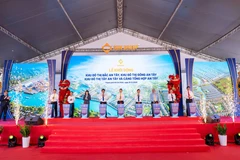
The launching ceremony of Sun Group’s 724-hectare An Tay integrated project complex (Photo: Sun Group)

Sun Group launches An Tay integrated project complex in HCM City

Spanning a total area of 724 hectares, the complex carries an investment value of 51.16 trillion VND, equivalent to approximately 2 billion USD, and comprises three modern urban areas – East An Tay, North An Tay and West An Tay – alongside the An Tay General Port.

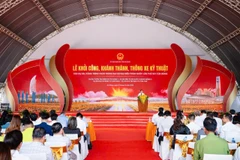
The groundbreaking, inauguration and technical opening ceremony for projects in An Giang on December 19, 2025. (Photo: Sun Group)

Phu Quoc breaks ground on nearly-342-million-USD urban light rail line

Connecting Phu Quoc International Airport with the APEC Convention Centre, the LRT project is expected not only to strengthen the island’s capacity to host APEC 2027, but also to usher in a new phase of infrastructure development and urban spatial planning for the special administrative zone.

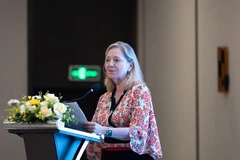
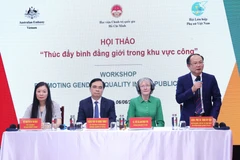
The delegates at the workshop on promoting gender equality in the public sector (Photo: VNA)

Pilot gender equality index for public sector unveiled in Hanoi

The event organised by the Ho Chi Minh National Academy of Politics (HCMA), in coordination with the Australian Embassy in Vietnam through the Vietnam–Australia Centre (VAC) aimed to introduce and discuss the findings of a study developing a specialised assessment tool to measure gender equality in the public sector, covering both central agencies and local authorities.

The Golden City social housing project in Long Xuyen ward, An Giang province, was handed over in July 2025. (Photo: VNA)

Vietnam exceeds social housing target, completing 102,633 units

In the coming period, the Ministry of Construction will accelerate the development of social housing for the 2026–2030 period in accordance with the Government's new resolution, aiming to achieve the goal of at least one million social housing units for low-income individuals and workers in industrial zones.

Forces relocate MK81 bomb from residential garden in Khanh Hoa (Photo: qdnd.vn)

Khanh Hoa safely disposes 150kg MK81 bomb

An over-150-kg bomb left over from war was discovered after recent historic flooding in Khanh Hoa province eroded layers of sand, exposing the ordnance on the premises of a household in Khanh Vinh commune. Upon discovery, local residents promptly reported it to local authorities and military units.

The K53 Team of the Quang Ngai provincial military command carries out search and recovery operations for the remains of fallen soldiers in Laos. (Photo: VNA)

Five sets of Vietnamese martyr remains recovered in Laos, Cambodia

The remains of five Vietnamese volunteer soldiers and experts who sacrificed their lives in Laos and Cambodia during wartime have been recovered by Team K53 of the Quang Ngai provincial Military Command after more than a month of search and recovery operations under the 2025-2026 dry-season mission.

National Assembly Vice Chairman Tran Quang Phuong presents a gift to the bishop’s office of the Can Tho Diocese during his pre-Christmas visit on December 17 (Photo: VNA)

NA Vice Chairman pays Christmas visit to Can Tho Diocese

A National Assembly delegation led by Vice Chairman Tran Quang Phuong on December 17 paid a visit and extended Christmas greetings at the bishop’s office of the Can Tho Diocese, which currently covers the Mekong Delta’s Can Tho city and Ca Mau province, with a total of 142 parishes of various sizes.