Vietnam’s pharma sector heats up with major M&A deals

PwC Vietnam forecasts a vibrant M&A market in Vietnam’s healthcare sector in 2025, driven by rising demand for high-quality medical services and a growing middle class. Pharmaceutical companies, private hospitals, and specialised medical facilities, particularly in ophthalmology and oncology, are predicted to be key targets for M&A.

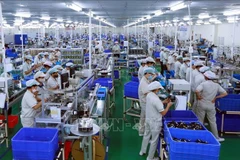
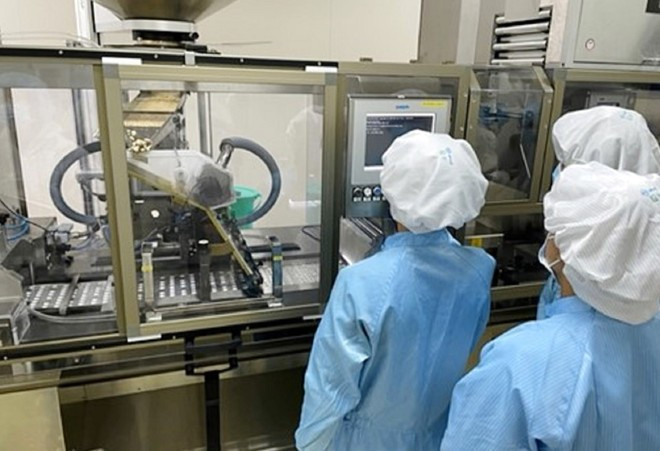
Pharmaceutical production at a company in Vietnam. (Photo: VNA)

Hanoi (VNA) – The entry of foreign strategic investors with strong financial capacity and technological advantages has helped Vietnamese pharmaceutical companies significantly enhance their competitiveness and expand export markets.

Vibrant market

PwC’s Global M&A Industry Trends: 2025 Outlook reveals that CEOs around the world are optimistic about mergers and acquisitions (M&A) in 2025. Accordingly, 81% of CEOs who have completed at least one major M&A deal in the past three years, plan to pursue one or more deals in the next three years. Notably, the healthcare and pharmaceutical sectors are actively engaging in M&A to accelerate business model transformation.

PwC Vietnam forecasts a vibrant M&A market in Vietnam’s healthcare sector in 2025, driven by rising demand for high-quality medical services and a growing middle class. Pharmaceutical companies, private hospitals, and specialised medical facilities, particularly in ophthalmology and oncology, are predicted to be key targets for M&A.

According to Partner and Transaction Services Leader at PwC Vietnam Ong Tiong Hooi, global M&A activity is on a strong recovery path, fueled by improving economic indicators and a surge in strategic deals.

This trend is also evident in Vietnam, with the rising number of M&A deals across sectors. Domestic enterprises are taking a more proactive role, leading high-value transactions, while foreign investors are showing renewed interest in the market, especially in the promising healthcare and education sectors.
a-t10.jpg
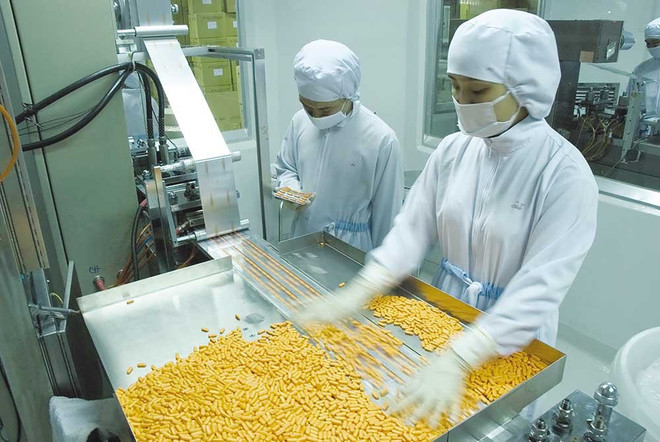
Drug production at Traphaco. (Photo: https://baodautu.vn)

Foreign buyers stepping up acquisitions

Vietnam’s healthcare and pharmaceutical sectors have recently seen an M&A boom, driven by several big deals. According to Kirin Capital – a long-term fundamental research-driven equity investor in Vietnam, healthcare was the most active sector for M&A in 2023, with 11 transactions totaling a disclosed value of 508 million USD. This made it rank third in M&A, following only the traditional frontrunners of finance and real estate. Most of the acquisitions were made by foreign investors.

Notable transactions included Thomson Medical Group’s acquisition of FV Hospital and Dongwha Pharm’s purchase of a majority stake in the Trung Son pharmacy chain.

In March, Mekong Enterprise Fund IV (MEF IV), managed by Mekong Capital, made its first foray into private healthcare by investing in TNH Hospital Group JSC, one of the leading private hospital systems in Vietnam’s northern midland and mountainous region. Chris Freund, Founder and CEO of Mekong Capital, shared that the firm had spent over a decade searching for investment opportunities in potential hospitals and that TNH was ultimately chosen for its visionary leadership.

TNH has recently attracted significant foreign investment. Singapore-based fund Blooming Earth acquired over 6.72 million TNH shares, raising its ownership to 13.74%. Earlier, Luxembourg-based Access S.A., SICAV-SIF - Asia Top Picks also purchased over 1.6 million TNH shares, increasing its stake to 8.05%.

Binh Dinh Pharmaceutical and Medical Equipment JSC has also seen growing interest from foreign investors. In mid-December 2024, KWE Beteiligungen AG of Swiss purchased an additional 79,500 DBD shares, raising its stake from 9.93% to 10.01%, making it the second-largest shareholder in the Vietnamese firm. The fund is also a major shareholder in TNH, holding a 10.5% stake.

Leading pharmaceutical producers such as Hau Giang Pharma, Domesco, Traphaco, and Pymepharco all have foreign strategic shareholders. Some have even gained controlling stakes of over 51%, with a few completing full acquisitions./.
VNA

See more

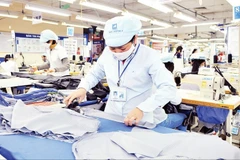
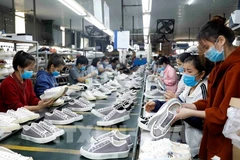
Workers at Garment 10 Corporation produce apparel for export. (Photo: Nhan Dan)

Leveraging export advantages within RCEP region

In 2025, seafood exports to China alone exceeded 2.2 billion USD, up about 33% compared to 2024. Shipments to Japan fetched nearly 1.7 billion USD, a year-on-year increase of 14.6%, while those to the Republic of Korea and Australia grew by 9.6% and 3.2%, respectively.

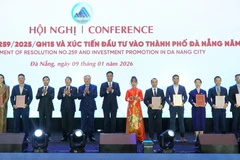
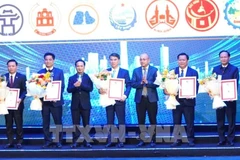
Certificates of membership in the Vietnam International Financial Centre in Da Nang are awarded at the conference on January 9. (Photo: VNA)

Da Nang continues targeted investment promotion approaches

According to Chairman of the Da Nang People’s Committee Pham Duc An, the city prioritises building sustainable economic ecosystems and focuses on key breakthrough sectors with strong spillover effects, including high technology and digital transformation, logistics, urban infrastructure, finance, processing and manufacturing industries, high-tech agriculture, and the pharmaceutical and medicinal herb industry.

In 2025, Hyundai sales reached 53,229 vehicles across the Vietnamese market. (Illustrative photo: Yonhap/VNA)

Hyundai sales in Vietnam rise almost 23% in December

In 2025, sales reached 53,229 vehicles across the market, a result considered a testament to the efforts by TC Group, Hyundai Thanh Cong, and the entire Hyundai dealership network nationwide amidst a volatile market.

Hydroponic vegetable cultivation model at the High-Tech Agricultural Park (Photo daibieunhandan.vn)

HCM City accelerates shift toward ecological urban agriculture

​The city’s agricultural sector is undergoing a strong transformation, restructuring toward higher value-added and sustainable development. In recent years, the sector has maintained steady growth, with agricultural, forestry and fisheries output rising by an estimated 2.5% annually.

Illustrative photo (Photo: VNA)

Dong Nai to launch major projects ahead of 14th National Party Congress

The launch of work on these projects represents an important political event for the province as they demonstrate the strong commitment of the entire political system to developing a comprehensive and modern infrastructure network, enhancing inter-regional connectivity, and addressing social welfare needs.

Illustrative image (Photo: VNA)

Lam Dong ready for nationwide economic census 2026

The entire process needs to reassure respondents that statistical activities operate independently, information is protected under the Statistics Law, and all data collection is completely separate from tax management.

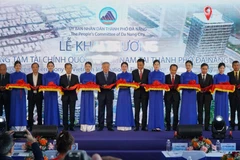
Officials cut the ribbon to inaugurate the IFC Da Nang. (Photo: VNA)

Vietnam launches International Financial Centre in Da Nang

The Government has clearly defined the development orientation of the International Financial Centre in Da Nang as a modern international financial hub closely linked with the innovation ecosystem, digital technology, and sustainable finance.

Officers of the Thanh Hai Border Guard Station (Phu Thuy ward, Lam Dong province) patrol and monitor fishing vessels entering and leaving the port. (Photo: VNA)

Lam Dong steps up oversight to curb IUU fishing

As of early January 2026, the province had 8,210 registered fishing vessels, with more than 90% holding valid fishing licences, according to the department. A total of 8,115 vessels, or 98.76%, have been updated in the National Population Database, while 1,773 out of 1,941 vessels measuring 15 metres or longer have been granted food safety certificates, accounting for 91.34%.

Prime Minister Pham Minh Chinh speaks at the national conference on accelerating public investment for 2025 and 2026 (Photo: VNA)

People’s legitimate rights, interests must never be overlooked in public investment: PM

The Prime Minister underlined that public investment has consistently been identified as a key political task, with public investment disbursement results serving as one of the criteria for evaluating officials under Party regulations. Through state spending, public investment directly boosts aggregate demand and serves as an effective tool for regulating and stabilising the macroeconomy while safeguarding major economic balances.