14th National Party Congress charts breakthrough path for Vietnam’s next development phase: Researcher

Professor Nguyen Van Phu, Research Director at France’s National Centre for Scientific Research (CNRS), assessed the Congress’s orientations as correct and timely, but stressed that success hinges on swift, consistent and substantive implementation.

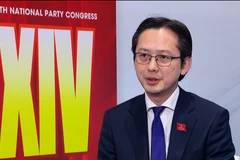
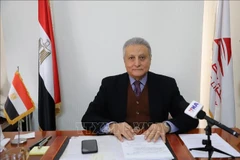
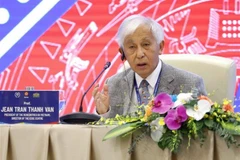
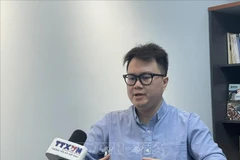
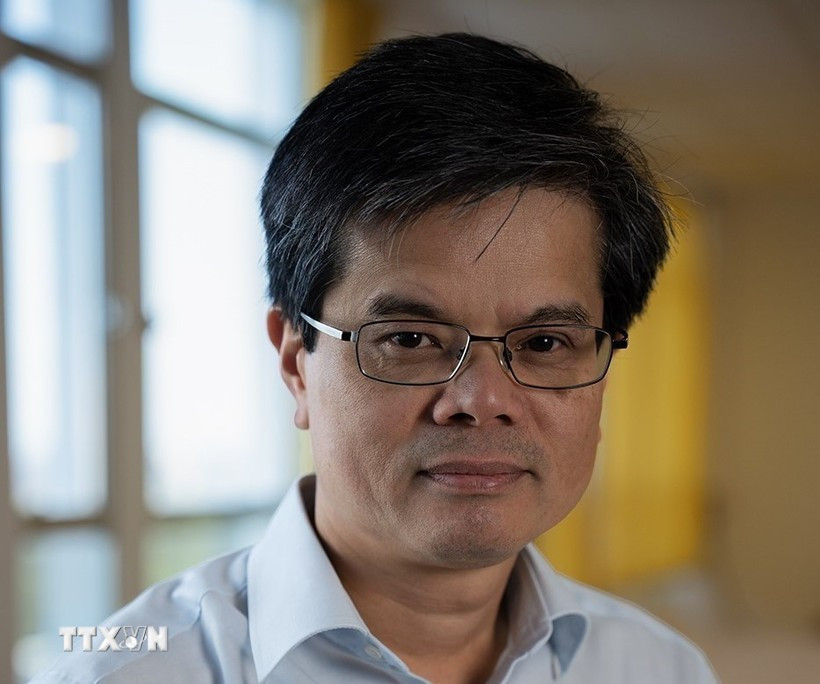
Professor Nguyen Van Phu, Research Director at France’s National Centre for Scientific Research (Photo: VNA)

Paris (VNA) - The economic orientations outlined at the 14th National Congress of the Communist Party of Vietnam mark a “major strategic shift” towards building a foundation for sustainable, high-quality growth of the country in the coming period, according to Professor Nguyen Van Phu, Research Director at France’s National Centre for Scientific Research (CNRS).

According to Prof. Phu, the core of this shift lies in renewing the growth model—moving away from dependence on low-cost labour, resource exploitation and volume-driven foreign direct investment (FDI), towards development powered by knowledge, high technology, innovation and labour productivity. The private sector is identified as the central growth engine, alongside strong investment in education, science and technology, digital transformation and a national innovation ecosystem.

He stressed that this transformation is crucial to helping Vietnam avoid the middle-income or middle-growth trap, where growth stagnates at 6–7% without qualitative breakthroughs. Without decisive productivity gains, he warned, Vietnam would struggle to consolidate long-term development foundations despite recent achievements.

While Vietnam has sustained growth of 7 - 8% and recorded disbursed FDI of 27.62 billion USD in 2025 - the highest in five years - the economy remains heavily reliant on the FDI sector, which accounts for about 70% of exports. Domestic enterprises continue to face constraints in capital, technology and governance, while regional competitors such as India, Indonesia, Thailand and Malaysia are aggressively attracting high-quality FDI into strategic sectors including semiconductors, electric vehicles, data centres and the green economy.

In this context, Prof. Phu said the 14th National Party Congress should pursue a selective, upgrading development strategy. Key priorities are drawing in FDI with solid technology transfer and ties to the “Make in Vietnam” vision, speeding up institutional reforms to cut red tape, boost transparency, and make policies more predictable, and building up top domestic companies ready to compete regionally and globally. Focus should go to strategic sectors like semiconductors, AI, biotechnology, healthcare, the digital and green economies, and high-quality agriculture.

He also highlighted the importance of attracting non-FDI financial capital through the establishment of International Financial Centre (IFC) in Ho Chi Minh City and Da Nang, under the “one centre, two destinations” model. Ho Chi Minh City will focus on banking, capital markets and financial transactions, while Da Nang will target fintech, start-ups, technology funds and green finance. The centre is expected to attract 10–15 billion USD annually by 2030, though Vietnam will face stiff competition from established hubs such as Singapore and Hong Kong (China).

Overall, Prof. Phu assessed the Congress’s orientations as correct and timely, but stressed that success hinges on swift, consistent and substantive implementation. Vietnam is no longer a low-cost option and must now compete on institutional quality, innovation and policy credibility. The year 2026 will be pivotal in determining whether the country can strengthen its role as a regional production and financial hub or risk prolonged stagnation.

On institutional reform, he welcomed the designation of the private sector as the “most important driving force” of the economy, stressing that genuine business confidence depends on substantive administrative reform, transparent procedures and fair access to land, credit and resources. Strengthening protection of property and intellectual property rights, improving access to finance and promoting innovation, especially for small and medium-sized enterprises, are also essential.

Prof. Phu underscored the need to mobilise overseas Vietnamese resources. Beyond remittances estimated at 16 billion USD in 2025, overseas Vietnamese contribute valuable expertise, management experience and global networks. He called for a shift from “mobilisation” to “substantive engagement”, underpinned by transparent institutions, non-discriminatory investment rights and targeted incentives for high-tech and green projects.

If supported by rigorous implementation and independent oversight, he concluded, these orientations could help Vietnam overcome the middle-income trap, strengthen its position in global value chains and enhance its role as a bridge linking Vietnam with Europe in economy and knowledge by 2030./.


VNA
See more

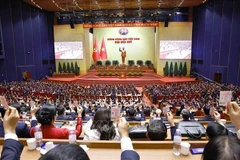
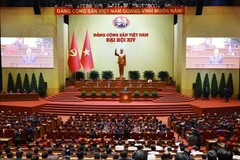
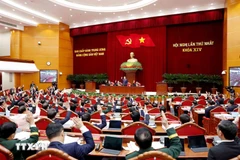
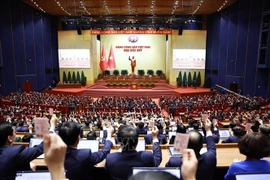
Delegates at the 14th National Party Congress vote on the list of candidates to the 14th Party Central Committee. (Photo: VNA)

14th National Party Congress: Enduring strength of people-centred path

Kyril Whittaker, a UK-based Vietnam specialist, that Vietnam’s 40-year Renewal (Doi Moi) process has succeeded thanks to three closely intertwined factors - a scientific and practical approach to reform, the Communist Party of Vietnam’s leadership role, and the principle of placing the people at the heart of all policies.

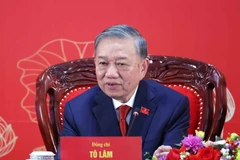
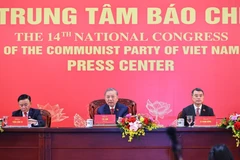
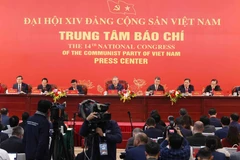
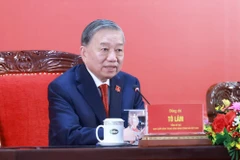
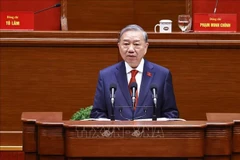
Party General Secretary To Lam speaks at an international press conference announcing the results of the 14th National Party Congress on the afternoon of January 23. (Photo: VNA)

Renewing mindset, setting development vision through 2045: Party General Secretary To Lam

The political report integrates three previously separate documents - the political report, the socio-economic report and the review of Party building - into a single, unified and comprehensive one, with clearer priorities. Designed to be concise, easy to understand, remember and implement, this integration stands out as a key hallmark of the Congress.

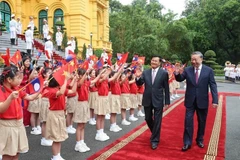
Communist Party of Vietnam General Secretary To Lam (right) and General Secretary of the Central Committee of the Lao People’s Revolutionary Party and President of Laos Thongloun Sisoulith during his visit to Vietnam on September 10, 2024 (Photo: VNA)

Top Lao leader to pay state visit to Vietnam

General Secretary of the Central Committee of the Lao People’s Revolutionary Party and President of Laos Thongloun Sisoulith and his spouse will pay a state visit to Vietnam from January 26 to 27.

The article titled “The 14th National Congress of the Communist Party of Vietnam and the Advance toward a New Era,” published on aladaainternacional.com, the website of the Latin American Center for Studies on Asia and Africa. (Photo: VNA)

14th National Party Congress: Vietnam’s strategic shift in new era

Vietnam now stands at the threshold of a new development era, driven by strong aspirations and substantial potential. The 14th Party Congress is, therefore, of decisive importance for the country’s future transformations, particularly amid an international environment marked by uncertainty and volatility. While this phase may be among the most complex of the renewal process, it also presents a critical opportunity for Vietnam to break through and evolve from an “Asian tiger” into a regional “dragon.”

☕ Afternoon briefing on January 23

☕ Afternoon briefing on January 23

General Secretary of the 13th Party Central Committee To Lam re-elected as the Party chief for the 2026 – 2031 term, Vietnam's attendance at a signing ceremony for the founding charter of the Board of Peace aimed at ending the conflict in the Gaza Strip, and Fitch Ratings' upgrade of Vietnam’s senior secured long-term debt instruments to BBB- are among news highlights on January 23.

Members of the Party Central Committee vote to approve the list of candidates for election to the 14th Political Bureau. (Photo: VNA)

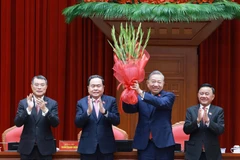
List of newly-elected members of 14th Political Bureau announced

At the closing session of the 14th National Party Congress on January 23 afternoon, Politburo member, Chairman of the National Assembly Tran Thanh Man, on behalf of the Congress’s Presidium, reported on the results of the election of the Political Bureau.

General Secretary of the All India Forward Bloc Prof. G. Devarajan (Photo: VNA)

14th Party Congress displays historic strategic vision: Indian leftist leader

General Secretary of the All India Forward Bloc (AIFB) Prof. G. Devarajan praised the 14th Party Congress for placing environmental protection on an equal footing with socio-economic development. Amid rapid industrialisation and urbanisation, he warned that growth without ecological safeguards would inflict long-term damage on both people and nature.

Enzo Sim Hong Jun, a Malaysian researcher specialising in Southeast Asian history and defence, grants an interview to the Vietnam News Agency. (Photo: VNA)

14th National Party Congress: A symbol of stability, growth aspirations

At a time when global investors place strong emphasis on stability and policy consistency, ensuring continuity in leadership and consensus following the Congress is seen as a key factor in safeguarding and advancing Vietnam’s long-term economic objectives over the next five years, said Enzo Sim Hong Jun, a Malaysian researcher specialising in Southeast Asian history and defence.