14th National Party Congress: Growth model renovation for national transformation

The 14th National Party Congress should provide clearer orientations for the development of concrete, long-term cooperation programmes, in which overseas Vietnamese entrepreneurs and experts are involved from the very early stages of policy and project design.

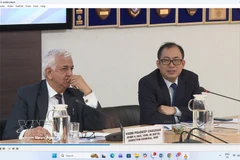
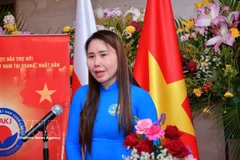
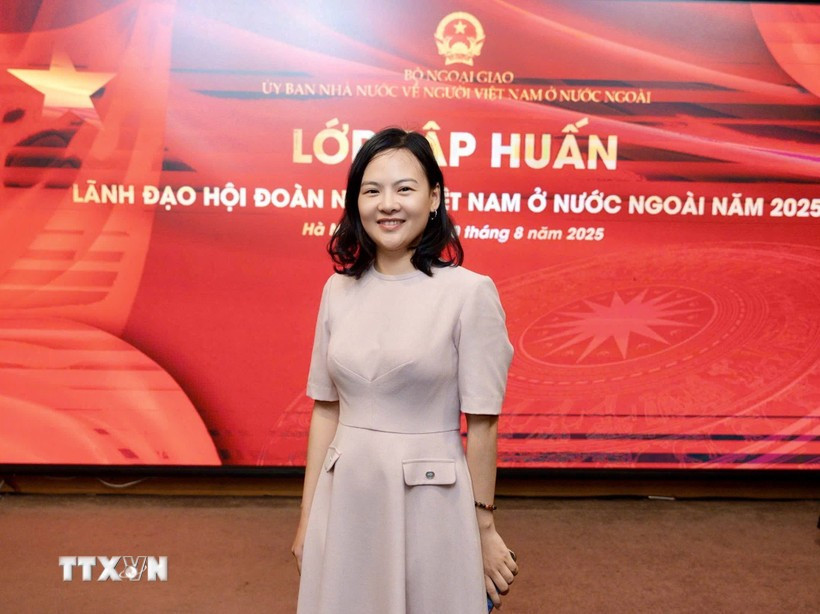
Tran Ha My, Director of the Vietnam Innovation Network in France (VINEU France) and President of the Vietnam Young Entrepreneurs Association in Europe (VYBE) (Photo: VNA)

Hanoi (VNA) – The 14th National Party Congress’s emphasis on renewing the growth model and enhancing productivity, quality and competitiveness is seen as a strategic step, as Vietnam has moved beyond a development phase largely reliant on low-cost labour and extensive investment.

The remark was made by Tran Ha My, Director of the Vietnam Innovation Network in France (VINEU France) and President of the Vietnam Young Entrepreneurs Association in Europe (VYBE).

She said that from global experience, countries and companies that stay competitive over the long term often focus heavily on science, technology, innovation, and high-value industries. Innovation hubs like Paris-Saclay in France have become new growth drivers through strong connections between the government, businesses, research centres, and universities. This approach shows that with a steady development strategy centred on knowledge, technology, and innovation, Vietnam could build new growth pillars and steadily lessen its reliance on labour-intensive sectors.

She also noted interest from French and European partners in Vietnam is clearly shifting to areas such as digital technologies, semiconductors, renewable energy, smart logistics and aerospace. This trend indicates that the orientations set out by the 14th National Party Congress are not only strategically sound but also aligned with global investment movements.

From the perspective of young entrepreneurs who are starting up, expanding their businesses, and making cross-border investments in France and Europe, My emphasised that the core issue lies not merely in incentives, but in institutional trust and the State’s capacity for long-term partnership and support.

First, the overseas Vietnamese young entrepreneur community is in great need of a stable, transparent, and long-term predictable policy environment. Unlike previous generations, many young entrepreneurs today operate in fields such as technology, innovation, digital finance, and the green economy - sectors that require long investment cycles, involve high risks, and depend heavily on the legal framework.

In practice, many Vietnamese start-ups and overseas Vietnamese technology enterprises in France in particular and Europe in general wish to relocate their research and development (R&D) centres or product testing activities to Vietnam, but remain concerned about frequent regulatory changes, especially in emerging areas such as data governance, artificial intelligence (AI), and financial technology (fintech).

Second, there is a need for truly effective one-stop mechanisms specifically designed for overseas Vietnamese businesses and investors, particularly the younger generation. In France, startup support models such as Station F and Bpifrance clearly demonstrate the State’s role in accompanying, advising, and reducing market entry costs for young enterprises. If Vietnam were to establish similar focal points that directly connect with the OV young entrepreneur community, flows of capital, knowledge, and innovative projects would be activated far more strongly.

Third, there is a need for a more open approach toward the private sector and the entrepreneurial spirit. The younger generation of entrepreneurs not only wishes to invest in Vietnam, but also aspires to participate in the policy-making process, experiment with new models, and contribute to addressing the nation’s major challenges. Recognising the private sector and granting room for experimentation, especially for young enterprises, would create strong and sustainable momentum for innovation.

According to My, establishing preferential mechanisms specifically for overseas Vietnamese young entrepreneurs such as startup support programmes, innovation-driven entrepreneurship initiatives, or co-investment funds accompanying the overseas Vietnamese community would help fully harness the entrepreneurial spirit and intellectual capital of the younger generation. Policies such as cross-border investment advisory focal points, regulatory “sandboxes” for technology enterprises (state-designed controlled testing mechanisms), or streamlined one-stop administrative procedures could help strengthen confidence and reduce market entry costs for young entrepreneurs seeking to invest in Vietnam.

She also noted that the Vietnamese community in France and Europe today enjoys a very unique advantage: a deep understanding of international business environments, research ecosystems, and global standards, coupled with a strong attachment to and desire to contribute to their homeland. Through their activities, VINEU France and VYBE frequently witness experts and entrepreneurs who are willing to share knowledge, connect partners, and even invest capital back in Vietnam, provided that appropriate mechanisms are in place.

To effectively mobilise these resources, she stressed that the 14th National Party Congress should provide clearer orientations for the development of concrete, long-term cooperation programmes, in which overseas Vietnamese entrepreneurs and experts are involved from the very early stages of policy and project design. For example, in areas such as high-tech human resource training, innovation ecosystem development, or green transition, the OV community could play a bridging role between Vietnam and leading knowledge hubs in France and Europe./.
VNA

See more

National Assembly Chairman Tran Thanh Man on January 14 presents certificates of merit from the NA Standing Committee to collectives and individuals for their outstanding performance in the legislature’s digital transformation in 2025. (Photo: VNA)

National Assembly steps up digital transformation

Immediately after the Politburo issued Resolution No. 57-NQ/TW on breakthroughs in science and technology development, innovation and national digital transformation, the Party delegation of the NA rolled out an implementation plan.

Party General Secretary To Lam (R) and outgoing Cambodian Ambassador Chea Kimtha (Photo: VNA)

Party chief hosts outgoing Cambodian ambassador

General Secretary Lam stressed that their relationship is rooted in a shared history of solidarity, close bonds and mutual sacrifice in pursuit of each country’s peace, stability and development and ASEAN’s common interests.

Prime Minister Pham Minh Chinh (standing) on January 14 chairs the sixth meeting of the National Steering Committee for the implementation of Vietnam’s commitments at the 26th United Nations Climate Change Conference of the Parties (COP26). (Photo: VNA)

Achieving net-zero emissions by 2050 is a political mission of Vietnam: PM

Bringing Vietnam to net-zero emissions by 2050 is not merely a promise but a commitment to action - a political mission of the nation and a responsibility of the entire political system, the business community, and every citizen. Therefore, all ministries, sectors, localities, businesses, and people must focus on fulfilling this mission effectively.

Ambassador Do Hung Viet (second from right( (Photo: VNA)

Communist Party USA shows confidence in Vietnam’s new development path

The documents of the upcoming 14th National Party Congress continue to reaffirm the guideline of building and defending the Fatherland under a socialist orientation amid rapid and complex international and regional developments, with particular emphasis on closely combining development with national defence, and domestic affairs with foreign affairs.

☕ Afternoon briefing on January 14

☕ Afternoon briefing on January 14

The sixth meeting of the National Steering Committee for the implementation of Vietnam’s commitments at COP26, the final review of organisational arrangements for the 14th National Party Congress, and the inauguration of the congress's press centre are among news highlights on January 14.

The press centre for the 14th National Party Congress is equpped with modern facilities, high-speed internet connectivity, more than 150 computers and a full range of technical equipment. (Photo: VNA)

Press centre for 14th National Party Congress inaugurated

So far, 597 journalists and technicians from 113 domestic media outlets, along with 79 journalists and media assistants from 43 foreign news agencies, overseas Vietnamese media, and political party publications, have registered to cover the congress, marking a significant increase compared to the 13th National Party Congress.

Politburo member and Permanent member of the Party Central Committee’s Secretariat Tran Cam Tu (front, centre) and other officials examine organisational arrangements for 14th National Party Congress on January 14. (Photo: VNA)

Final review of preparations for 14th National Party Congress

After on-site inspections and reports from relevant units on the implementation of the assigned tasks following the preliminary review on January 13 morning, Politburo member and Permanent member of the Party Central Committee’s Secretariat Tran Cam Tu commended agencies and units for their strong sense of responsibility, close coordination, and timely completion of tasks.

A delegation of the Central Military Commission pays tribute to General Le Van Dung. (Photo: VNA)

State-level funeral held for General Le Van Dung

A delegation of the Party Central Committee led by Politburo member and Standing Vice Chairman of the National Assembly Do Van Chien paid respects to General Dung and conveyed condolences to his family.

Prime Minister Pham Minh Chinh chairs meeting of National Steering Committee for International Integration. (Photo: VNA)

PM urges shift towards deeper, more effective international integration

PM Pham Minh Chinh emphasised integration serves three key goals: enhancing Vietnam’s stature, capacity, position and credibility on the global stage; strengthening strategic proactiveness in international relations; and improving the material and spiritual well-being of the people.

Ho Chi Minh City’s downtown area and the Thu Thiem Peninsula, where the International Financial Centre is being developed in Ho Chi Minh City. (Photo: VNA)

Permanent NA Vice Chairman urges renewing mindset in lawmaking

Therefore, renewing thinking in lawmaking and institutional development, he stressed, is an objective and long-term strategic requirement. This means a decisive shift from the mindset of “making laws to manage” toward “legislation that creates development,” with the focus on establishing a transparent and stable legal framework that enables effective governance, encourages innovation, liberates productive forces, and mobilises all social resources.