A “bitter” institutional remedy needed to cool down property prices

According to the Ministry of Construction’s report on property prices during the first nine months of this year, the average primary price (developer selling price) of apartments in Hanoi in the third quarter of 2025 ranged between 70 and 80 million VND per square metre, an increase of 5.6% from the first quarter and 33% year-on-year.

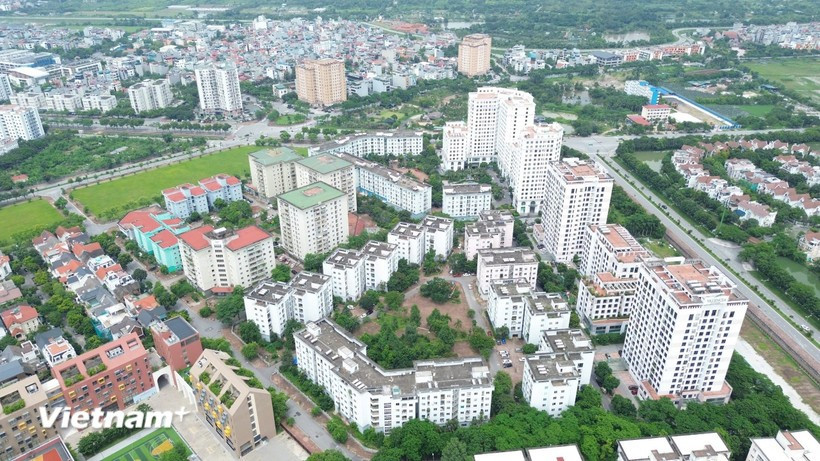
Apartment prices soar far beyond average income levels, leaving home ownership out of reach for many. (Photo: VietnamPlus)

Hanoi (VNA) - In recent years, property prices, particularly in the apartment segment, have shown no sign of slowing down, with each surge higher than the last. This relentless climb has made it nearly impossible for middle-income earners to afford a home, even after saving for decades.

Pham Thi Phuong Thao, an accountant from Hung Yen province working in Hanoi, recounted that she was offered a four-storey, 33-square-metre old house on Ngoc Thuy Street for 4.55 billion VND (129,900 USD) in early October. Within just a week, the price had jumped to 4.8 billion VND, and the property was quickly snapped up by another buyer.

With prices rising every week, owning a home in Hanoi is an unreachable dream unless you have strong financial backing, Thao said.
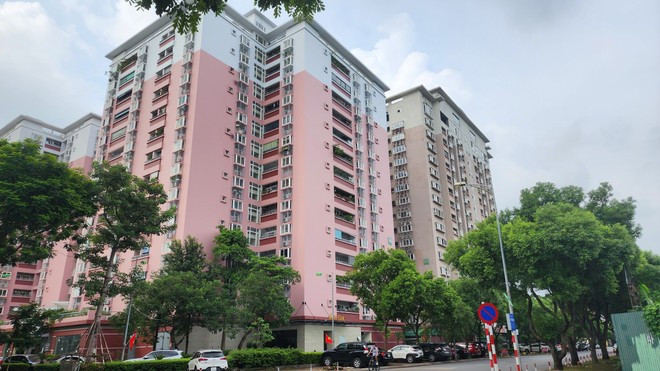
chung-cu-ha-noi.jpg
Apartment prices continue to surge month after month, year after year. (Photo: VietnamPlus)

According to the Ministry of Construction’s report on property prices during the first nine months of this year, the average primary price (developer selling price) of apartments in Hanoi in the third quarter of 2025 ranged between 70 and 80 million VND per square metre, an increase of 5.6% from the first quarter and 33% year-on-year.

Leaders of the Ministry of Construction attributed the surge to a shortage of affordable housing options, as new developments target the mid- and high-end segments. Property prices are far exceeding the affordability of middle-income urban residents. Market manipulation, hoarding, and speculation have continued to distort supply and demand, a ministry official explained.

At a meeting of the Central Steering Committee for Housing and Real Estate Market in September, Prime Minister Pham Minh Chinh instructed relevant ministries to tighten land management, pricing, and auctions, and to promptly address acts of manipulation and speculation to stabilise the property market.

The Ministry of Construction is currently seeking feedback from relevant ministries on a draft government resolution aimed at controlling and stabilising property prices, which is expected to be submitted for approval within October.

The draft proposes establishing a real estate transaction centre to ensure transparency in property dealings, alongside policies on homebuyer loans and the development of affordable commercial housing.

Nguyen Van Dinh, Vice Chairman of the Vietnam Association of Realtors (VARS), said the proposed measures were necessary and would serve as essential tools to steer the market towards sustainable growth. He noted that requiring all transactions to go through a state-managed centre will help curb manipulation and speculation while providing a transparent and legally sound database of all property transactions, prices, and histories.
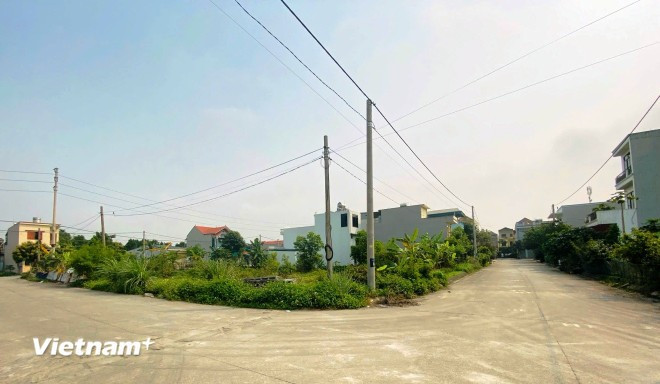
gia-dat.jpg
The market continues to witness hoarding, price inflation, and speculation, driving property prices even higher. (Photo: VietnamPlus)

According to Tong Thi Hanh, Director of the Housing and Real Estate Market Management Department under the Ministry of Construction, the root of the problem lies in institutional shortcomings. Regulatory reform is the key to addressing all bottlenecks in the market, from supply and transactions to transparency, she emphasised.

The Ministry of Construction plans to draft amendments to the Housing Law and Real Estate Business Law by 2026. The revisions will focus on core issues such as transaction conditions, real estate service business activities, and market control mechanisms to ensure a fair-minded market.

The goal is to create a clear, legal framework capable of mobilising resources and fostering a healthy, transparent market, Hanh said./.

VNA

See more

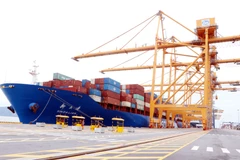
The vessel carrying the 2 millionth TEU arrives at Hai Phong Port. (Photo:VNA)

Hai Phong Port reaches 2-million-TEU milestone

Handling the 2 millionth TEU in 2025 not only demonstrates Hai Phong Port’s operational capacity and the collective efforts of its workforce, but also highlights its increasingly important role in regional and global supply chains, the confidence of shipping lines, logistics firms and the business community, and the effectiveness of policies to improve the investment climate and strengthen maritime infrastructure and services.

Melons labelled with traceability codes on display at the Song Van agricultural produce store in Ninh Binh city, Ninh Binh province. (Photo: VNA)

Tracing origins hindered by fragmented data systems

As the Government accelerates the digital economy, establishing a unified national traceability system has become a crucial move to end data fragmentation and disconnection among ministries, sectors and localities.

Hyundai unveils its new Avante Hybrid model in Seoul, the Republic of Korea, on August 13, 2020. (Photo: Yonhap/VNA)

Tax cuts poised to ignite Vietnam’s hybrid vehicle boom from 2026

Experts forecast that 2026-2030 will mark a period of strong growth for hybrid vehicles in Vietnam, a trend that will invigorate the automotive sector while supporting national objectives on emissions reduction, sustainable development and the broader transition to green mobility.

Illustrative image (Photo: VNA)

Vietnam targets 1 billion USD in banana exports

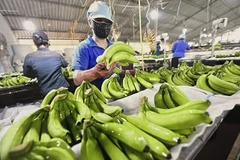
Bananas have been identified as a priority product under the Project for the Development of Key Fruit Crops to 2025, with a vision to 2030, approved in October 2022. Under the plan, banana acreage is projected to reach 165,000–175,000ha by 2030, with output of 2.6–3 million tonnes.

Deputy Minister of Foreign Affairs Nguyen Minh Hang (Photo: VNA)

Event connects Vietnamese businesses with African countries

Deputy Foreign Minister Nguyen Minh Hang held that to develop Vietnam – Africa ties more strongly and substantively, it is necessary to promote the engagement of businesses, and that the Government will create favourable conditions for them to enhance fruitful cooperation.

Deputy Prime Minister Ho Duc Phoc (R) and Independent Non-executive Chairman of AIA Mark Tucker at their meeting in Hanoi on December 12. (Photo: VNA)

AIA Group envisions long-term investment, cooperation in Vietnam

Over 25 years of operation in Vietnam, AIA has achieved positive results. Its premium revenue ranks among the top five life insurers, reaching nearly 14.83 trillion VND (563.71 million USD) in 2024 and an estimated 15.73 trillion VND in 2025, equivalent to around 10% of the market share.

A view of the 2025 Japan business roundtable in HCM City on December 12. (Photo: VNA)

Ho Chi Minh City courts Japanese investment with growth blueprint

Ha underscored the pivotal contributions of Japanese firms, which have long supported local socio-economic progress through major infrastructure projects, industrial zones and workforce training courses. To date, Japanese companies have invested more than 15 billion USD in over 2,200 projects, reflecting sustained confidence and commitment to the market.

Deputy Prime Minister Bui Thanh Son receives Kounlaphanh Vongnathy, Vice President of Phongsupthavy Group, in Hanoi on December 12, 2025. (Photo: VNA)

Lao group urged to deepen energy ties with Vietnam

Deputy Prime Minister Bui Thanh Son has commended Phongsupthavy Group as one of Laos’ leading investors supplying electricity to Vietnam, noting its pledge to ramp up power exports and actively contribute to the implementation of energy cooperation agreements endorsed by senior leaders of the two Parties and States.