AdTech – key to promoting Vietnam's mobile application industry in 2025

In 2025, Vietnam's application and gaming industry is witnessing a revolutionary transformation driven by cutting-edge advertising technology (AdTech) trends that are being rapidly adopted.

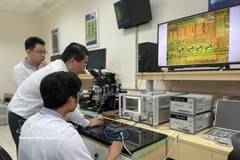
Illustrative photo
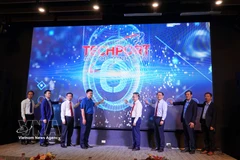
Illustrative photo

Hanoi (VNA) – The application and gaming industry in Vietnam is experiencing an incredible transformation, driven by cutting-edge advertising technology AdTech trends.

With Google’s removal of third-party cookies and Vietnam’s Data Law, businesses are increasingly looking for personalised solutions and investing in AI to maximise efficiency.

In this context, AdTech is becoming a key factor shaping Vietnam’s digital future.

Described as digital technologies and solutions that support the buying, selling, management, and optimisation of online advertising, AdTech encompasses a range of tools that help optimise ad performance, target audiences, and maximise revenue.

According to a report by We Are Social, as of January, there were 76.2 million social media users in Vietnam, accounting for 75.2% of the total population.

The growth of social media users in Vietnam is quite impressive, with an increase of 3.5 million people or 4.8% from the beginning of 2024 to the beginning of this year, making it an important advertising channel for businesses.

Localised approaches will help increase engagement rates and bring higher efficiency to digital advertising. With the Southeast Asian gaming industry expected to reach 6.39 billion USD by 2025, Vietnam is becoming an important hub in the gaming and AdTech ecosystem.

Also according to Adjust's Mobile App Trends 2025 report, the number of mobile phone users worldwide is about to reach 6 billion people, with about 18.22 billion devices.

Accordingly, the mobile application market is forecast to boom, topping 626 billion USD by 2030, corresponding to a compound annual growth rate (CAGR) of 14.3% in the 2024-2030 period.

The report also shows that in 2024, user spending on mobile apps increased by 15.7% year-on-year, while average smartphone usage time reached five hours per day.

Meanwhile, e-commerce is also shifting strongly to mobile platforms.

According to statistics, 85% of online shoppers in Southeast Asia prefer to use apps rather than websites.

According to the Digital Vietnam 2025 report by We Are Social and Meltwater, social networks continue to play an important role in brand search behaviour, with a growth rate of 3.4%, higher than search engines.

This shift is mainly driven by the rapid development of Facebook, Zalo and TikTok.

The above figures show that this is a great opportunity for the AdTech industry not only in Vietnam but also worldwide.

Outstanding AdTech trends in 2025

According to experts, AdTech is not only a supporting tool but also a driving force shaping Vietnam’s digital future.

One of the most prominent changes is the popularity of hybrid revenue growth strategies, combining in-app purchases (IAP) and in-app advertising (IAA) to maximise revenue potential.

Nana Phan, Head of Strategic Relations for Yandex Ads in Southeast Asia said that up to 72% of game developers are applying this model.

A report shows that the Return on Ad Spend (ROAS - a marketing metric that helps measure the effectiveness of a particular advertising campaign and how it affects revenue) after 90 days of mid-range Android games reached 146%, far surpassing the IAP-only (93%) or IAA-only (58%) models.

nana.jpg
Nana Phan, Head of Strategic Relations for Yandex Ads in Southeast Asia. (Photo: VietnamPlus)

Increased revenue and more user engagement allow developers to reach a wider audience, compared to just 5% from IAP users.

This approach ensures that both casual and long-time players have meaningful experiences, whether through gamified or rewarded advertising, said Nana.

She said the use of AI in AdTech is becoming increasingly indispensable. The influence of AI extends to customer interactions, with chatbots and AI-powered virtual assistants capable of providing personalised interactions in real time.

By leveraging AI and data analytics, brands can create more authentic, relevant advertising experiences for users, fostering lasting connections.

As Vietnam’s AdTech ecosystem continues to grow, it is critical to leverage cutting-edge technologies and strategic approaches.

Experts emphasise that publishers and advertisers should adopt practical solutions to stay competitive and maximise campaign performance.

thu-nguyen.jpg
Thu Nguyen, Business Development Manager of Yango Ads (Photo: VietnamPlus)

Thu Nguyen, Business Development Manager of Yango Ads, said that understanding users and analysing user behaviour will help advertisers optimise their strategies.

Thu also emphasised the indispensable use of AI-integrated tools.

Using AI-powered platforms to create ads, target precisely, and analyse performance not only helps increase efficiency but also optimizes campaign results.

She also noted that data privacy must be a top priority. As data protection regulations become increasingly stringent, ensuring compliance and prioritizing user consent during data collection is crucial to building customer trust./.


VNA

See more

Experience virtual reality technology at Nha Trang Center shopping mall (Khanh Hoa). (Photo: VNA)

Experts give ideas to build AI economy from data

Vietnam’s economic growth over past decades has largely relied on labour expansion, capital accumulation, export promotion and deep global trade integration, but as the country enters a higher development stage, this model is showing limitations.

VINASA Vice Chairwoman and Secretary General Nguyen Thi Thu Giang (right) and SEPC General Director Abhay Sinha sign the MoU on cooperation in New Delhi on March 25. (Photo: VNA)

Vietnam, India ink deal to step up IT cooperation

Under the terms of the MoU, the two sides will jointly push trade and investment in IT and services, arrange business delegations and business-to-business meetings, share market and policy information, and help companies access partnership opportunities and expand into new markets.

The Ninh Thuan 1 Nuclear Power Plant project is planned to be built in Khanh Hoa province (Photo: VNA)

Vietnam approves atomic energy development strategy, targeting civil applications

Tran Chi Thanh, Director of the Vietnam Atomic Energy Institute under the Ministry of Science and Technology, underscored that in the coming period, the institute and its affiliated units will continue promoting their strengths to promote the safe and secure application of atomic energy, contributing effectively to socio-economic development goals.

Students at FPT Ha Nam Inter-level High School practice their lessons directly by applying digital technology software (Photo: VNA)

FPT joins top 35 global AI application development service providers

The recognition reflects FPT’s end-to-end AI capabilities, spanning strategic consulting, solution design, application development, and the integration and deployment of AI systems in real-world operations. Notably, the company has developed IvyHub, an integrated agentic AI platform that enables enterprises to design, deploy and manage AI agents at scale.

The High-Frequency Systems and Microchip Laboratory at Ho Chi Minh City University of Technology, Vietnam National University, Ho Chi Minh City. (Photo: VNA)

Ho Chi Minh City sets sights on becoming semiconductor hub

A central component of the plan is expanding cooperation with global technology leaders such as AMD, NVIDIA and Qualcomm. These partnerships are expected to support technology transfer, strengthen chip design capabilities and help the city move further up global semiconductor value chains.

The modern nanotechnology research laboratory of Vietnam National University, Ho Chi Minh City. (Photo: VNA)

Resolution 57 delivers tangible outcomes from local practice

In the course of implementing this resolution, the northern province of Quang Ninh has emerged as one of the early movers in translating strategic orientations into comprehensive development models linked to innovation and digital transformation.

Delegates at the launch of the new version of Ho Chi Minh City technology exchange platform. (Photo: VNA)

Ho Chi Minh City launches upgraded technology exchange platform

The upgraded platform represents a comprehensive shift from a simple information-sharing model to a managed online technology trading system, enabling monitoring and measurement of real transaction outcomes. It is built on three pillars, namely new tradable technology products, a modern digital platform, and an improved operational model.

A Viettel 5G base station provides coverage at the April 16 Square area in Dong Hai ward, Khanh Hoa province. (Photo: VNA)

Conquering 6G networks helps Vietnamese businesses master strategic technologies

The global 6G alliance marks not only a technological milestone but also an opportunity for Vietnamese enterprises to strengthen their position on the global technology landscape. With the involvement of FPT, Viettel and VNG, Vietnam is gradually emerging as an early mover in the development and application of 6G technology.

At the Online Product Safety Summit in Hanoi on March 18. (Photo: dms.gov.vn)

Hanoi summit advances operation of ASEAN product safety portal

The Online Product Safety Summit in Hanoi on March 18 focused on practical enforcement solutions for identifying and removing non-compliant goods from online marketplaces, thereby strengthening consumer protection amid the rapid growth of e-commerce.

Illustrative image (Photo: VNA)

Resolution 57 charts directions for Vietnam’s technology ecosystem

Vietnam's sci-tech sector must evolve from a manufacturing base toward mastering technologies and ultimately developing original products independently, which requires shifting away from outsourcing and assembly models to one where domestic scientists lead in design, development and ownership of core technologies.

Party General Secretary To Lam (centre), Prime Minister Pham Minh Chinh (left), and Chairman of the Party Central Committee’s Commission for Internal Affairs Phan Dinh Trac mark the start of work on a high-tech semiconductor manufacturing plant in Hanoi on January 16, 2026. (Photo: VNA)

Resolution 57 refines technology priorities for new growth phase

The Ministry of Science and Technology is seeking feedback on a draft Prime Minister decision outlining four key categories: priority high technologies for investment, encouraged high-tech products, strategic technologies, and strategic tech products. The move is intended to capture emerging technology trends while strengthening the policy framework for high-tech development.