Ample room for Vietnamese furniture, handicraft exports to EU

Vietnamese products, particularly home and outdoor décor, handicrafts, fashion, gifts, and lifestyle goods enjoy ample growth potential in the EU market thanks to its strong purchasing power, diverse demand, and high market openness.

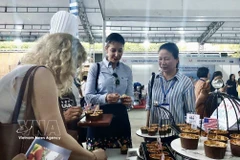
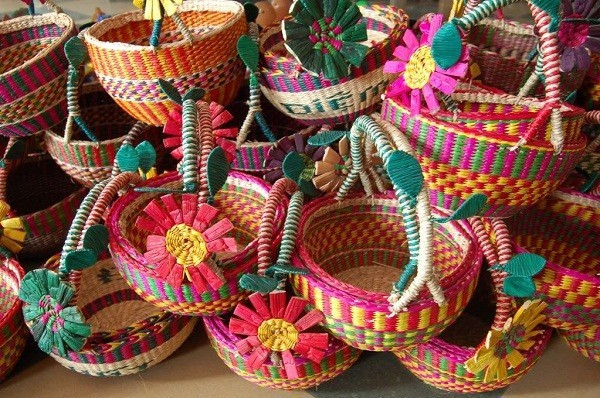
Vietnamese furniture, handicrafts see strong growth potential in EU (Photo: thoibaotaichinhvietnam.com)

Ho Chi Minh City (VNA) – The European Union (EU) market still offers significant growth opportunities for Vietnamese furniture and handicraft exports, though it requires strict compliance with supply chain traceability and sustainability standards.

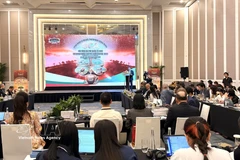
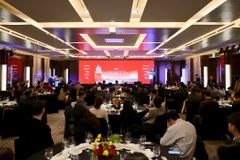
This was highlighted at a seminar on accelerating exports of contemporary lifestyle products to Europe, held on August 14 by the Ho Chi Minh City Investment and Trade Promotion Centre (ITPC), in coordination with the Vietnamese Business Association in France and the French Chamber of Commerce and Industry in Vietnam.

ITPC Deputy Director Ho Thi Quyen noted that Vietnam and France have substantial potential for strengthening economic, trade, and investment ties.

France was the first EU nation to establish a comprehensive strategic partnership with Vietnam and is its fifth-largest EU trading partner, with bilateral trade reaching 5.42 billion USD in 2024, up 12.9% year-on-year. France also ranks 16th among 147 foreign investors in Vietnam, with 700 active projects worth nearly 4 billion USD, still modest compared to potential.

The EU, especially France, is a promising export market for Vietnam, with the EU-Vietnam Free Trade Agreement (EVFTA) continuing to offer tariff advantages for Vietnamese businesses after five years of implementation.

Vietnamese products, particularly home and outdoor décor, handicrafts, fashion, gifts, and lifestyle goods enjoy ample growth potential thanks to the market’s strong purchasing power, diverse demand, and high market openness.

However, exporters face challenges including global tariff tensions, new EU sustainable product regulations (ESPR), stricter supply chain certification requirements, and high logistics costs.

To maintain competitiveness, firms should obtain certifications such as FSC, BSCI, ISO 14001, and circular material credentials; use certified or recycled wood; adopt clean production technologies; focus on creative designs for compact living spaces; and actively join trade promotion events, especially in Europe.

Lawyer Chu Lan Phuong of Ceven Law stressed the need for exporters to understand EU product safety rules (GPSR), product liability directives (PLD), and related regulations.

She advised diversifying distribution channels from retail chains and e-commerce to trade fairs and standardising product design, labeling, and intellectual property protection from the outset.

Source of Asia Market Development Director Tra Le added that Vietnamese firms should export not just products but also cultural identity. With over 60% of urban EU consumers preferring handmade over mass-produced goods, and strong demand for bamboo and rattan products, opportunities are clear. Yet competition from large-scale, low-cost producers like China and India, coupled with stringent EU requirements on chemical residues, anti-deforestation, traceability, and ESG practices, means exporters must tightly manage domestic supply chains and craft compelling brand stories to add value./.

VNA
See more

Officials visit a booth at the festival. (Photo: VNA)

Vietnam OCOP Festival 2025 opens in Hanoi

The festival functions as a space to bring together regional OCOP excellence, a forum connecting OCOP stakeholders with distributors, investors, experts and consumers, and a platform to spread pride in indigenous culture, local knowledge, and the aspiration for legitimate prosperity.

Prime Minister Pham Minh Chinh (third from right) and officials launch the Ministry of Construction’s new information technology systems at the conference on December 21. (Photo: VNA)

Modern, comprehensive infrastructure – a need for fast, sustainable development: PM

The Party and State continue to define infrastructure development as one of the three strategic breakthroughs, with priority given to building comprehensive and modern infrastructure, particularly transport facilities, technological infrastructure, and green – digital transition infrastructure, to help realise the national target of double-digit growth, the PM said.

Prime Minister Pham Minh Chinh addresses he third meeting of the National Steering Committee implementing the Politburo’s Resolution 68 in Hanoi on December 20. (Photo: VNA)

PM pushes trust, breakthroughs to accelerate private sector growth

Prime Minister Pham Minh Chinh noted that since the rollout of Resolution 68, alongside supporting resolutions from the National Assembly (NA) and Government, there has been a marked change in understanding the private sector’s critical position and role in Vietnam’s socialist-oriented market economy.

PM Pham Minh Chinh chairs the meeting (Photo: VNA)

Private sector thrives eight months after Resolution 68’s launch: PM

The private sector has shown marked progress eight months after the launch of Resolution 68, registering about 18,000 new enterprises monthly and pushing the nationwide total to nearly 1.1 million, Prime Minister Pham Minh Chinh told the third meeting of the National Steering Committee in Hanoi on December 20.

Phin Ho Tra – a national five-star OCOP product. (Illustrative photo: VNA)

Hanoi to host Vietnam OCOP Festival 2025

The festival is seen a practical activity celebrating the achievements made by the capital and the country in 2025, affirming OCOP’s role in rural economic development, contributing to realising Vietnam’s aspiration for strong economic growth in the context of deep integration.

The expanded Hoa Binh Hydropower Plant (Photo baochinhphu.vn)

EVN launches major power projects

Among the flagship projects inaugurated was the expanded Hoa Binh Hydropower Plant with a total installed capacity of 480MW per year and average annual output of about 488 million kWh.

An ultra-intensive shrimp farming model linked with environmental protection in Ca Mau province. (Photo: VNA)

Fisheries take the lead in the Mekong Delta’s green transition

Across the Mekong Delta, leading aquaculture producers, processors and exporters, along with suppliers of inputs, are transitioning to circular, high-tech and clean production models that cut greenhouse gas emissions and comply with international certification standards.

A perspective view of the Red River Landscape Boulevard project in Hanoi (Photo: VNA)

Works starts on Hanoi’s Red River Landscape Boulevard Axis project

The project is among the 234 key works and projects being launched, inaugurated or technically opened simultaneously across 34 cities and provinces nationwide to mark the 14th National Party Congress. Its launch contributes to implementing the country’s strategic development orientations while concretising Hanoi’s development goals in the new period.