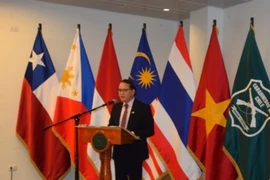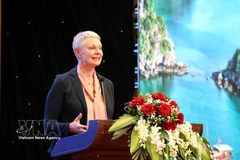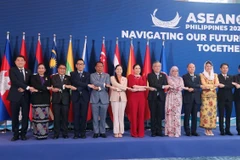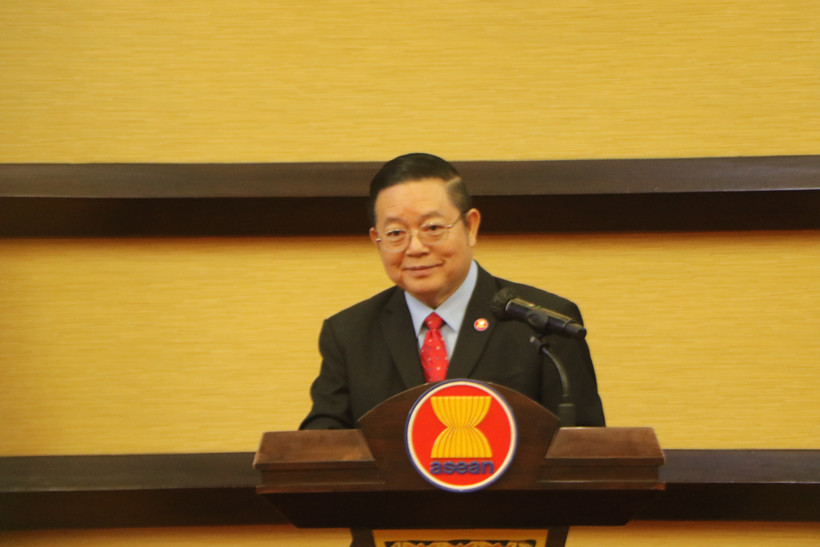
Jakarta (VNA) – ASEAN Secretary-General Kao Kim Hourn underscored the unity and cohesion within the Southeast Asian region at a press briefing held on October 30 at the ASEAN Secretariat in Jakarta, Indonesia, to announce the outcomes of the 47th ASEAN Summit and Related Summits in Kuala Lumpur, Malaysia, from October 26–28.
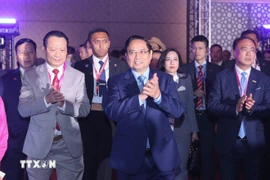
The ASEAN chief said the meetings, themed “Inclusivity and Sustainability”, concluded successfully, with 66 documents adopted and nearly 100 bilateral meetings held on the sidelines, reflecting the region’s extensive cooperation. He highlighted bilateral meetings with leaders, including Vietnamese Prime Minister Pham Minh Chinh and UN Secretary-General Antonio Guterres.
One of the summit’s key achievements was the signing of the Declaration on the Admission of Timor-Leste, officially making it the 11th member of the Association of Southeast Asian Nations (ASEAN), a realisation of “the founding fathers’ dream” of an association encompassing all Southeast Asian nations.
Another major diplomatic milestone was the signing of the “Kuala Lumpur Agreement” between Cambodia and Thailand, effectively resolving long-standing border tensions. The signing took place under the mediation of Malaysia - ASEAN Chair, and in the presence of US President Donald Trump.
On the economic front, ASEAN and China signed the Protocol to Upgrade the ASEAN–China Free Trade Area (ACFTA) 3.0, introducing new commitments on digital and green economies, supply chain connectivity, and consumer protection. The bloc also completed the Second Protocol to Amend the ASEAN Trade in Goods Agreement (ATIGA), reinforcing ASEAN’s role as a unified production base and market.
Leaders adopted the Kuala Lumpur Declaration, marking the 20th anniversary of the East Asia Summit (EAS), reaffirming ASEAN’s centrality and welcoming Timor-Leste’s first participation as a full member.
In external relations, ASEAN elevated its partnership with New Zealand to a Comprehensive Strategic Partnership (CSP), making it the bloc’s seventh such partner. Discussions with India, Japan, the Republic of Korea, the United States, and the United Nations focused on aligning the ASEAN Outlook on the Indo-Pacific (AOIP) with each partner’s regional strategy. Notably, RCEP leaders reconvened after five years, calling for the inclusion of new economies.
The Secretary-General said ASEAN leaders held candid discussions on transnational challenges, particularly online scams, and would mobilise all available mechanisms, including the ASEAN Ministerial Meeting on Transnational Crime (AMMTC) and the ASEAN Digital Ministers’ Meeting (ADGMIN), while establishing a new mechanism for prosecutors and justice ministers to tackle such issues.
He also revealed that negotiations on the ASEAN–Canada Free Trade Agreement are expected to conclude by April 2026, while feasibility studies for a potential ASEAN–Gulf Cooperation Council (GCC) FTA are underway.
At the event, the ASEAN chief also addressed additional questions on Myanmar, Timor-Leste’s membership, nuclear energy for the region, and efforts to combat transnational crime./.