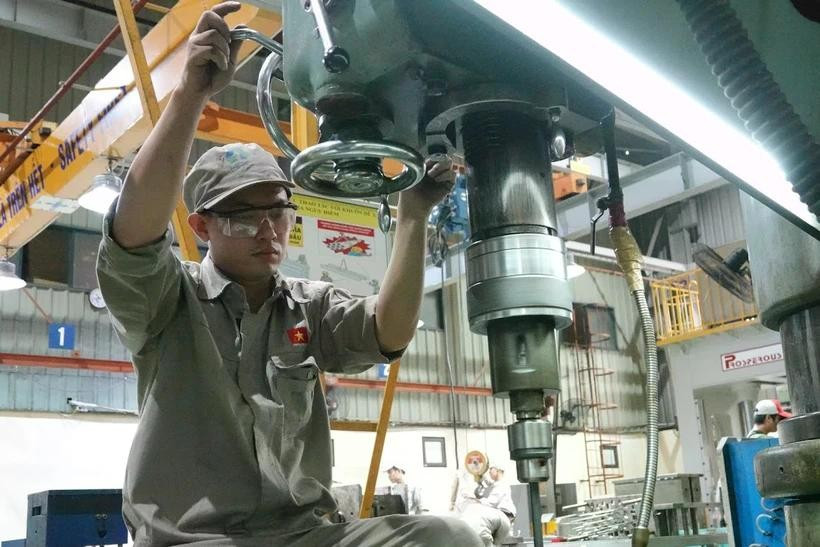
Hanoi (VNA) - Achieving "double-digit" economic growth requires significant efforts to promote industries, particularly the processing and manufacturing sectors, according to experts.
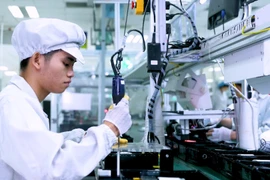
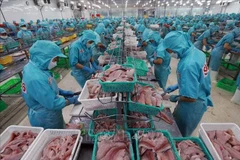
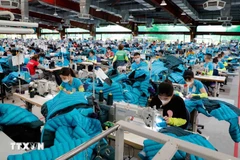
The Index of Industrial Production (IIP) in the first quarter of 2025 is estimated to increase by 7.8% compared to the same period last year, with the processing and manufacturing sector growing by 9.5%, continuing to be the main driving force of economic growth. For an economy primarily focused on export-oriented production, this result is highly commendable, especially given the challenging global market conditions.
Assigning growth targets to each locality
According to a report from the National Statistics Office, the IIP in Q1 increased in 59 out of the 63 provinces and centrally-run cities, but decreased in the remaining four. Notably, the high GRDP growth in several localities was largely driven by the growth of processing and manufacturing, which continue to be a key engine of economic growth.
Dr. Nguyen Quoc Viet, a public policy expert at the University of Economics under the Vietnam National University, Hanoi, noted that the industrial sector, especially processing and manufacturing, achieved a relatively high growth rate in Q1. Furthermore, the increase in the IIP in 59 out of the 63 localities is also a noteworthy indicator, as this is the first year that growth targets for economic growth have been assigned to each locality.
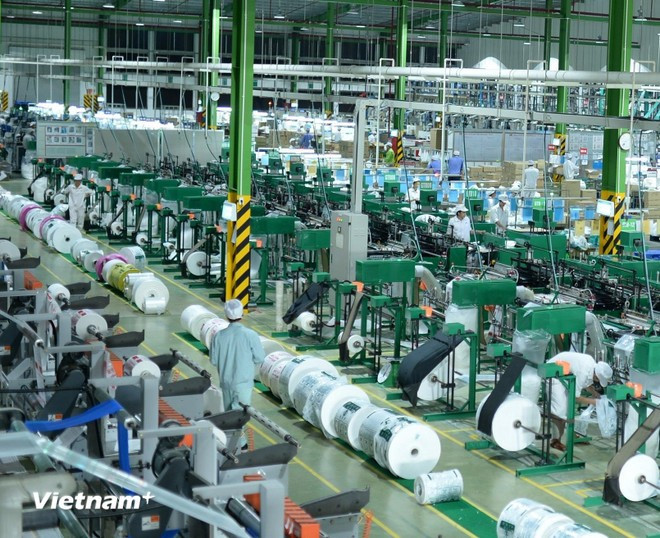
The rise is also expected to stimulate private investment, and promote job creation and income generation, thereby supporting the growth of the domestic consumption and services sectors, said Viet.
Unleashing market potential
Despite the positive results achieved in the first three months of the year, the industrial sectors still face numerous challenges and difficulties in the second quarter, including in addressing a significant amount of inventory.
Statistics show that the inventory index for the entire processing and manufacturing industry in March increased by 5.9% compared to the previous month and by 15.1% compared to the same month last year. The average inventory ratio for the processing and manufacturing sector in Q1 was 90.0%, far higher than the 68.7% recorded in Q1 2024.
To promote industrial development and contribute to the national economic growth target of at least 8% this year, the Ministry of Industry and Trade stated that it will continue to focus on effectively implementing the tasks assigned in Government Resolutions No. 01 and 02, as well as Resolution No. 25 (dated February 5, 2025). These decrees cover the allocation of industrial and trade production growth targets to each industry, sector, and locality.
Bui Huy Son, Director of the Ministry’s Department of Planning, Finance, and Enterprise Management, emphasised the importance of solutions to boosting industrial production by focusing on solving the challenges faced by key industrial and energy projects.
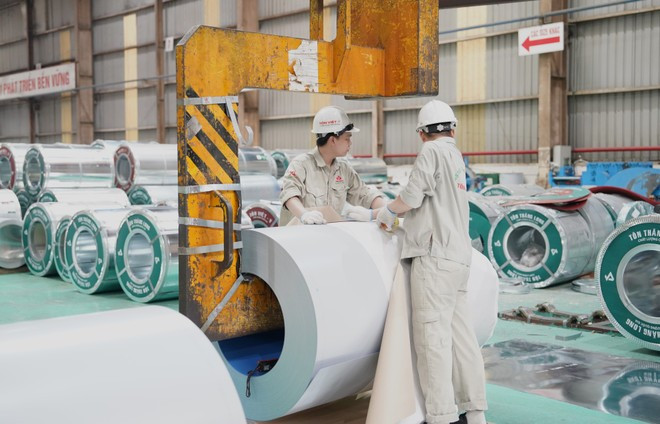
At the same time, the ministry is actively coordinating with other ministries and agencies to implement measures that encourage businesses to expand investment and attract large multinational corporations to invest in the country’s key projects.
In the context of an increasingly challenging export market due to stricter standards and the imposition of high taxes to protect domestic production in many countries, experts suggest that processing and manufacturing enterprises, particularly in mechanical engineering and supporting industries, should focus on the domestic market.
Truong Thi Chi Binh, Vice President and General Secretary of the Vietnam Association of Supporting Industries (VASI), said that according to the eighth Power Development Plan and the future Electricity Development Strategy, the country's energy supply will heavily depend on renewable energy. Therefore, it is crucial to get involved from the outset and adopt a long-term domestic localisation policy to encourage businesses, including foreign-invested ones, to boost the consumption of locally produced components and spare parts.
"If we have a strategy from the outset and a clear localisation plan, all parties will be well-prepared. With preparation, Vietnamese businesses can certainly participate in the supply chain of the renewable energy sector," Binh recommended.
To ensure the sustainable development of the industrial sector within a green, digital economy and a high-value-added circular economy, Deputy Minister of Industry and Trade Nguyen Sinh Nhat Tan said that the ministry is accelerating programmes to support industrial enterprises in their digital transformation.
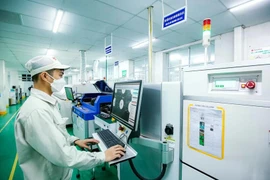
Digital transformation in production is a key factor in enhancing competitiveness. Therefore, the ministry is submitting to the government for approval of a programme to support businesses in adopting Industry 4.0 technologies through digital transformation to develop smart production. It is also focuse on policies that encourage businesses to invest in smart factories, automated production, and the application of the Internet of Things (IoT), artificial intelligence (AI), and big data to improve efficiency, added Tan./.