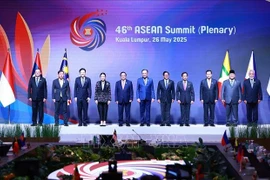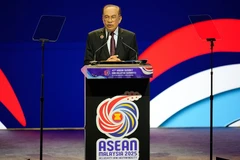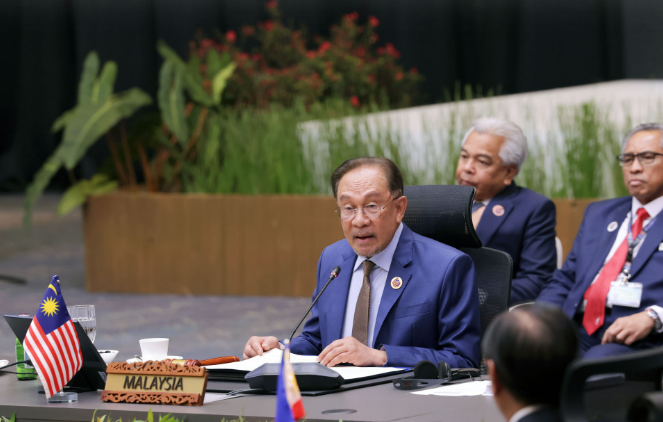
Kuala Lumpur (VNA) – The Association of Southeast Asian Nations (ASEAN)’s success in building consensus and drawing leaders' attention stands out as one of its most important achievements, according to Malaysian Prime Minister Anwar Ibrahim.
In an interview with the Vietnam News Agency (VNA)'s correspondent in Kuala Lumpur on ASEAN’s most notable achievements halfway through 2025 under Malaysia’s ASEAN Chairmanship, Anwar said regional leaders had held thorough discussions before reaching consensus on several key issues, including the US’s new tariff policy, the ASEAN power grid project, and issues related to connectivity and digitalisation.
The Gulf Cooperation Council (GCC) has expressed its intention to further strengthen cooperation with ASEAN, as Southeast Asia is currently one of the most peaceful regions with strong potential for economic development, he said.
A clear sign of ASEAN's unity and consensus is the notable increase in intra-bloc trade compared to previous years, the Malaysian leader said, expressing his hope that this momentum will be sustained next year when the Philippines assumes the ASEAN Chairmanship. He noted that the Philippines has requested Malaysia to share detailed plans so they can monitor and build upon Malaysia’s initiatives in the coming year.
The Myanmar situation remains one of the key challenges, however, ASEAN leaders’ engagement with relevant stakeholders in Myanmar marked a significant step forward in efforts to resolve the problem, the PM said.
Regarding the fight against poverty, Anwar urged ASEAN to prioritise poverty eradication, protect vulnerable communities, and make this a central pillar in the region’s development agenda./.

ASEAN Summit advances economic growth, regional connectivity, resilience: Australian scholar
Carlyle A. Thayer said that in January this year, the Press Statement after the ASEAN Foreign Ministers’ Retreat identified the following priorities set by Malaysia as ASEAN Chair for 2025: “advancing ASEAN’s collective vision of a resilient, people-centred, forward looking ASEAN Community while advancing economic growth and regional connectivity, and enhancing regional resilience.”