Indonesia promotes waste-to-energy conversion

Under the programme, the national strategic investment management agency (Danantara) will provide investment capital, while state-owned electricity utility Perusahaan Listrik Negara (PLN) will be responsible for purchasing and distributing the electricity generated.

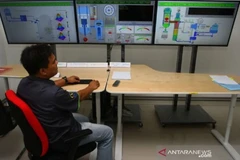
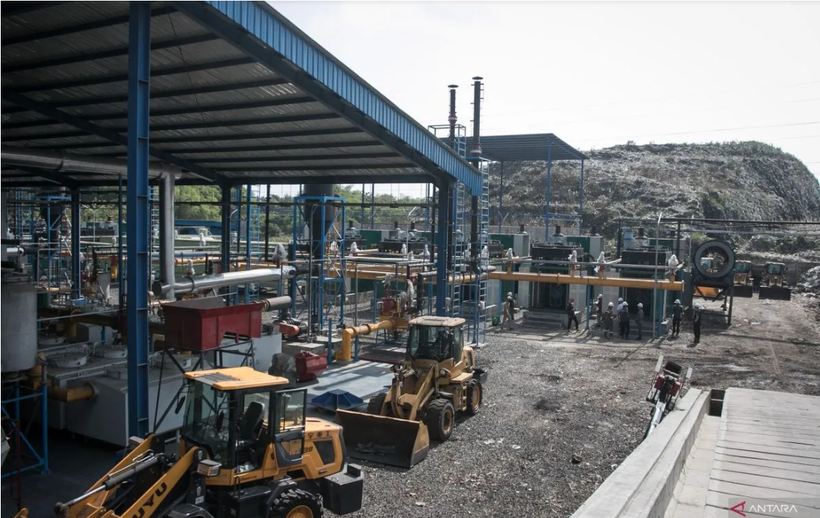
A worker inspects a waste-to-energy generator at the Putri Cempo power plant in Solo, Central Java. (Photo: ANTARA)

Jakarta (VNA) – Facing mounting pressure from the rapid growth of household waste, Indonesia is accelerating initiatives to convert waste into energy (WtE) as a key pillar of its green growth and circular economy strategy.

Under the programme, the national strategic investment management agency (Danantara) will provide investment capital, while state-owned electricity utility Perusahaan Listrik Negara (PLN) will be responsible for purchasing and distributing the electricity generated.

Indonesia generates an estimated 35–60 million tonnes of waste annually, nearly 60% of which is organic. Therefore, environmentally friendly waste management is no longer an option but a necessity. Instead of continuing landfill disposal, which causes pollution and resource waste, the government is seeking to transform organic waste into an alternative energy source to fossil fuels, while creating new economic value.

The WtE programme aims not only to address waste treatment challenges but also to establish a long-term ecosystem that integrates environmental protection with local economic development. Danantara will co-develop, co-own and co-manage WtE plants with local authorities, ensuring compliance with technical and environmental standards as well as stable access to investment capital.

However, major challenges remain, including governance issues, unclear waste treatment fees, and constraints in capital mobilisation. Danantara is expected to help bridge these gaps by ensuring a stable supply of feedstock, offering long-term contracts, and maintaining a transparent investment environment. In the initial phase, the programme will prioritise four to five locations in Jakarta before expanding to other major cities in Java and Bali, among a total of 33 urban areas participating nationwide.

According to estimates, every 1,000 tonnes of waste can generate approximately 15 MW of electricity. During the 2025–2034 period, Indonesia aims to produce a total of 453 MW of electricity from waste, with total investment estimated at 2.72 billion USD.

If implemented effectively, the programme is expected to help local governments improve economic productivity, increase budget revenues, and enhance the living environment for residents.

Converting waste into electricity is not only a solution to Indonesia’s prolonged environmental challenges, but also an opportunity to develop a modern, sustainable waste management system closely aligned with the country’s long-term green growth objectives./.
VNA

See more

Malaysia targets 32% renewable energy capacity

Malaysia targets 32% renewable energy capacity

Deputy Prime Minister Datuk Seri Fadillah Yusof, who is also the Minister of Energy Transition and Water Transformation of Malaysia, said the country had achieved 31% installed RE capacity as of December 2025.

Deputy foreign ministers and senior officials of the 11 ASEAN member states and Russia pose for a group photo. (Photo: Ministry of Foreign Affairs)

ASEAN, Russia prepare for 35th anniversary summit

Deputy Minister Dang Hoang Giang reaffirmed that ASEAN views Russia as one of its key partners contributing to regional peace, stability and development. He proposed enhancing high-level strategic exchanges, strengthening cooperation in priority areas such as cybersecurity, including the effective implementation of the Hanoi Convention, and expanding collaboration within ASEAN-led mechanisms.

Thailand ready to share experience with Vietnam in green urban development: officials

Thailand ready to share experience with Vietnam in green urban development: officials

Thailand is ready to share its experience and successful models in green urban development with Vietnam, as the two countries share many similar characteristics, including rapid urbanisation, traffic congestion, flooding, canal networks and growing demand for greener public spaces, Thai officials have said in recent interviews with the Vietnam News Agency.

KKP cuts GDP forecast, warns Thailand faces recession risk. (Photo: The Nation)

Thailand’s economy may face recession risk

In its latest report, KKP Research noted that Thailand’s vulnerability goes beyond its reliance on imported crude oil and liquefied natural gas (LNG). Disruptions to shipping routes in the Middle East could also worsen shortages of fertilisers, affecting agricultural output, as well as petrochemical feedstocks, which would impact the plastics and textile industries.

Thai Prime Minister Anutin Charnvirakul speaks before Thai Parliament in Bangkok. (Photo: Xinhua/VNA)

Thailand plans tighter, targeted fiscal 2027 budget

Thailand's fiscal 2027 budget is projected at around 3.78 trillion THB (nearly 118 billion USD), a 2% increase from the previous year, with a focus on targeted spending and cutting unnecessary expenses, according to Prime Minister Anutin Charnvirakul.

Fitch downgrades Philippines’ outlook to ‘negative’. (Illustrative photo: Reuters)

Fitch downgrades Philippines’ outlook to ‘negative’

The Outlook revision reflects rising risks to the Philippines' strong medium-term growth prospects from recent disruptions to public investment, exacerbated in the near-term by elevated exposure to the ongoing global energy shock.

The Singapore Maritime Technology & Research Roadmap is aimed at advancing the sector’s efficiency and sustainability. (Photo: businesstimes.com.sg)

Singapore unveils new roadmap to boost innovation in maritime sector

The Singapore Maritime Technology & Research Roadmap is aimed at advancing the sector’s efficiency and sustainability. It highlights priorities – including digital technologies, decarbonisation and operational integration – to boost resilience, productivity and innovation in Singapore’s maritime ecosystem. It also addresses structural issues such as manpower, land and sea space limitations.

Malaysia considers establishing strategic petroleum reserve

Malaysia considers establishing strategic petroleum reserve

Malaysia, which was previously a net exporter, has now become a net importer due to declining domestic production and rising consumption, with demand estimated at around 800,000 barrels per day compared to production of about 400,000 barrels per day.

Indonesia to halt diesel imports from July

Indonesia to halt diesel imports from July

The move is part of the Indonesian Government’s efforts to strengthen national energy independence by utilising palm oil as an alternative fuel, said Agriculture Minister Andi Amran Sulaiman.