CPTPP - Growth lever amid reciprocal tariff: Experts

The Comprehensive and Progressive Agreement for Trans-Pacific Partnership (CPTPP) is one of the first new-genereration free trade agreements (FTAs) to take effect, playing a vital role in Vietnam’s export growth, especially amid the impacts of the US’s tax policies, according to insiders.

Experts discuss at the seminar. (Photo: VNA)

Hanoi (VNA) - The Comprehensive and Progressive Agreement for Trans-Pacific Partnership (CPTPP) is one of the first new-genereration free trade agreements (FTAs) to take effect, playing a vital role in Vietnam’s export growth, especially amid the impacts of the US’s tax policies, according to insiders.

Speaking at a seminar held in Hanoi on November 5, Trinh Thi Thu Hien, Vice Director of the Import-Export Department under the Ministry of Industry and Trade, said the utilisation of CPTPP tariff preferences has made remarkable progress. Exports using CPTPP certificate of origin (C/Os) rose from 0.7 billion USD (2%) in 2019 to nearly 5 billion USD (8.8%) in 2024.

Emerging markets such as Mexico, Canada, and Peru have been standout performers. The share of exports to Mexico using CPTPP C/Os surged from 7% in 2019 to 47% in 2024, with seafood and footwear reaching 70–80%. In Canada, product groups such as suitcases, handbags, handicrafts, and seafood achieved C/O issuance rates of 40–80%.

Hien noted that while CPTPP utilisation rates remain lower than those of the EU–Vietnam (EVFTA) or UK–Vietnam (UKVFTA) FTAs, this is largely due to overlap among agreements. For example, Vietnamese exports to Japan can benefit from four different FTAs, resulting in a modest 3% use of CPTPP C/Os but an overall preferential tariff coverage of up to 50%.

Australia, one of Vietnam’s major CPTPP trade partners, has seen strong growth under the pact. According to Tran Thi Thanh My, Deputy Consul General and Head of the Vietnam Trade Office in Sydney, Vietnam’s exports to Australia rose from 3.5 billion USD in 2019 to 6.5 billion USD in 2024, up 83%.

However, she emphasised that businesses face stringent technical barriers in Australia, including food safety, quarantine, traceability, packaging standards, and fierce competition from China, Thailand, Indonesia, and India. To succeed, Vietnamese enterprises must improve product quality, enhance legal awareness, strengthen compliance with rules of origin, and increase the localisation rate of raw materials.

The US’s countervailing tax policy, she added, is accelerating the global supply chain restructuring, prompting exporters to pivot to stable FTA markets such as Australia and other CPTPP members. Despite short-term challenges, Australia remains a promising destination for Vietnamese goods because of its high purchasing power, stable demand, and CPTPP advantages.

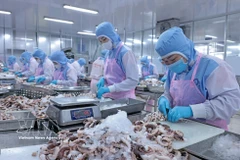
Do Thi Phuong Thao, Export Director of Lenger Vietnam Seafood Co. Ltd., described the CPTPP as a strategic opportunity to expand markets and enhance the value of Vietnamese products. For Lenger Vietnam, a leading clam processor and exporter, the agreement offers access to high-standard yet stable markets such as Japan, Canada, and Australia.

Thao noted that the company is building a closed domestic supply chain to meet origin standards, ensuring maximum tariff benefits. It is also investing in certified raw material zones and traceability systems to position “Vietnamese clams” as a sustainable and responsible brand in the global market. She stressed that rather than reacting passively to reciprocal tariffs, Lenger Vietnam views them as a catalyst to restructure and strengthen competitiveness for sustainable growth.

Hien further advised enterprises to maintain comprehensive origin documentation to avoid losing preferential tariffs during verification by importing customs authorities.

The Ministry of Industry and Trade’s Import-Export Department is finalising a new decree to replace Decree No. 31/2018/ND-CP on rules of origin for exports and imports, tightening control over origin fraud while ensuring transparency and fairness. The delegation of C/O issuance authority to localities is also being expanded to shorten processing times and facilitate exports./.

VNA
See more

From early December, major retail chains in Ho Chi Minh City have recorded a noticeable increase in shoppers seeking Tet products. (Photo: VNA)

HCM City businesses ramp up production to meet Lunar New Year demand

From early December, major retail chains in the city have recorded a noticeable increase in shoppers seeking Tet products. Many consumers are taking advantage of promotional programmes to purchase gift items with long shelf lives, such as confectionery, soft drinks and processed foods, well ahead of the holiday peak.

Workers process fish to be tinned for export at KTC Canned Food Factory under Kien Giang Trading JSC. (Photo: VNA)

Vietnam to host seminar on export growth strategies

Vietnam's exports rose 16.1% to 430.2 billion USD in the first 11 months of 2025, while total trade hit 839.8 billion USD during the same period. This strong performance shows that exports remain a key driver of economic growth, boosting Vietnam's standing on the world stage in recent years.

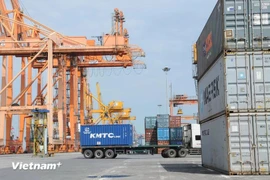
The vessel carrying the 2 millionth TEU arrives at Hai Phong Port. (Photo:VNA)

Hai Phong Port reaches 2-million-TEU milestone

Handling the 2 millionth TEU in 2025 not only demonstrates Hai Phong Port’s operational capacity and the collective efforts of its workforce, but also highlights its increasingly important role in regional and global supply chains, the confidence of shipping lines, logistics firms and the business community, and the effectiveness of policies to improve the investment climate and strengthen maritime infrastructure and services.

Melons labelled with traceability codes on display at the Song Van agricultural produce store in Ninh Binh city, Ninh Binh province. (Photo: VNA)

Tracing origins hindered by fragmented data systems

As the Government accelerates the digital economy, establishing a unified national traceability system has become a crucial move to end data fragmentation and disconnection among ministries, sectors and localities.

Hyundai unveils its new Avante Hybrid model in Seoul, the Republic of Korea, on August 13, 2020. (Photo: Yonhap/VNA)

Tax cuts poised to ignite Vietnam’s hybrid vehicle boom from 2026

Experts forecast that 2026-2030 will mark a period of strong growth for hybrid vehicles in Vietnam, a trend that will invigorate the automotive sector while supporting national objectives on emissions reduction, sustainable development and the broader transition to green mobility.

Illustrative image (Photo: VNA)

Vietnam targets 1 billion USD in banana exports

Bananas have been identified as a priority product under the Project for the Development of Key Fruit Crops to 2025, with a vision to 2030, approved in October 2022. Under the plan, banana acreage is projected to reach 165,000–175,000ha by 2030, with output of 2.6–3 million tonnes.

Deputy Minister of Foreign Affairs Nguyen Minh Hang (Photo: VNA)

Event connects Vietnamese businesses with African countries

Deputy Foreign Minister Nguyen Minh Hang held that to develop Vietnam – Africa ties more strongly and substantively, it is necessary to promote the engagement of businesses, and that the Government will create favourable conditions for them to enhance fruitful cooperation.

Deputy Prime Minister Ho Duc Phoc (R) and Independent Non-executive Chairman of AIA Mark Tucker at their meeting in Hanoi on December 12. (Photo: VNA)

AIA Group envisions long-term investment, cooperation in Vietnam

Over 25 years of operation in Vietnam, AIA has achieved positive results. Its premium revenue ranks among the top five life insurers, reaching nearly 14.83 trillion VND (563.71 million USD) in 2024 and an estimated 15.73 trillion VND in 2025, equivalent to around 10% of the market share.

A view of the 2025 Japan business roundtable in HCM City on December 12. (Photo: VNA)

Ho Chi Minh City courts Japanese investment with growth blueprint

Ha underscored the pivotal contributions of Japanese firms, which have long supported local socio-economic progress through major infrastructure projects, industrial zones and workforce training courses. To date, Japanese companies have invested more than 15 billion USD in over 2,200 projects, reflecting sustained confidence and commitment to the market.