Cross-border trade driving China-Vietnam ties

This grassroots synergy — powered by digital platforms, complementary industries and cultural affinity — has fueled a robust partnership between the two countries. China has remained Vietnam's largest trading partner for over two decades, while Vietnam is China's top trading partner within ASEAN. Bilateral trade exceeded 260 billion USD in 2024.

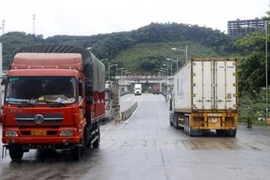
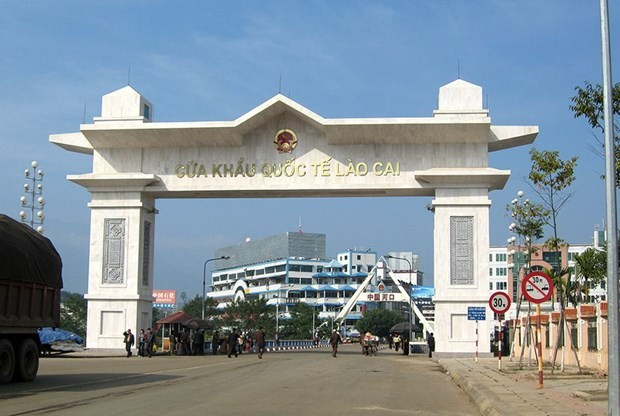
Lao Cai International Border Gate (Photo: VNA)

Beijing (VNA) - In its article titled "Cross-border trade driving China-Vietnam ties", the China Daily wrote that at dawn, Vietnamese tourists lined up at Hekou Port, the largest land port along the Yunnan section of the China-Vietnam border, drawn by more than mere sightseeing. These vibrant exchanges of goods and people are a microcosm of the ties between China and Vietnam, which have been continuously deepened by the engines of shopping, trade and tourism.

According to the article, this bustling scene is driven by Vietnam's cross-border shopping boom, propelling a wave of Chinese goods southward. This shopping frenzy is reshaping the border economy as foreign consumers increasingly flock to Chinese e-commerce platforms for Made in China products.

This offline frenzy is mirrored at the China-ASEAN (Hekou) Cross-border E-logistics Industrial Park, where over 30 livestream studios buzz with Chinese and Vietnamese sales pitches. Many Vietnamese streamers visit Chinese factories, where they showcase products live to their audiences back home. These Made-in-China goods are shipped from bonded warehouses in China and can reach Vietnam within a week.

While consumer goods flow south, Vietnamese agricultural produce heads north. Trucks constantly shuttle at Hekou, laden with Yunnan vegetables, flowers and fruit, alongside Vietnamese dragon fruit, coffee, cassava — and now, passion fruit and lychee. Vietnam's lychee season sees over 100 trucks cross daily into China via Hekou — each clearing Customs in under 10 minutes on average.

Customs statistics show that in the first half of this year, Hekou Customs processed 29,000 metric tonnes of imported Vietnamese lychees worth 160 million yuan (22.4 million USD), representing year-on-year increases of 104.7% in volume and 66.9% in value, respectively. Hekou Customs data highlighted the growing trade, with more than 200,000 tonnes of Vietnamese fruit worth 700 million yuan entering China in the first four months of 2025.

"China-Vietnam agricultural cooperation is highly complementary, with vast potential and tangible results," said Ma Zhigang, an official with China's Ministry of Agriculture and Rural Affairs. In 2024, trade between Yunnan and Vietnam reached 22.1 billion yuan, up 18.6% year-on-year. Yunnan's specialty agricultural products and machinery find robust markets in Vietnam, while Vietnamese tropical fruit and seafood delight Yunnan consumers.

Cooperation has deepened as Yunnan recently exported its first batch of 8-tonne freshwater-farmed live sturgeon to Vietnam. In Yunnan's Malipo Border Economic Cooperation Zone, near the border, Vietnamese durian, coffee beans and other raw materials are processed into high-value, freeze-dried snacks and essential oils for broader markets.

Beyond goods, people-to-people exchanges binds the nations. In 2025, more than 10,600 Vietnamese tour groups — totaling over 120,000 visitors — entered China via Hekou Port, according to official data.

This grassroots synergy — powered by digital platforms, complementary industries and cultural affinity — has fueled a robust partnership between the two countries. China has remained Vietnam's largest trading partner for over two decades, while Vietnam is China's top trading partner within ASEAN. Bilateral trade exceeded 260 billion USD in 2024./.
VNA

See more

Vietnam, RoK expand supply chain, manufacturing cooperation

Vietnam, RoK expand supply chain, manufacturing cooperation

Beyond sourcing products, RoK companies aim to build long-term partnerships with Vietnamese firms through product showcases, business-to-business (B2B) matchmaking, investment opportunities and sustainable supply chain development.

Ho Chi Minh City, GTEL partner on technology transfer for metro network

Ho Chi Minh City, GTEL partner on technology transfer for metro network

The two sides will study and localise key technologies covering signalling, communications, power supply, electromechanical systems (E&M), SCADA, operations control centres (OCC), automatic fare collection (AFC) and platform screen doors (PSD), while advancing technology transfer, workforce development and the capabilities of domestic enterprises.

Vietnamese Ambassador to Laos Nguyen Minh Tam and Lao Deputy Minister of Industry and Commerce Phouthavanh Nanthavong visit a Vietnamese booth at VIETLAO EXPO 2026. (Photo: VNA)

Vietnam-Laos trade targets 10 billion USD

Held on the sidelines of VIETLAO EXPO 2026, the seminar aimed to help businesses explore trade and investment opportunities and foster cross-border production and supply chains.

Standing Deputy Prime Minister Pham Gia Tuc chairs a meeting with representatives of US business associations and companies operating in Vietnam on July 17, 2026. (Photo: baochinhphu.vn)

Standing Deputy PM meets with US business community

Chairing a meeting with representatives of US business associations and companies operating in Vietnam, Tuc praised the US business community for its substantive contributions to Vietnam's socio-economic development as well as the two countries’ relations.

Workers assembles electronic components on the production line at the Bao Sen Co., Ltd. in Bac Ninh province. (Photo: VNA)

Vietnam's economy needs to shift from quantity to quality: ADB experts

Shantanu Chakraborty, ADB Country Director for Vietnam, noted that while achieving strong growth in a single year is encouraging, maintaining both the pace and quality of growth over many years will be essential if Vietnam is to achieve its goal of becoming a high-income country by 2045.

The Long Son Petrochemical Complex, an investment project of Thailand's SCG Group, is located in Long Son commune, Ho Chi Minh City. (Photo: VNA)

Vietnam reshapes FDI strategy with focus on technology, innovation

Politburo Resolution No. 10-NQ/TW, issued on June 8, 2026, recognises the foreign-invested sector as an important component of the national economy, signalling a major shift in the country's investment attraction strategy. Rather than prioritising labour-intensive projects, Vietnam is now seeking high-quality investments capable of driving technological progress, innovation, sustainable development and stronger participation in global value chains.

International tourists love shopping for souvenirs at Hanoi's Old Quarter night market (Photo: VNA)

Hanoi aims to raise tourists' night-time spending to 30%

Hanoi will establish and operate flagship night-time economy zones supported by preferential policies, including heritage and cultural districts in Hoan Kiem, Cua Nam, Ba Dinh, Son Tay and Soc Son; modern entertainment hubs in Tay Ho-West Lake West, My Dinh and Dong Anh; creative economy zones linked to cultural industries such as theatres, cinemas and museums; and cultural tourism and resort destinations in suburban craft villages including Bat Trang, Ba Vi and Huong Son.

Vietnamese Ambassador to Laos Nguyen Minh Tam and Lao Deputy Minister of Industry and Commerce Phouthavanh Nanthavong visit the Vietnamese pavilion at VIETLAO EXPO 2026 (Photo: VNA)

VIETLAO EXPO 2026 helps boost Vietnam-Laos strategic cohesion

The Vietnam-Laos Trade Fair 2026 (VIETLAO EXPO 2026) opened on July 16 in Vientiane, serving as a key platform for businesses from both countries to showcase products, seek partnerships, transfer technologies and expand investment cooperation.

The Vietnam-EFTA FTA is one of the longest-negotiated trade agreements in Vietnam's history. (Illustrative Photo: VNA)

Vietnam-EFTA deal set to further boost bilateral trade growth

The Vietnam-EFTA FTA is one of the longest-negotiated trade agreements in Vietnam's history, reflecting its broad scope of commitments covering trade in goods and services, investment, intellectual property, government procurement, environmental protection, sustainable development, small and medium-sized enterprises (SMEs), and other areas of cooperation.

Passengers and visitors check in at Terminal 1 of Noi Bai International Airport. (Photo: VNA)

Hanoi-Ho Chi Minh City route among world’s busiest

According to IATA’s ranking of global air passenger markets, the US remained the world’s largest market in 2025, with 890.1 million passengers, up 1.6% from 2024. China, the world’s second-largest market, recorded stronger growth of 4.8%, reaching 776.1 million passengers. China is widely forecast to overtake the US and become the world’s largest air passenger market in the 2030s.