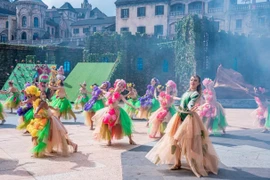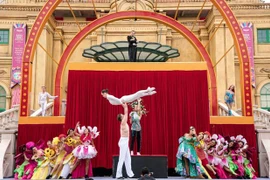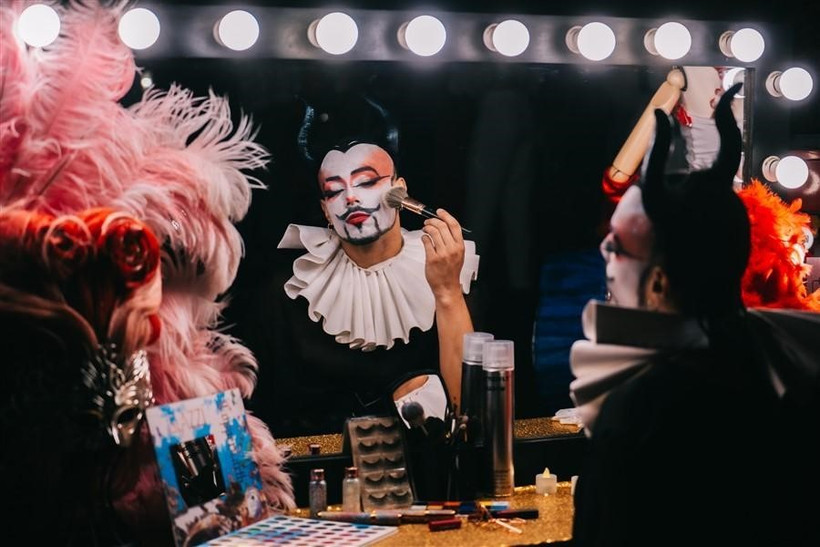
Hanoi (VNA) - As night falls over Ba Na Hills, Beer Plaza lights up with a true "artistic feast" – the mesmerising cabaret show After Glow. Dubbed a “mystery box” full of delightful surprises, the performance is a captivating blend of drama, elegance, and allure.
A dramatic storyline, dazzling fashion, and hypnotic choreography
After Glow is not just a show of spectacular lights, music, and dance – it draws in audiences with its suspenseful and theatrical narrative. Inspired by the figure of Marie Antoinette, the powerful and indulgent queen of France, the performance reimagines her story in the mystical, romantic atmosphere of Ba Na by night. Audiences are taken into the lavish world of a queen torn between luxury, passion, and palace intrigues.
The storyline is meticulously constructed, leading the audience from the splendid Kingdom of the Sun to the seductive mysteries of the night. In “After Glow”, “Lovelark the Royal Jester” – the central character of the show, acts as the red thread that weaves the entire performance together. Lovelark’s journey introduces a captivating realm where the arrival of the Black Queen, a powerful and stunning figure, brings with her graceful dances and bold swordplay. The tension rises with the emergence of the Red Queen, a symbol of instinct, rebellion, and the yearning for freedom. Their dramatic confrontation unveils a deeply emotional, psychologically rich universe that draws the audience into its spellbinding tale.
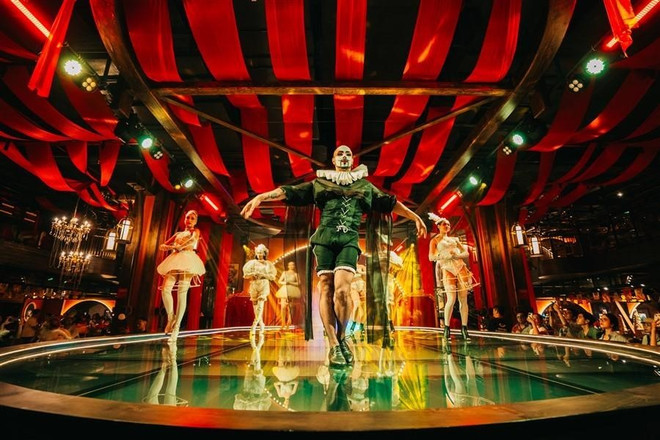
One of the show’s most dazzling elements is its meticulously designed costumes, created with striking attention to detail. Drawing inspiration from Queen Marie Antoinette, the outfits blend the opulent Rococo style of the French aristocracy with sensual Boudoir aesthetics – a bold yet fitting choice for the show’s dramatic theme and setting.
The magic of After Glow also comes from the vision of renowned director-choreographer Duc Viet, whose artistic direction, combined with the dynamic performances of a diverse, multinational, and gender-inclusive cast, brings to life dance routines that are not only sensual and magnetic but also rich in emotion – connecting deeply with the audience through every beat and movement.
Introducing cabaret to Da Nang for the first time
After Glow debuts as the very first cabaret-style performance ever staged in Da Nang. Originating in late 19th-century France, cabaret was traditionally performed in cafés and small lounges in Paris. Unlike mainstream theatre, cabaret embraces freedom, rebellion, and experimentation – allowing artists to blend music, dance, drama, and fashion in an intimate setting that encourages direct interaction with the audience.
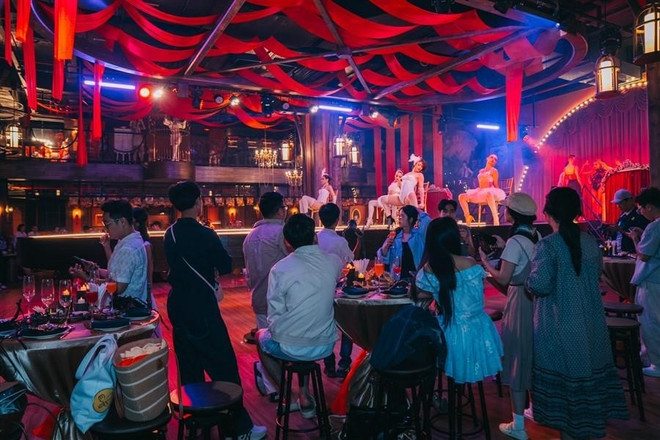
In Vietnam, cabaret remains a relatively new and unfamiliar art form. Bringing such a show to Ba Na Hills, featuring renowned Thai transgender beauty queens, a dazzling cast of drag performers, and a celebrated director, is a bold move that breathes new life into Da Nang’s nightlife scene.
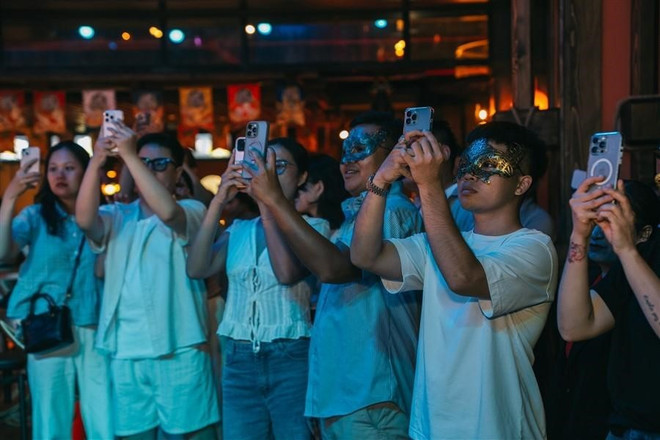
With After Glow, the cabaret tradition is reimagined in a modern setting, yet its original spirit remains intact. It’s a borderless stage where secrets, desires, and beauty collide with the audience’s emotions, waiting to be unleashed in an explosive celebration. It’s a multisensory experience where light, music, dance, and fashion come together in a passionate symphony. And above all, it’s an invitation into a world of self-exploration, where each person confronts the hidden corners of their own identity. “The storyline, the choreography, and the performers – everything was impressive. It was fiery and seductive, but also incredibly refined and thought-provoking. I never thought Vietnam could have a show like this,” said Phillip Le, a Vietnamese-American visitor.
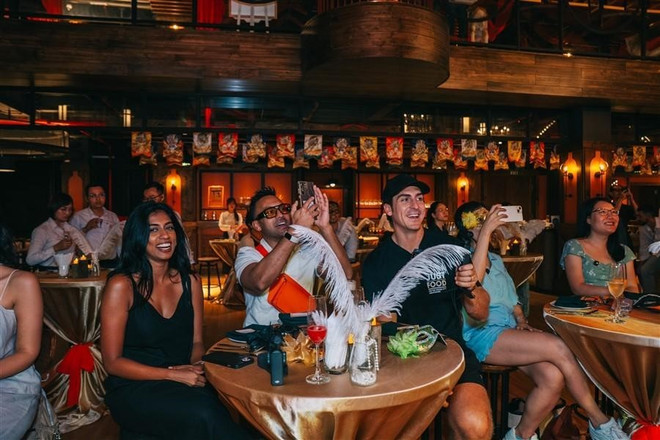
A talented, diverse cast from around the world
What makes After Glow truly stand out is its incredibly diverse and talented cast. The show brings together 15 international performers from various countries, each bringing world-class stage presence and polished technique. Notably, it features several Thai transgender beauty queens alongside a vibrant lineup of international drag artists, creating a colourful and inclusive performance that’s rarely seen on Vietnamese stages.
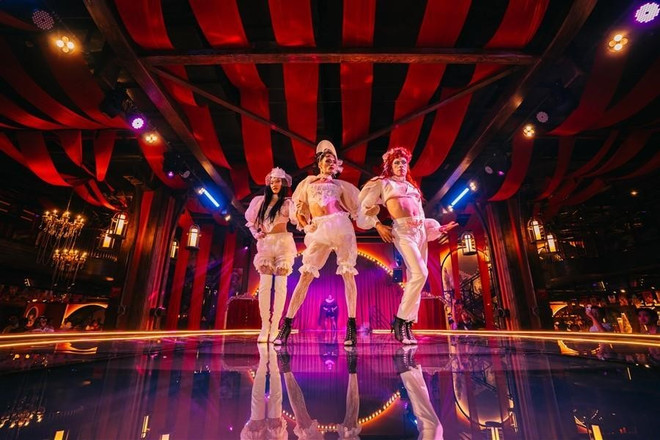
Behind the success of After Glow is visionary choreographer Duc Viet, also known by his stage name “Vit Den” (“Black Duck”). He is widely recognised for his distinctive choreography in hit productions such as the TV program “Anh trai say Hi”, Hoa Minzy’s viral music video “Bac Bling”, and the current TV program “Em xinh say Hi”. With After Glow, Duc Viet takes his signature style to a new level – bold, modern, and unapologetically free-spirited.
After Glow is performed twice daily at Beer Plaza, from 3:00 pm to 3:30 pm and 7:00 pm to 7:30 pm, except Tuesdays. Open exclusively to guests aged 18 and over, the 360-degree stage of Beer Plaza immerses audiences in a version of Ba Na Hills unlike any they’ve seen before – sensual, mysterious, and utterly magnetic. Whether it’s your first time in Da Nang or your fifth, After Glow promises to make your night unforgettable./.