Deputy PM urges faster digital transformation to reposition national tourism

Deputy Prime Minister Mai Van Chinh has instructed the Ministry of Culture, Sports and Tourism (MoCST) to coordinate with other ministries, agencies and localities to effectively implement policies and directives from the Party, Government, and Prime Minister on tourism development.

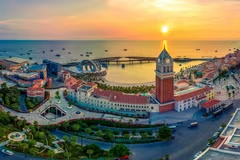
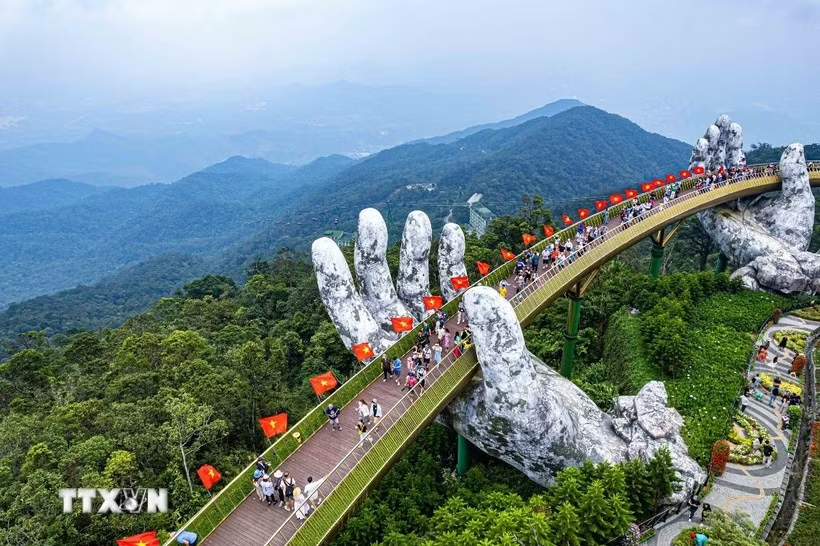
Cau Vang (Golden Bridge), a tourist magnet in the central city of Da Nang. (Photo: VNA)

Hanoi (VNA) – Deputy Prime Minister Mai Van Chinh has called for a strong push in digital transformation and the development of a smart tourism ecosystem to reposition Vietnam’s national tourism in a more professional and strategic manner.

According to a notice released by the Government Office summarising conclusions at a recent meeting of the State Steering Committee for Tourism, the Deputy PM instructed the Ministry of Culture, Sports and Tourism (MoCST) to coordinate with other ministries, agencies and localities to effectively implement policies and directives from the Party, Government, and Prime Minister on tourism development.

He emphasised the need to fundamentally shift thinking and raise awareness of tourism’s role, while clearly identifying Vietnam’s unique advantages including political stability, rich cultural and historical heritage, and diverse natural resources to build a distinct and competitive tourism identity.

The Deputy PM tasked the MoCST with expediting the implementation of key resolutions, notably Resolution 57-NQ/TW on breakthroughs in science, technology, innovation, and digital transformation; Resolution 59-NQ/TW on international integration in the new context; and Resolution 82/NQ-CP on accelerating tourism recovery and development.

Chinh stressed the importance of transitioning to smart and sustainable tourism, urging ministries and localities to restructure tourism markets, attract high-spending and long-stay visitors, enhance market research and forecasting, and train high-quality human resources.

He also directed efforts to revise and improve the 2017 Law on Tourism and relevant regulations to better align with new realities.

It’s necessary to develop a transparent and interconnected digital tourism ecosystem that helps improve destination management and enhance visitor experience.

In line with this, the Deputy PM instructed the MoCST and relevant agencies to finalise the working regulations and action plan of the State Steering Committee for Tourism by August 15.

To strengthen global promotion, the Ministry of Foreign Affairs was asked to direct Vietnamese diplomatic missions abroad to coordinate with the MoCST in organising cultural and tourism promotion events, and advise the Government on visa exemptions for more key tourism markets.

The Ministry of Industry and Trade will integrate tourism branding into its domestic and international trade promotion programmes, while the Ministry of Science and Technology will work with the MoCST to speed up digital transformation in the sector.

The Ministry of Agriculture and Environment was tasked with implementing sustainable rural and agricultural tourism programmes for the 2024–2030 period.

Other ministries will coordinate with the MoCST to review and mobilise resources, and propose mechanisms for developing tourism infrastructure, particularly in encouraging private investment in large-scale transport facilities such as airports, seaports, and tourist vehicles.

The Deputy PM urged provincial and municipal People's Committees to take proactive and effective actions, foster regional tourism linkages, promote public-private partnerships, and regularly report and make proposals on relevant issues./.

VNA
See more

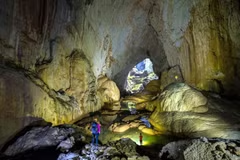
The scenery outside Phong Nha Cave in Phong Nha-Ke Bang National Park is picture-perfect. (Photo: VNA)

Quang Tri to host week-long culture and tourism festival

The opening ceremony and an art programme under the same theme will take place on November 24 at Phong Nha-Ke Bang National Park in Phong Nha commune, highlighting the UNESCO-listed natural heritage site and promoting cave exploration tours.

On October 20, every woman visiting Maison Éric Kayser Phu Quoc will receive a complimentary cookie and greeting card (Photo: Sun Group)

Pink month brings a sweet October escape to Phu Quoc’s Sunset Town

Available from October 5 through October 30, the French bakery’s Pink Month Collection 2026 introduces shades ranging from delicate blush to vibrant pink across macarons, éclairs, and flower-shaped mousse cakes. Created exclusively for October, the collection brings a seasonal flourish to the pastry counter and a fresh reason to pause amid a day of sightseeing.

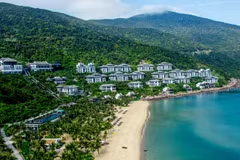
Sun Group’s resort in Da Nang tops the Asian resort category at Condé Nast Traveler’s 2026 Readers’ Choice Awards. (Photo: Sun Group)

Condé Nast Traveler names InterContinental Danang Best Resort in Asia for 2026

On October 6, Condé Nast Traveler announced its “Top 15 Resorts in Asia” list as part of the 2026 Readers’ Choice Awards. InterContinental Danang Sun Peninsula Resort ranked first with a score of 98.76, ahead of Wildflower Hall, Shimla - an Oberoi resort in India - which placed second with 98.56. The Oberoi Vindhyavilas Wildlife Resort, Bandhavgarh, took third place with 98.36.

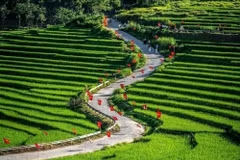
Tourists experience the buckwheat flower season on the Dong Van Karst Plateau. (Photo: VNA)

Buckwheat blossoms help extend tourism season in stone plateau

Phan Duc Nam, Chairman of the Dong Van commune People's Committee, said the locality is focusing not only on flower cultivation but also on improving landscapes, environmental sanitation and tourism services. The goal is to give visitors more reasons to stay longer and return at other times of the year.

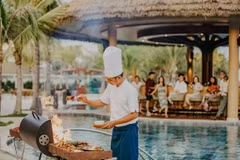
For leisure travellers, a dining venue worth experiencing can be a decisive factor in choosing a destination. (Photo: New World Phu Quoc)

From APEC to Michelin: New opportunities for Phu Quoc to extend stays, boost spending

Gwendal Poullennec, International Director of the Michelin Guide, has observed that Phu Quoc’s culinary identity is shaped by the interplay between fishing-village food culture and restaurants with an international character. This provides a foundation for the island to develop itineraries offering a variety of experiences and price points.

Pu Luong community-based ecotourism site in Thanh Hoa province attracts visitors during National Day holiday. (Photo published by VNA)

Travel firms drive tourist flows, boost tourism value

Travel companies should play a key role in directing tourist flows and linking the tourism value chain, thus enhancing the competitiveness of the tourism sector. They should go beyond selling tours to understand market demand, design products, connect services, organise tourist flows, manage risks and contribute to shaping destination images.

The picturesque scenery outside Phong Nha Cave (Phong Nha-Ke Bang National Park) (Photo published by VNA)

Vietnam steps up tourism promotion on global markets

Experts say that to turn advantages into high-value tourist arrivals, tourism promotion needs to move beyond fragmented activities towards large-scale, long-term campaigns tailored to target markets and closely linked to actual visitor experiences.

Visitors tour Hoi An Ancient Town in Da Nang city. (Photo: VNA)

Vietnam’s tourism targets 12% of GDP by 2030

Resolution 26-NQ/TW targets a direct GDP contribution of 10–12% by 2030, 45–50 million foreign arrivals, 160 million domestic visitors, and total revenue of 80–90 billion USD.

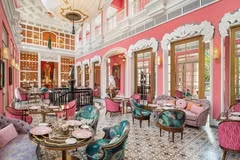
Located on Apollo Square in the heart of Sunset Town, Phu Quoc, Apollo Cafe is a distinctive venue designed by renowned architect Bill Bensley.

Coffee beneath an “upside-down” town: A surreal stop in Phu Quoc

With an entire town recreated on its ceiling, sweeping sunset views and a vantage point for watching fireworks after dark, Apollo Cafe in Phu Quoc offers more than a photogenic backdrop. Designed by Bill Bensley, the venue shows how a café can become an experience travellers deliberately build into their itinerary.