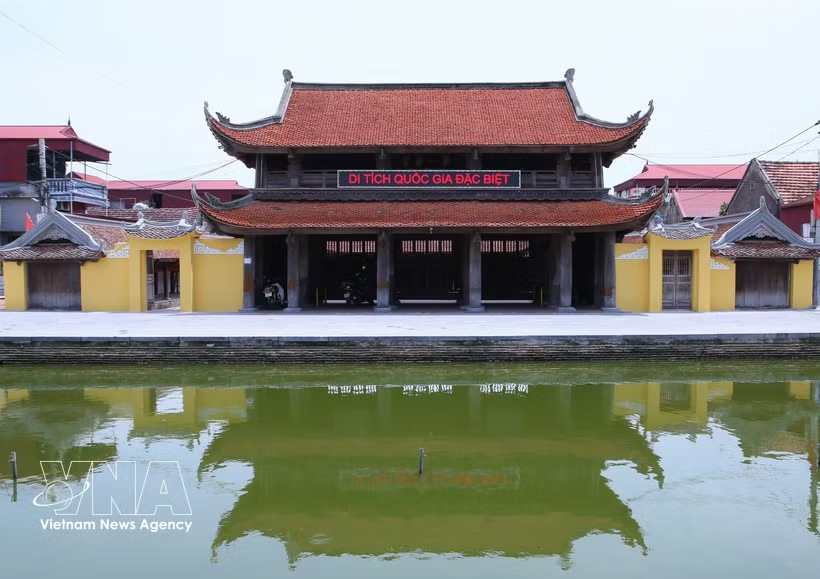
Ninh Binh (VNA) – Authorities in Xuan Hong commune of the northern province of Ninh Binh are leveraging digital technology to preserve cultural heritage and promote rural tourism, with the centuries-old Keo Hanh Thien Pagoda serving as the centrepiece of the initiative.
Keo Hanh Thien Pagoda is one of Vietnam's most significant ancient temples, renowned for its historical, architectural and cultural values. It was recognised as a Special National Relic site in 2016, while its annual festival was inscribed on the National Intangible Cultural Heritage List in 2019.
A project to digitalise the pagoda, launched in 2023, aims to build a comprehensive digital database documenting its history, architecture, cultural heritage and community traditions. The initiative preserves these values while making the heritage more accessible to the public through digital platforms.
According to architect Do Vu Loi, who leads the project, the digitalisation process is based on extensive research of historical documents, particularly Han-Nom manuscripts, combined with field surveys to comprehensively identify the site's architectural, artistic and cultural values.
The project has developed 3D digital models, digital maps and a standardised database to support conservation efforts. A key feature of VR360 virtual reality technology is that it allows visitors to explore the pagoda and its cultural spaces remotely via an online platform. The digital map has QR codes and Near Field Communication (NFC) technology, enabling users to access information about the site.
Dang Ngoc Ky, Deputy Head of the Management Board of Keo Hanh Thien Pagoda, said digital technology has significantly expanded public access to the heritage while enhancing education and cultural promotion. The pagoda's collection of Han-Nom documents is being digitalised, translated and standardised for publication on suitable digital platforms to support research, education and heritage preservation.
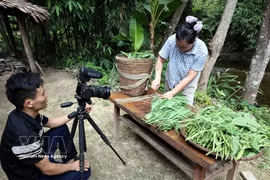
The programme has since expanded beyond the pagoda to cover the entire cultural landscape of the former Hanh Thien village, now Hamlet 9 in Xuan Hong commune. Ancient documents preserved at relic sites, in family lineages, and in local households have been collected and digitised. The project team has also recorded interviews with village elders to preserve folk knowledge and collective memories, laying the foundation for heritage conservation linked to rural tourism development.
Through the "Hanh Thien Village" website, residents and visitors can access a digital archive of local heritage sites and cultural spaces. The platform provides information on Keo Hanh Thien Pagoda, Dinh Lan Pagoda, Tam Giap Temple, the memorial house of late Party General Secretary Truong Chinh and other historic landmarks, promoting the village's cultural heritage in the digital era.
The digitalisation initiative has enhanced Hanh Thien's appeal as a tourism destination. On weekends and public holidays, increasing numbers of visitors explore the Truong Chinh Memorial House, Keo Hanh Thien Pagoda and other historical sites, creating opportunities to develop rural experiential tourism that combines heritage visits, historical learning and cultural exploration.
Tran Ngoc Anh, a visitor from Nam Dinh ward, said Hanh Thien's charm lies not only in its ancient pagoda but also in its well-preserved traditional village landscape, featuring old houses, red-brick lanes and timeworn village gates. Each visit, he said, offers a deeper appreciation of the cultural values passed down through generations.
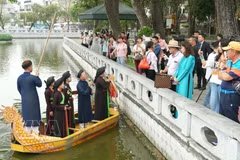
Vice Chairman of the Xuan Hong communal People's Committee, Nguyen Van Ke, said the Keo Hanh Thien Pagoda Festival vividly reflects the beliefs, customs and traditions of farming communities in Vietnam's Red River Delta. Besides serving as a valuable resource for the study of traditional rural life, the festival has become a distinctive cultural tourism product, helping promote the locality's image and attract more visitors./.