Data lays foundation for Vietnam's smart tourism ecosystem

The Ministry of Culture, Sports and Tourism has proposed a national tourism data ecosystem based on a "1+34+N" model to ensure data is accurate, complete, clean, up-to-date, standardised and shared.

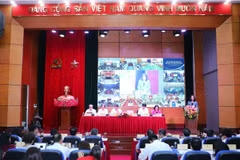
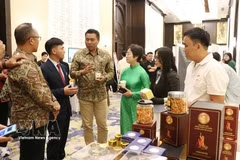
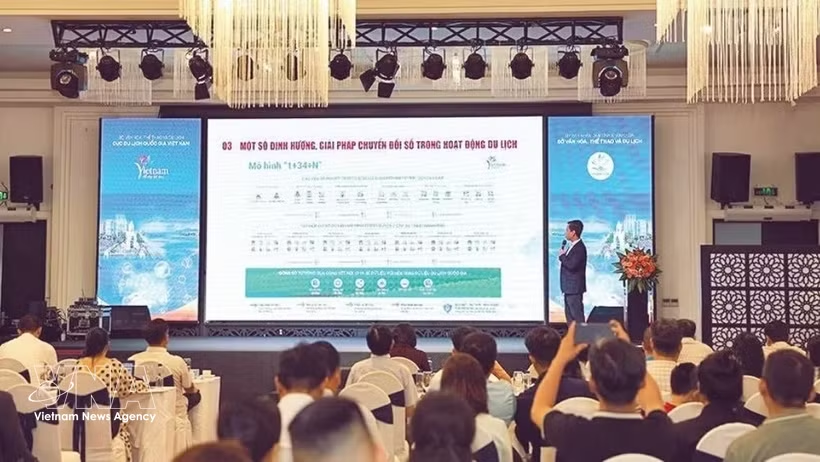
At a digital transformation implementation guidance programme in the tourism sector in July 2026. (Photo: VNA)

Hanoi (VNA) - Building an integrated and standardised database has become essential to developing a smart tourism ecosystem and supporting Vietnam's goal of making tourism a key economic sector, according to insiders.

According to the Vietnam National Authority of Tourism (VNAT), the country welcomed more than 12.2 million international visitors in the first half of 2026, up 14.8% year on year and equal to 48.8% of the annual target. Domestic holidaymakers numbered 81 million, or 54% of the year's goal, while tourism revenue totalled 569 trillion VND (21.66 billion USD), achieving 50.5% of the annual plan.

While these figures highlight strong growth in visitor numbers and market size, Vietnam continues to lag behind many destinations in average length of stay, visitor spending and repeat international arrivals. Addressing these challenges requires a unified and reliable data system to optimise destination management, monitor carrying capacity, track changing travel behaviour and improve service quality and competitiveness. Vietnam already generates vast amounts of tourism-related data through immigration, aviation, transport, accommodation, e-commerce, payment and telecommunications systems. However, these datasets remain fragmented across ministries, localities and businesses, limiting their value and practical use.

To tackle this bottleneck, the Ministry of Culture, Sports and Tourism has proposed a national tourism data ecosystem based on a "1+34+N" model to ensure data is accurate, complete, clean, up-to-date, standardised and shared.

Under the framework, "1" refers to a national tourism data platform coordinated by the ministry, "34" represents databases of Vietnam's 34 provinces and cities, while "N" covers connected ministries, agencies, businesses and other organisations contributing and enriching the system.

The ministry's central platform will integrate local databases nationwide while expanding connectivity with government agencies and the private sector to create a continuously updated nationwide data network.

According to VNAT Vice Chairman Pham Van Thuy, digital transformation in tourism is no longer simply about adopting technology but about fundamentally restructuring management, business operations and visitor experiences. Within this vision, the national tourism database will serve as the digital backbone of the country's smart tourism ecosystem.

The "1+34+N" model aims to establish digital visitor profiles to strengthen forecasting, decision-making and real-time personalised services, enabling tourism authorities to shift from experience-based management to data-driven governance. During 2026-2027, the programme will focus on integrating fragmented data from ministries, localities and businesses into a core database. From 2027 onwards, the ministry plans to complete the shared platform while issuing common data standards and mechanisms for data sharing and utilisation, in line with the Party's and State's policies on science, technology, innovation and digital transformation. Vietnam's tourism sector has already developed some shared digital platforms linking government agencies, businesses, tour guides and travellers. These include the national tourism database, tourism statistical reporting system, Tourism Management and Business platform, a tourism operations dashboard providing real-time business, booking and financial data, the Vietnam Travel national tourism app, the Vietnam Card national tourism card, an integrated multi-modal e-ticketing system and multimedia audio guide services.

Hoang Quoc Hoa, Director of the Tourism Information Centre, said that adopting these shared digital platforms allows local authorities and businesses to reduce investment and training costs while improving data connectivity, eliminating fragmented systems and creating a more consistent management framework that enhances both business efficiency and visitor experience.

Thuy stressed that interoperability is the key. If every locality develops separate, disconnected systems, resources will be wasted and the sector will fail to achieve the benefits of an integrated digital ecosystem.

The VNAT therefore advocates a model in which the central government builds the platform, local authorities implement it, businesses utilise it and visitors ultimately benefit. It also stressed the need to modernise tourism promotion through digital tools, apply artificial intelligence to personalise marketing for different target markets, expand digital skills training for local authorities and businesses, and strengthen interoperability between central and local tourism information systems./.

VNA

See more

Sun PhuQuoc Airways to expand long-haul network with eight A330s

Sun PhuQuoc Airways to expand long-haul network with eight A330s

Sun PhuQuoc Airways has finalised plans to receive eight Airbus A330 wide-body aircraft, with four expected to join its fleet in 2026 and the remaining four to be delivered during the first four months of 2027. The move marks a key step in the airline’s strategy to expand its operations and progressively connect Phu Quoc with more distant international markets.

Hoi An Ancient Town in Da Nang city is a magnet for both domestic and foreign visitors. (Photo: VNA)

More European travellers love to visit Vietnam

A recent report from Agoda has revealed that Vietnam has been ranked among the top spots as the most-searched Asian destinations by European travellers, showcasing a surge in interest among global tourists.

Participants in the working session in Can Tho on August 7 (Photo: VNA)

Can Tho steps up tourism cooperation with Korean partners

The Mekong Delta city of Can Tho and Jeonbuk province of the Republic of Korea are stepping up tourism cooperation by strengthening business links, developing tourism products and building tours and travel routes between the two localities.

Beyond admiring scenic landscapes, travellers are increasingly seeking to become preservationist of the natural environment. (Photo: VNA)

Green, responsible tourism gains ground in Vietnam

By choosing to walk, cycle or use double-decker buses and metro systems in major cities such as Hanoi and Ho Chi Minh City, travellers can reduce their carbon footprint while experiencing the authentic rhythm of urban life.

The conference brings together representatives from the Vietnamese Embassy and the Vietnam Trade Office in Thailand, the Tourism Authority of Thailand (TAT), and more than 30 businesses from the two countries. (Photo: VNA)

Can Tho promotes tourism potential in Thailand

In her speech, Minister Counsellor at the Embassy of Vietnam in Thailand Hoang Diem Hanh welcomed Can Tho's decision to choose Thailand for its tourism promotion programme, saying it offered an opportunity not only to introduce the city's attractions but also to exchange experience in developing tourism linked to preserving traditional cultural values.

Kem Beach remains one of Phu Quoc's most breathtaking coastal gems, captivating visitors from around the world. (Photo: Sun Group)

Reasons why Phu Quoc shines even during rainy season

Recently named by Expedia among the "10 Best Islands to Visit in 2026" for offering premium holidays at reasonable prices, Phu Quoc is far from being just a dry season destination. Even during the rainy months, Pearl Island offers enough experiences to fill every hour of the day, with short tropical showers rarely disrupting the journey.

A tour guide leads visitors on a tour of Bay Bon fish farm in Con Son Islet, Can Tho city. (Photo: VNA)

Experts recommend tourism workforce overhaul amid digital, green transition

Rapid technological advances and growing concerns over climate change are changing travel demand, with tourists increasingly seeking seamless digital experiences and environmentally responsible destinations. As a result, digital transformation and green transition have been identified as inevitable trends and key strategic pillars for driving the rapid and sustainable development of Vietnam's tourism industry.

Ruwan Ranasinghe, Deputy Minister of Tourism at Sri Lanka's Ministry of Foreign Affairs, Foreign Employment and Tourism, speaks at a Vietnamese tourism promotion event in Colombo on the evening of July 31, 2026. (Photo courtesy of Vietnamese Embassy in Sri Lanka)

Vietnam steps up tourism promotion ahead of direct flights to Sri Lanka

The new direct routes will not only shorten travel times between Vietnam and Sri Lanka but also provide fresh impetus for cooperation in tourism, trade, investment and people-to-people exchanges, helping to deepen the longstanding bilateral friendship in a more substantive and comprehensive manner.

Experiences in Phu Quoc made a Dubai traveler describe the destination as “far exceeded expectations.” (Photo: Fabl Belek)

What makes Dubai visitors say Phu Quoc “far exceeded expectations”?

While Phu Quoc was once primarily known for its turquoise waters, white-sand beaches, and beachfront resorts, the island is now attracting visitors with a full-day journey of experiences stretching from morning until night, rather than simply offering a traditional beach holiday.

The craft of making banh cuon Thanh Tri (Thanh Tri steamed rice rolls) has officially been recognised as part of Vietnam’s National Intangible Cultural Heritage, upholding Hanoi’s long‑standing culinary traditions (Photo: VNA)

Hanoi ranks among world's top 10 street food cities

With its rich culinary diversity, distinctive flavours and affordable prices, Hanoi's street food has long been one of the capital's signature tourism products, helping promote its image and attract an increasing number of international visitors.

International tourists enjoy boat tour in Tam Coc, Ninh Binh province. (Photo: VNA)

Red River Delta: Turning potential into tourism advantages

Vu The Binh, Chairman of the Vietnam Tourism Association (VITA), said provinces should strengthen regional cooperation by developing integrated tourism routes linking Hanoi, Quang Ninh, Hai Phong, Ninh Binh and neighbouring localities such as Hung Yen and Bac Ninh. Such cooperation would create complementary tourism products instead of isolated competition.