Economists: More measures needed to support enterprises amid COVID-19

More measures and policies should be introduced to support enterprises, especially small and medium-sized enterprises (SMEs), in the context of a growing number of businesses temporarily ceasing operations due to the COVID-19 pandemic, economists have said.
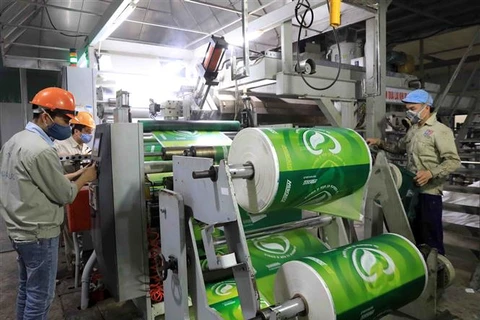
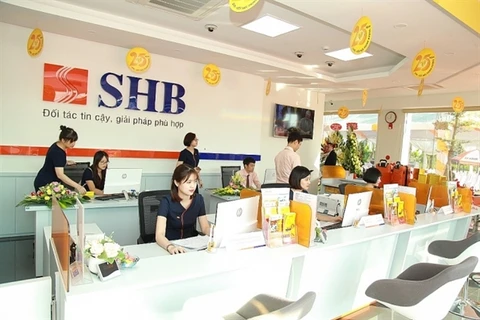
Economists: More measures needed to support enterprises amid COVID-19 ảnh 1Illustrative image (Photo: VNA)

Hanoi (VNA) - More measures and policiesshould be introduced to support enterprises, especially small and medium-sizedenterprises (SMEs), in the context of a growing number of businesses temporarily ceasing operations due to theCOVID-19 pandemic, economists have said.

Figures from the National Database on Business Registrationshow that some 6,553 enterprises withdrew from the market during March, a 55.5percent increase year-on-year. Of these, 2,452 registered to temporarilysuspend their operations, or 78.6 percent more than in the same period of 2019.

Meanwhile, nearly 12,300 new enterprises were establishedduring the month with total registered capital of over 131.3 trillion VND (over5.5 billion USD), down 1.6 percent in number and 2.5 percent in capital year-on-year.

In the first quarter of 2020, the country had 29,711 newly established enterprises, a rise of 4.4 percent year-on-year. This is one of the lowest increases in the number of Q1 newly-established businesses from 2015-2019 (the average increase is 10.9 percent).

During the three-month period, total additional capital in existing enterprises was down23.5 percent compared to the same period of 2019, revealing that enterprisesare afraid of investing more in production and business given the pandemic.

Deputy Minister of Planning and Investment Tran Quoc Phuong said the Governmentis considering issuing a raft of policies to help enterprises stabilise their productionand business activities during these difficult days, particularly measures relatingto extensions on timelines for tax payments and introducing tax reductions.

According to Phan Dinh Thuy, head of the General Statistics Office (GSO)’sIndustry Statistics Department, the GSO has proposed that priority be given to supportingSMEs and household businesses facing difficulties in securing materials forproduction.

Relevant authorities, he went on, should also adopt special policies to supportenterprises operating in agriculture, transport, and tourism, which have been mostaffected by the pandemic.

He added that credit institutions need to ensure they hold adequate capital forproduction and business, especially for seasonal sectors and those facing difficultiesregarding consumption.

Meanwhile, Nguyen Viet Phong from the GSO’s Construction and Investment CapitalDepartment stressed the importance of public investment in promoting growth in theconstruction sector.

He explained that every 1 percent of growth in public investment in the sector contributes0.06 percentage points to GDP growth.

The Government, he continued, has paid due regard to flexiblyoperating monetary policy, interest rates, and exchange rates in accordancewith domestic and international market movements, at the same time harmonizing fiscaland other macroeconomic policies to control inflation, support production andbusiness, and promote economic growth.

Most economists agree that relevant authorities need to focus on othersolutions such as increasing the ability to meet production needs, promotingthe development of the domestic market, meeting the internal demands of theeconomy, and gradually replacing imported goods with domestically-produced goods./.
VNA
See more

Ahmad Haikal Hasan, Head of the Halal Product Assurance Organising Agency (BPJPH) of Indonesia, speaks at the seminar (Photo: VNA)

Indonesia ready to cooperate with Vietnam in halal sector

Ahmad Haikal Hasan, Head of the Halal Product Assurance Organising Agency (BPJPH) of Indonesia, described Vietnam as a “potential supplier” of halal products with the capacity to play a larger role in the market, particularly in the fast-moving consumer goods (FMCG) sector. He revealed a plan to visit Vietnam next week to discuss the country’s progress in the global halal industry.

Delegates perform the opening ceremony. (Photo: VNA)

Thailand Week 2026 opens in Hanoi

The event brings together more than 100 companies, including Thai enterprises and Vietnamese importers, across about 120 booths. It features a wide range of Thai products aligned with consumer trends in Vietnam, including food and beverages, health and beauty, mother-and-baby and pet products, fashion and jewellery, household goods and tourism services.

Illustrative image (Photo: VNA)

Vietnam remains Singapore’s third-largest seafood supplier in 2025

Data released by the Accounting and Corporate Regulatory Authority of Singapore (ACRA) show that Singapore spent 125.5 million SGD (97.7 million USD) importing seafood from Vietnam last year, up 10.7% year on year, accounting for 10.3% of the city-state’s total seafood import market.

Workers assemble mobile phone components at Diem Thuy Industrial Park in the northern province of Thai Nguyen. (Photo: VNA)

Electronics exports surpass 107 billion USD in 2025

With an export turnover of 107.75 billion USD in 2025, computers, electronic products and components not only maintained their position as Vietnam’s largest export by value, but also contributed more than half of the overall increase in the country’s export turnover in 2025.

Experts said that Vietnam’s economic outlook continues to be underpinned by stable foreign direct investment inflows and public investment, which is playing an important role in driving growth. (Photo: thoibaotaichinh.vn)

Foreign investors maintain strong confidence in Vietnam’s market

Looking ahead to 2026, prospects remain bright as manufacturing, economic growth and foreign investment in Vietnam are expected to stay robust, with the country forecast to post the highest growth rate in the region this year, according to Adam Sitkoff, Executive Director of the American Chamber of Commerce (AmCham) in Vietnam.

Toy production at a Hong Kong-invested factory (Photo: VNA)

Vietnam targets deeper market penetration in Hong Kong in 2026

Vietnam-Hong Kong trade hit 62.3 billion USD in the first 11 months of 2025, soaring 73.1% annually. Vietnamese exports to Hong Kong amounted to 36.8 billion USD, a 90.6% hike, ranking fourth among Hong Kong’s import sources, while imports from Hong Kong stood at 25.5 billion USD, up 52.9% and ranking third.

Vietnam’s start-up market enters restructuring phase

Vietnam’s start-up market enters restructuring phase

In 2026, venture capital inflows into Vietnam’s start-up ecosystem are expected to recover gradually, though in a more selective manner. VinVentures forecasts that capital will focus on start-ups that have survived the rigorous screening of 2024–2025, possess clear business models, strong commercialisation capacity, and the ability to generate real cash flows.