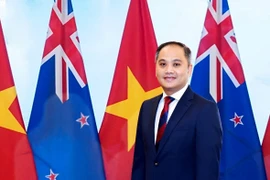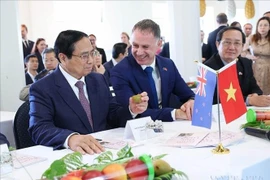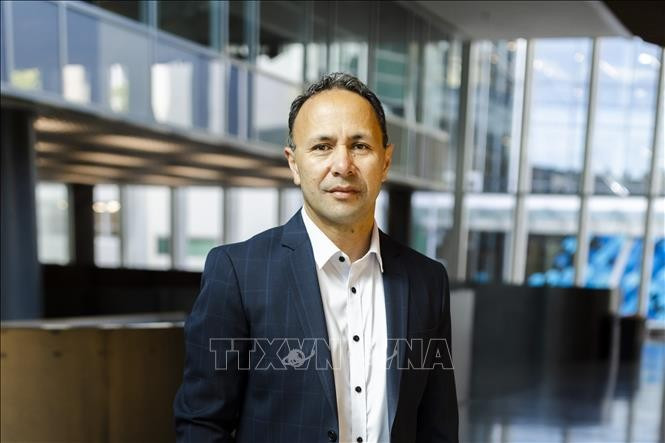
Sydney (VNA) – Education plays a vital part in contributing to the future success of the Vietnam – New Zealand partnership and their contribution to the global community, according to Prof. Damon Salesa, Vice-Chancellor of the Auckland University of Technology (AUT).
In a recent interview granted to the Vietnam News Agency on the occasion of the 50th founding anniversary of Vietnam – New Zealand diplomatic ties (June 19, 1975–2025), Salesa highlighted the closer development of the bilateral relations, saying that the relationship has grown from strength to strength.
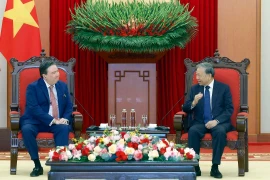
The upgrade of the two countries' relations to a Comprehensive Strategic Partnership in February 2025 during New Zealand Prime Minister Christopher Luxon’s visit to Vietnam is a major milestone and demonstrates the high level of trust, ambition, and strategic alignment between the two countries, he said.
Showing his honour to accompany the New Zealand PM on the visit, Salesa said that the upgrade reflects the deepening trust, shared values, and growing opportunities between the two nations.
He stressed that the upgraded partnership provides a stronger and more structured framework for cooperation and co-creation across all areas, opening the door for greater government support for academic and research partnerships, student exchanges, joint investments in innovation initiatives, and capacity-building efforts.
The upgrade of the bilateral relations has facilitated partnership between the two sides, especially in areas of economics, trade and investment, defence and security, education and people-to-people connections, he said, noting that there is high ambition for further growth as the two nations’ PMs set a goal of lifting trade to 3 billion USD in 2026.
According to him, the education sector, in particular, has been one of the foundations playing a vital role in deepening ties. New Zealand’s world-class universities, including AUT, have built strong collaboration with Vietnam's higher education institutions through student and staff exchange, joint research, joint programme provisions and capacity building initiatives through initially the Colombo Plan to the now Manaaki New Zealand Scholarships.
These academic connections lay the foundation for broader cooperation in critical fields going forward, underpinned by the rapid development of information technology and artificial intelligence (AI), he added.
To illustrate the importance of AUT’s long-standing relationship with Vietnam and partnerships with esteemed institutions, as part of PM Luxon's visit, an MoU was signed with Vietnam National University – Ho Chi Minh City University of Science (VNU-HCMUS) that extends a historic relationship with a new focus on research activity in computer science, AI, data science and human-computer interaction, he said.
The MoU between AUT and VNU-HCMUS binds the two countries closer together, and it will play an important role in producing research and delivering local graduates that will help address Vietnam’s skills shortage, he said, adding that as New Zealand’s only university of technology, AUT is uniquely placed to support regional countries like Vietnam to jointly progress research that continues mutual advancement into the new tech economy.
Salesa said Vietnam is one of the most digitally connected countries in the Asia-Pacific region, with some of the best digital infrastructure in Asia and a digital economy estimated to be growing at 20% each year. At the same time, New Zealand brings expertise in ethical AI, digital inclusion and tech-driven sustainability areas where the two sides can create significant shared value and deepen collaboration in areas such as digital transformation, blue economy, sustainable energy development, and high-tech agriculture.
There are still areas where Vietnam and New Zealand can further expand cooperation, particularly in education, with great potential in student exchanges, he noted, saying that this is meaningful form of educational cooperation as it builds mutual understanding, strengthens people-to-people ties, and creates future leaders who are globally minded and culturally aware.
As two dynamic countries in the Asia-Pacific region, Vietnam and New Zealand share many common interests in sustainable development, education, innovation, trade, and regional stability, he said, affirming that the potential for cooperation between the two sides is substantial, both bilaterally and on the global stage.
There are clear opportunities to expand cooperation in areas such as digital transformation, agriculture, tourism, education and research which play into both countries’ strengths. Universities can play a vital role in acting as a bridge that connects knowledge, people, and industries bilaterally.
In the international arena, there is also strong potential for the two sides to collaborate on global issues such as climate change, food security, digital equity and security in forums such as the Asia-Pacific Economic Cooperation (APEC) and the Comprehensive and Progressive Agreement for Trans-Pacific Partnership (CPTPP).
He stressed that success will be determined by the two countries’ willingness to engage in a long-term and strategic partnership by building a shared vision and investing in people and infrastructure that is innovative, agile, and globally connected./.