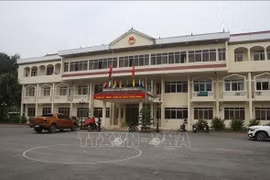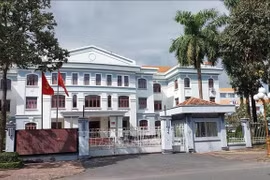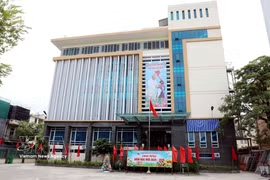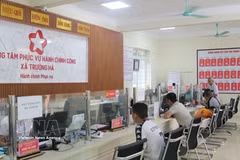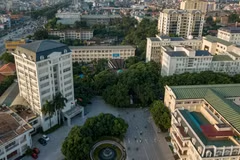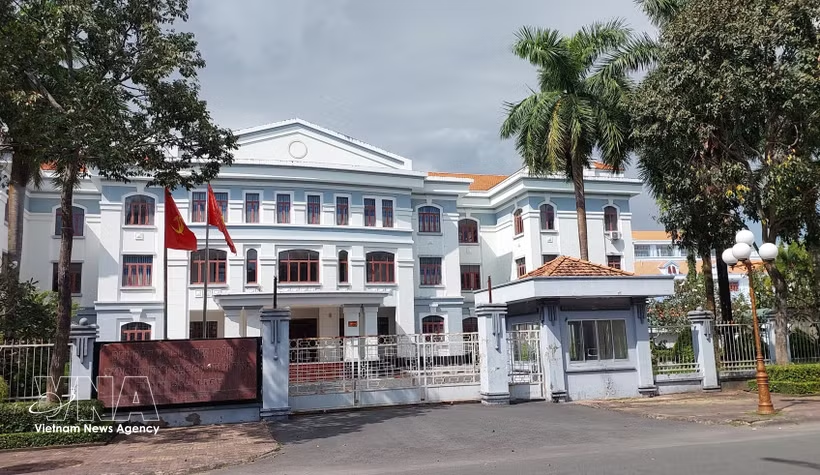
Hanoi (VNA) – The restructuring of the organisational apparatus and administrative units is ushering in a new phase of administrative reform while creating an urgent need to reallocate and make effective use of thousands of surplus offices and public land and property facilities left after mergers.
Properly utilised, these assets can help avoid waste, expand essential infrastructure and create new development space for localities.
According to the Ministry of Finance (MoF), more than 11,000 public land and property facilities nationwide have been recovered or transferred to local authorities but have yet to be put back into use. The portfolio includes office buildings, public service facilities and many land plots in prime urban and residential locations.
At a time when many localities still lack schools, healthcare stations, community centres, parking facilities and land for infrastructure projects, numerous surplus offices have remained vacant for prolonged periods. Delays in handling these assets have led to deterioration, continued spending on security and maintenance, and missed opportunities to put existing resources to productive use.
Economist Dinh Trong Thinh said the issue is not merely one of public asset management but also of resource allocation. The value of public assets lies not only in proceeds from sales or leases, but also in the socio-economic benefits they generate when used for the right purpose at the right time.
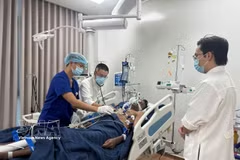
Former office buildings can be converted into schools, healthcare facilities or service centres that align with local planning, helping reduce investment costs, expand essential infrastructure, generate revenue and support local development. Surplus public assets therefore need to be redistributed and used efficiently so that they can continue serving communities and meet development needs in the new period.
However, a considerable gap remains between policy and implementation. Although ministries, sectors and localities agree on the need to quickly rearrange surplus facilities to avoid waste, progress has been slower than expected because the process involves multiple steps, including inspections, legal procedures, planning adjustments, asset valuation and the selection of appropriate uses. A delay at any stage can hold up the entire process.
As a result, many facilities that already have approved handling plans have not yet been transferred, renovated or auctioned. In Tay Ninh, following the reorganisation of administrative units and the implementation of a two-tier local government model, the province manages 3,386 public land and property facilities, of which 876 are subject to transfer or reassignment. Although plans have been prepared for all 420 surplus facilities, implementation has been hindered by the large volume of assets, incomplete legal documentation, deteriorating buildings and limited investment resources.
Similar challenges are being seen in many other localities because the process involves laws governing public assets, land, investment, construction and planning at the same time. Coordination among agencies, together with caution among some officials regarding valuation and disposal procedures, has resulted in many dossiers being referred through multiple levels for review, prolonging implementation.
The current priority is therefore not only to accelerate the handling of surplus assets but also to establish a sufficiently clear mechanism that allows local authorities to act proactively while ensuring compliance with regulations and maximising the value of each asset. This has also provided the basis for the Government to introduce special mechanisms to remove obstacles in the management and use of public assets after the restructuring process.
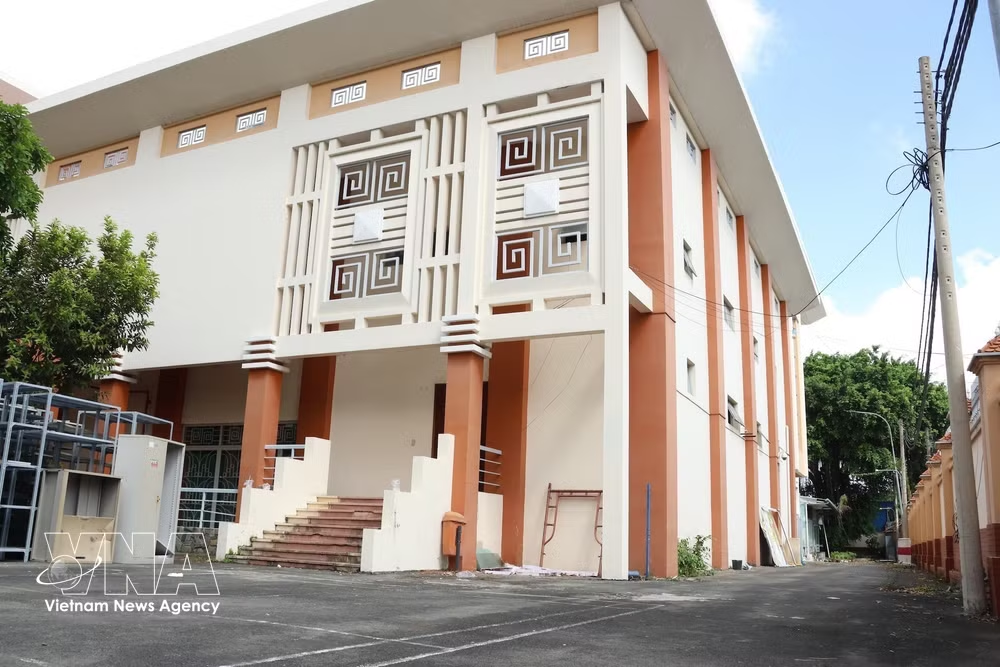
Against this backdrop, the Government’s Resolution No. 31/2026/NQ-CP on special mechanisms and policies for handling surplus public land and property following the restructuring of the organisational apparatus and administrative units is being viewed as an important shift in public asset management. The focus is no longer solely on tight control and preventing losses, but also on returning assets to productive use as quickly as possible while remaining fully compliant with regulations.
A key feature of the resolution is greater decentralisation, giving local authorities more autonomy in deciding how each facility should be used. Deputy Minister of Finance Ta Anh Tuan said that dealing with surplus assets is aimed not only at practising thrift and preventing waste, but also at mobilising resources for socio-economic development, easing pressure on public investment and improving public services.
MoF has also instructed ministries, sectors and localities to urgently review and classify all surplus land and property, prepare handling plans for each facility, update databases and publicly disclose assets eligible for use, reassignment, lease or auction. Holding agency leaders accountable for implementation progress has been identified as another measure to prevent delays and further deterioration.
Experiences from several localities show that public assets can generate significant value when the right use is chosen. Hung Yen has converted a former government office into a healthcare station. Phu Tho has turned a number of surplus offices into schools and community facilities. As of June 24, 2026, Ninh Binh had 839 surplus public land and property facilities, of which 367 had been fully handled. Assets that remain suitable for public use have been reassigned to government agencies, schools, healthcare facilities and cultural institutions, while others are being leased, auctioned or converted into parks and parking areas.
Economists say that although localities have adopted different approaches, they share the same objective: aligning the use of public assets with local development needs. A former office building that becomes a school, a healthcare station or a public park creates not only economic value but also lasting benefits for the community and a better quality of life for residents./.