Hanoi (VNS/VNA) - As Vietnam’s export turnover has yet to fully reflect its potential within the ASEAN region, enhancing the presence of Vietnamese goods and seizing opportunities in this market is essential, particularly amid tariff fluctuations.
This issue demands greater attention from businesses, along with a proactive and flexible approach to market access, deep market understanding and the ability to overcome trade barriers.
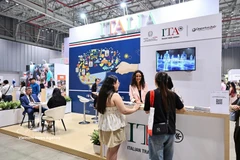
Vietnam’s Trade Office in Singapore recently encouraged Vietnamese businesses to participate in Retail’s Big Show APAC 2025, which will take place in Singapore early next month.
The event provides opportunities for Vietnamese enterprises to connect with potential customers and top retailers, while also exploring new trends in retail, ranging from enhancing customer experience to digital transformation strategies.
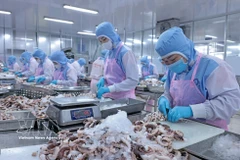
In light of Vietnam becoming the fourth-largest seafood supplier to Singapore, the trade office also announced ongoing efforts to promote trade connections between Vietnamese and Singaporean seafood businesses.
These efforts include participating in seafood exhibitions and trade fairs to increase the visibility of Vietnamese products in Singapore and help companies expand their market share.
The trade office also advised Vietnamese seafood exporters to maintain high quality standards, stay updated on local regulations, improve packaging designs and boost productivity to remain competitive with products from other countries in the region.
Guidance and support are crucial for Vietnamese enterprises looking to deepen their presence in Singapore specifically, and the ASEAN region more broadly — especially amid global trade instability caused by shifting US tariffs.
As of the first four months of this year, Vietnam’s exports to Thailand reached 2.67 billion USD, a modest increase of 1.4% year-over-year.
Meanwhile, imports from Thailand surged to over 4.2 billion USD, an 18.5% rise. Thailand is currently Vietnam’s largest export market within ASEAN, accounting for more than 20% of Vietnam’s total ASEAN export turnover, followed by Indonesia and the Philippines.
Key exports to Thailand include machinery and equipment, electronics and components, phones and parts, crude oil and vehicles.
At a seminar in Ho Chi Minh City last week, a representative of Central Retail Vietnam Group said that the company was promoting lychee exports to Thailand as the harvest season approached.
In mid-May, Vietnam’s Trade Office in the Philippines provided an update on the trade relationship between the two countries, noting that Vietnam still has plenty of room to expand its exports to the Philippines.
Agricultural products represent a significant opportunity. Despite similarities in the agricultural profiles of both countries, they are not direct competitors. Vietnam has a comparative advantage in various subtropical fruits and seafood strains that have not yet been exported to the Philippines.
Aside from rice, the Philippines has strong demand for many types of Vietnamese agricultural products, particularly fresh produce. However, some sectors remain untapped due to trade and logistics barriers.
Moreover, light industrial products, fertilisers, chemicals, tools, machinery, electrical and household appliances, heavy industry products and construction materials also have growth potential in the Philippine market.
Vietnamese exporters should also be aware of the market’s challenges and risks, and adopt appropriate marketing and market entry strategies to ensure success.
Despite these individual market opportunities, Vietnam’s overall export performance in the ASEAN region still falls short of its potential.
According to the latest data from Vietnam’s General Department of Customs, from the beginning of this year to May 15, exports to ASEAN reached 12.42 billion USD, an increase of just 3.2% year-over-year, or 389 million USD.
ASEAN ranks as Vietnam’s fourth-largest export market after the US, China and the EU.
To boost export turnover and the presence of Vietnamese products in ASEAN, it is vital for Vietnamese businesses to show greater interest and capitalise on opportunities in this regional market.
Building consumer trust and brand credibility is also crucial. Vietnamese exporters must work hard to change ASEAN consumers’ perception of Vietnamese goods and distinguish them from competitors./.
See more
German media group releases Vietnam outlook report 2026
The Germany-based international media group specialising in economic, financial and political coverage of emerging markets IntelliNews on January 11 published its annual Vietnam Outlook report 2026, highlighting prospects for economic growth and what problems lie in store.
Vietnam, Singapore enhance cooperation in IFC development
Permanent Deputy PM Nguyen Hoa Binh noted that as Singapore is a seasoned player in this field, the delegation wishes to learn its experience to support Vietnam’s IFC development.
PM pushes five strategic breakthroughs to fuel digital economy
Addressing the first meeting of the National Steering Committee on Data linked virtually with all 34 cities and provinces nationwide, PM Pham Minh Chinh, who is also head of the committee, stressed that the Party’s policies and guidelines and the State’s laws have long articulated a strategic vision for data development. He cited Resolution No. 57-NQ/TW and the recently enacted Law on Data, both of which designate data as a “new means of production” and a strategic resource that must be transformed into high-value assets.
Central bank aims for 15% credit growth in 2026
In 2026, monetary policy will continue to be implemented in a proactive, flexible, timely and effective manner to help stabilise the macroeconomy, keep inflation under control, support economic growth and advance the restructuring of banks under compulsory transfer.
Vietnamese business associations strengthen links across Europe’s key hubs
The closer coordination between the Vietnamese Business and Entrepreneurs Association in the UK (VBUK) and the Vietnam Business Association in Belgium (VBAB) would help enhance the standing of the Vietnamese business community in Europe.
Vietnam emerges as bright spot of growth, trusted and responsible partner
Despite a volatile global environment, Vietnam recorded solid gains in 2025. With flexible and proactive policies under the leadership of the Communist Party of Vietnam and the Government, all 15 key socio-economic targets were met or exceeded, while GDP expanded by about 8.02%, surpassing expectations.
Da Nang builds halal-friendly destination to tap into fast-growing market
In 2025, Da Nang implemented targeted promotion campaigns to attract Muslim travellers from Indonesia, Malaysia, CIS countries and the Middle East, welcoming more than 617,000 visitors from these markets, supported by newly opened direct and charter air routes.
CIS: Opportunity for game developers in Vietnam
The CIS region, which includes Eastern Europe and Central Asia, has potential for gaming developers from Vietnam as this market displays user behaviour patterns that are highly favourable for mobile gaming growth, particularly around major holiday periods.
Reference exchange rate down 2 VND at week’s beginning
With the current trading band of +/- 5%, the ceiling rate applicable for commercial banks during the day is 26,385 VND/USD, and the floor rate 23,873 VND/USD.
Financial scams surge ahead of Tet
As the Lunar New Year (Tet) approaches, financial and banking scams in Vietnam are showing a sharp upward trend, prompting banks and law enforcement agencies to issue repeated warnings.
Vietnam exports over 8 million tonnes of rice, earning 4.1 billion USD in 2025
Vietnam exported more than 8.06 million tonnes of rice in 2025, earning over 4.1 billion USD.
VASEP forecasts pangasius exports to hit 2.3 billion USD this year
VASEP forecasts that pangasius export turnover could reach around 2.3 billion USD in 2026, supported by tightening global whitefish supplies and improving demand in several key markets.
Hai Phong city targets 4.3 billion USD in FDI in 2026
Hai Phong’s investment appeal is underpinned by a rapidly expanding development space, including the Southern Coastal Economic Zone covering more than 20,000 hectares, a planned free trade zone, deep-water ports at Lach Huyen, and 12 industrial parks newly established in 2025.
Vietjet shifts domestic check-in at Tan Son Nhat from January 13
During the recent New Year 2026 holiday peak, Vietjet added 380 flights, equivalent to nearly 78,000 additional seats, on many key domestic routes linking Hanoi and Ho Chi Minh City with destinations such as Vinh, Thanh Hoa, Hai Phong, Da Nang, Phu Quoc, Nha Trang and Da Lat.
Capital sources expanded for sustainable growth
According to the State Bank of Vietnam (SBV), by the end of November 2025, outstanding green credit was estimated at around 750 trillion VND (28.55 billion USD), with an average growth rate exceeding that of overall credit in the economy.
Traceability emerges as protective shield for Vietnam’s exports
Traceability data are evolving into a critical layer of protection, helping exporters reduce tariff risks, shorten inspection times and strengthen proof of origin, thereby avoiding exclusion from formal distribution networks.
Retail market expands sharply, sustainability challenges persist
According to a report on recently released by the Ministry of Industry and Trade’s Agency for Domestic Market Surveillance and Development, the size of the market reached more than 7 quadrillion VND (about 266 billion USD) in 2025, up around 10% compared with 2024.
Vietnam eyes Israel as promising rice market under free trade deal
The Vietnam - Israel Free Trade Agreement (VIFTA), which took effect in late 2024, is poised to provide a fresh boost to agricultural exports, with rice at the forefront.
Resolution 79: State economy to lead growth
Resolution 79 is described as a “clear action declaration” by the Politburo, saying the state economy is not only responsible for maintaining macroeconomic stability, but must also become the force leading a new growth model that is green and sustainable.
Vietnam leverages export advantages within RCEP region
In 2025, seafood exports to China alone exceeded 2.2 billion USD, up about 33% compared to 2024. Shipments to Japan fetched nearly 1.7 billion USD, a year-on-year increase of 14.6%, while those to the Republic of Korea and Australia grew by 9.6% and 3.2%, respectively.