European firms show strong optimism in Vietnam as BCI hits three-year high

80% of survey respondents are optimistic about their prospects in Vietnam over the next five years, while 76% would recommend Vietnam as an investment destination. Despite external headwinds, Vietnam’s structural story still holds strong.

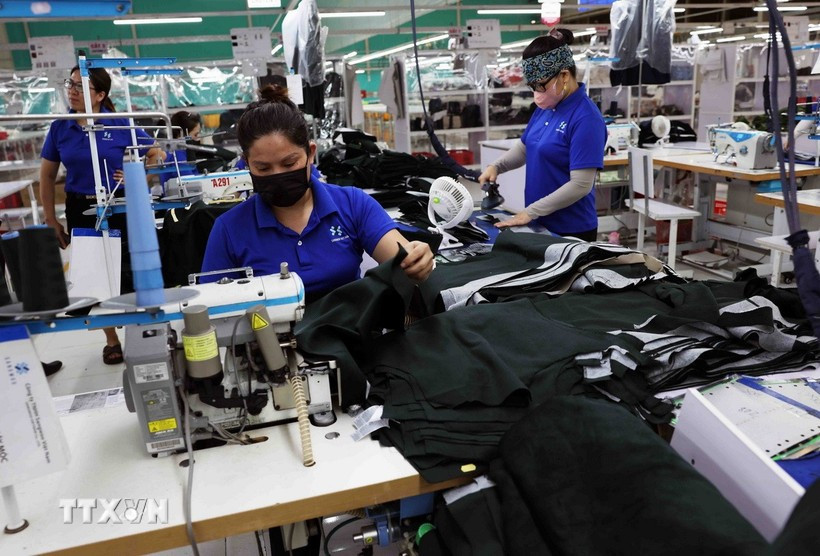
Producing apparel for export to Europe (Photo: VNA)

HCM City (VNA) - The European Chamber of Commerce in Vietnam (EuroCham) on October 14 unveiled the Q3 2025 edition of the Business Confidence Index (BCI), which reveals a renewed surge of optimism among European firms operating in Vietnam.


Investment confidence holds firm

The BCI climbed to 66.5 points in Q3, surpassing pre-US tariff levels and reaching its highest in three years.

The report, conducted by Decision Lab, goes beyond macroeconomic sentiment to capture structural shifts quietly reshaping Vietnam’s business environment: forward-looking reforms in visa and work permit policies, growing momentum for green investment, and the ongoing digitalisation of administrative procedures.

Together, these changes reflect how European investors perceive Vietnam’s future: full of promise.

EuroCham Chairman Bruno Jaspaert noted a sharp improvement in business sentiment: 80% of survey respondents are optimistic about their prospects over the next five years, while 76% would recommend Vietnam as an investment destination. Despite external headwinds, Vietnam’s structural story still holds strong.

The recent upgrade of Vietnam’s stock market status classification by FTSE Russell, from “frontier” to “secondary emerging”, underwrites the findings of BCI survey. It signals growing confidence from international investors and recognises Vietnam's rising importance as an investment destination for future business.
jw.jpg
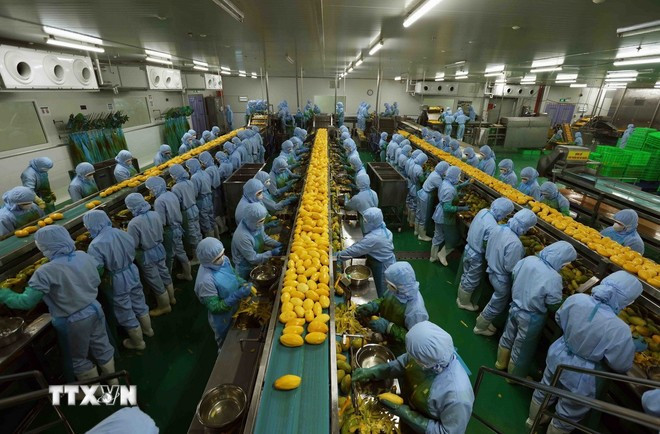
Processing mangos for export (Photo: VNA)

This renewed confidence aligns with Vietnam’s broader economic ambitions. Nearly half of respondents (42%) believed that Vietnam will reach its ambitious GDP growth target of 8.3–8.5% for 2025, while 23% remained neutral and 35% expressed some reservations.

Decision Lab CEO Thue Quist Thomsen noted: “While neutrality still dominates in the short-term outlook, sentiment becomes distinctly more positive when firms discuss the future. Notably, 68% expect economic stabilisation and improvement in the next quarter, up 18 percentage points since Q2 2025 – a clear indication that businesses are expecting to close the year on a stronger footing”.

Notable progress in administrative reform

Administrative inefficiency remains one of the major challenges facing European businesses in Vietnam, with 65% citing procedural burdens as an obstacle. Tax-related procedures, particularly VAT refunds, continue to cause frustration, while inconsistent interpretations of work-permit rules between provinces create operational uncertainty.

However, a major step forward was made in August 2025 when the Government introduced three new decrees designed to modernise visa and work-permit regulations and make the process more predictable.

Decree 219 empowers local authorities to issue work permits, enables online applications, reduces experience requirements for foreign experts in prioritised and emerging fields, expands categories eligible for exemptions, and simplifies paperwork. Decree 221 introduces a limited-term visa exemption for select groups of foreigners contributing to Vietnam’s socio-economic development, reflecting a more flexible approach to attracting international talent. Meanwhile, Decree 229 expands Vietnam’s visa-exemption policy to include 18 EU member states, further strengthening the link between European and Vietnamese mobility.

Almost half (48%) of the firms surveyed reported that these policy changes have already made a positive difference in their operations, while 42% said the impacts are yet to materialise, often due to transitional administrative issues.

Chairman Jaspaert stressed: “As Vietnam aspires to become a high-income, developed nation within the next two decades, talent mobility and skills transfer must be placed at the heart of this journey. These reforms are critical to ensuring that international expertise can flow freely to where it is most needed, unlocking innovation and strengthening Vietnam’s private-sector capacity”.

The Q3 2025 BCI ultimately reaffirms Vietnam’s position as one of the most promising destinations for European investment in Asia. Yet, as the world grows more volatile and unpredictable, optimism must be anchored in continued reform and resilience. Respondents consistently stressed that Vietnam’s long-term competitiveness depends on regulatory predictability, consistency across provinces, and efficient administrative procedures.

EU Ambassador to Vietnam Julien Guerrier added: “Vietnam’s growth trajectory is impressive, yet there is scope to unlock further the huge potential of the EU–Vietnam partnership with predictable and transparent rules in line with international standards, and the involvement of the business community in the preparation of new regulations. EuroCham’s role in conveying the insights of European businesses to contribute to accelerate Vietnam’s green and digital transition, is indispensable to our shared success”./.


VNA

See more

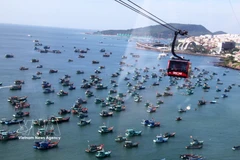
The world’s longest over-sea cable car to Hon Thom Island in the Phu Quoc special zone, An Giang province. (Photo: VNA)

An Giang steps up tourism development ahead of APEC 2027

Tourism in the province has recorded strong growth, affirming its position as one of the region’s leading destinations. Phu Quoc Island continues to attract the majority of international travellers, receiving more than 817,660 visitors, accounting for over 98.5% of total foreign arrivals to the province.

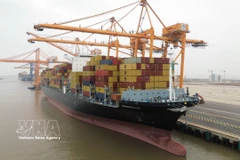
Import-export activities at Lach Huyen international port in Hai Phong (Photo: VNA)

Reducing risks, removing logistics bottlenecks amid Middle East volatility

According to Truong Xuan Trung, Trade Counsellor of Vietnam in the UAE, the Middle East serves not only as a consumption market but also as a key global transhipment hub, meaning instability in the region creates ripple effects across intercontinental transport networks. Shipping route adjustments and airspace restrictions have lengthened transit times, increased costs and disrupted delivery schedules, with some Vietnamese shipments forced to reroute or seek alternative markets.

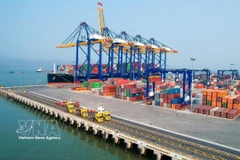
Cargo is handled at container terminals No. 3 and No. 4 of Hai Phong International Gateway Port. (Photo: VNA)

Businesses seek “survival momentum” amid global geopolitical turbulence

This is an urgent move as the challenges of 2026 differ markedly from previous ones, shaped by overlapping external shocks ranging from geopolitical tensions disrupting supply chains to surging logistics and raw material costs, exchange-rate pressures, and increasingly complex tariff barriers in global markets.

At the 2025 trade connectivity week for mechanical, electrical and digital industries. (Photo: VNA)

Ho Chi Minh City gives boost to supporting industry firms

Supporting industry firms in Ho Chi Minh City are scrambling to embed themselves more deeply into both global and domestic supply chains, backed by a suite of local incentives that are speeding up their tech upgrades and market access.

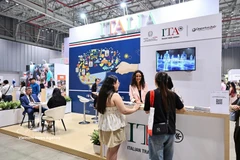
Italy's national pavilion at the ongoing Food & Hospitality Vietnam 2026 exhibition at Ho Chi Minh City's Saigon Exhibition and Convention Centre (SECC) draws visitors for hands-on experiences. (Photo: IVNA)

Italian food firms eye opportunities in Vietnam

Italy’s exports of food and beverages to Vietnam reached 105.1 million EUR in 2025, up 4% year-on-year, positioning the country among the leading EU suppliers to the Vietnamese market.

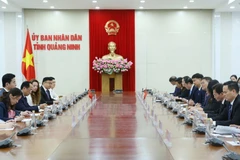
An overview of the working session (Photo: baoquangninh.vn)

Quang Ninh promotes all-round cooperation with Guangxi Zhuang Autonomous Region

Quang Ninh encourages Guangxi enterprises to invest in high-tech marine aquaculture and expand aquatic product exports in China. At the same time, the province aims to develop livestock farming in line with international standards and attract investment in deep-processing plants for agricultural products such as cinnamon, star anise and tea, linked with traceability systems at border gates.

Illustrative image (Source: VNA)

Vietnam becomes fastest growing market for Norwegian salmon in Southeast Asia

The Norwegian Seafood Council (NSC) reported at the “Norwegian seafood industry in Vietnam market 2026” event held in Ho Chi Minh City on March 25 that fresh Norwegian salmon exports to Vietnam jumped 16% in volume in the first two months of 2026 compared with a year earlier, while frozen salmon shipments surged about 37%.

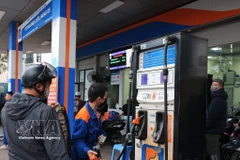
At a petrol station (Photo: VNA)

Energy giants work hard to roll out E10 RON95 sale ahead of schedule

Petrolimex and PVOIL, are in a strong position to accelerate the transition toward cleaner fuels. These companies have been actively preparing infrastructure, upgrading blending systems, and coordinating supply chains to ensure the availability of E10 RON95 across their nationwide retail systems.

Deputy Prime Minister Nguyen Chi Dung visits Bosch Industrial in Stuttgart, Germany. (Photo: VNA)

Vietnam, Germany boost innovation, startup ecosystem connectivity

Deputy PM Nguyen Chi Dung highly valued CfE’s reputation and pioneering role in building Germany’s innovation-driven startup ecosystem, and called for stronger cooperation with NIC to support Vietnamese universities, research institutes and organisations in training and scientific research.

The FTA Index 2024 provides a panorama of the FTA implementation outcomes across the country. (Photo: VNA)

ASEAN opens new export momentum for Vietnam

As competition in ASEAN is intensifying, Vietnamese enterprises are advised to strengthen distribution networks, enhance product innovation and closely monitor policy changes and trade-defence measures in importing markets to sustain and expand their market share.