Exporters advised to boost digital transformation to expand markets

In the context of the growing global digital economy, digital transformation and the promotion of e-commerce are key drivers helping Vietnam boost integration, enhance competitiveness, and expand export markets, according to the Vietnam E-commerce and Digital Economy Agency

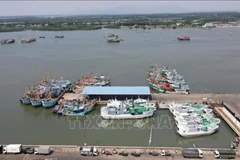
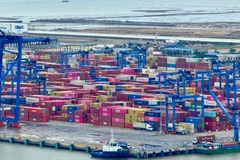
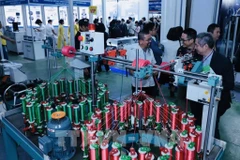
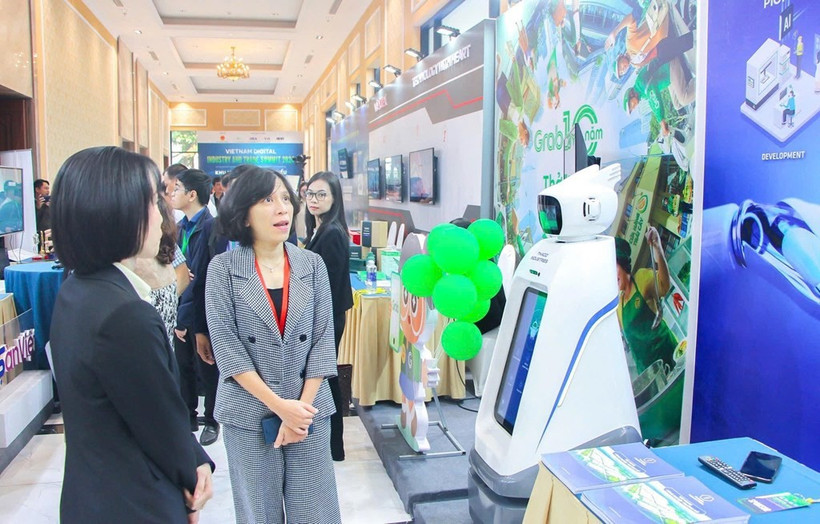
Illustrative image (Photo: Vietnam E-commerce and Digital Economy Agency)

Hanoi (VNA) - In the context of the growing global digital economy, digital transformation and the promotion of e-commerce are key drivers helping Vietnam boost integration, enhance competitiveness, and expand export markets, according to the Vietnam E-commerce and Digital Economy Agency (IDEA) under the Ministry of Industry and Trade.

Digital transformation is an integral part of the approved National E-commerce Development Plan for the 2021-2025 period. According to the plan, e-commerce is identified as a pioneering sector applying digital technology to modernise production systems and distribution models, improve business efficiency, and create sustainable growth momentum for exports.

To realise these goals, it is essential to establish and develop a comprehensive e-commerce ecosystem from domestic to international markets, and connect producers with effective international distribution channels, as no single business or organisation can independently handle all the diverse aspects of e-commerce, including technology, logistics, finance, policy, and the capacity to access international markets.

Therefore, the e-commerce ecosystem needs to be built as a multidimensional interactive network, where key stakeholders, including regulatory bodies, technology solution providers, exporters, logistics and financial service providers, consumers, as well as training institutions and media networks, collaborate, support, and amplify one another. This synergy will create a robust system capable of self-adjustment and sustainable development.

To promote a sustainable e-commerce ecosystem in Vietnam, the IDEA is actively implementing a range of concrete action programmes. Key priorities include improving the legal environment, enhancing capacity through training programmes and SME support initiatives, and developing infrastructure and technology with solutions such as cashless payments, smart logistics, and AI. Another key part of the plan is accelerating international cooperation and cross-border e-commerce to explore and expand export channels to global markets.

A key upcoming event is the Vietnam E-commerce and Digital Technology Application Forum 2025, scheduled for September 4-6 in Ho Chi Minh City, as part of the Vietnam International Sourcing 2025.

With the coordination of over 60 Vietnamese trade offices abroad, the forum is expected to welcome more than 300 international business delegations from various countries, which will come to seek opportunities for partnerships, import of Vietnamese goods, and investment connections.

The presence of a large number of international buyers and investors promises great opportunities for Vietnamese businesses to expand their export markets and deepen their participation in the global supply chain, thereby enhancing competitiveness.

According to Bui Huy Hoang, Deputy Director of the Centre for E-commerce and Digital Technology Development (eComDX) under the IDEA, global e-commerce is not simply about setting up an online store, but a complex game that requires a mindset focused on gradually mastering the digital value chain.

For cross-border e-commerce to become a long-term growth lever, Vietnamese enterprises need to be more proactive in directly approaching international markets rather than relying solely on existing platforms, he said. Currently, many Vietnamese businesses still struggle, stopping at merely listing products on marketplaces without a well-structured strategy for building databases, operations, marketing, and cross-border after-sales services.

In the context of rapidly advancing technology, Vietnamese enterprises need support in building internal capacities to independently manage, optimise, and measure the effectiveness of their cross-border e-commerce activities, rather than merely “participating” without truly “taking ownership,” advised Hoang./.

VNA

See more

Prime Minister Le Minh Hung (left) receives WTO Director-General Ngozi Okonjo-Iweala in New Delhi, India on September 12 (Photo: VNA)

PM Le Minh Hung calls on WTO to continue support for Vietnam

Vietnam actively and responsibly participates in the WTO’s agenda and supports its coordinating role in promoting inclusive and balanced global trade for peace, cooperation and development, while effectively responding to global challenges, said Prime Minister Le Minh Hung.

Vietnamese Trade Counsellor in India Bui Trung Thuong (Photo: VNA)

Vietnam sees opportunities to deepen engagement with BRICS: Trade Counsellor

Vietnam could deepen cooperation with BRICS through four main areas: expanding trade and market access; attracting and promoting two-way investment; engaging deeper in global supply chains and logistics networks; and advancing cooperation in science-technology, innovation and digital transformation.

Quang Tri province continues to mobilise resources to complete storm shelters and anchorage areas for fishermen. (Photo: VNA)

Quang Tri province mobilises resources for fisheries infrastructure

The provincial People's Committee assigned the Department of Agriculture and Environment to prepare an investment proposal for upgrading and expanding the Con Co storm shelter in Con Co special zone. The project has a total investment of 400 billion VND (15.4 million USD) and is scheduled to be implemented from 2026 to 2028.

A farmer in Tan Phuoc 3 commune, Dong Thap province, harvest pineapples. (Photo: VNA)

Digital transformation ushers Dong Thap agriculture into modern era

The province’s farmers are gradually embracing advances in science and technology and digital transformation, providing an important impetus for the agricultural sector to shift toward modern production in line with Politburo Resolution No. 19-NQ/TW dated June 16, 2022.

Customers shop for handicrafts at a trade fair in Hanoi (Photo: VNA)

Hanoi handicrafts reach 89 international markets

Major export products include rattan and bamboo products, sedge and wickerware, fine wooden furniture and handicrafts, ceramics, lacquerware and textiles. Many craft village products feature diverse designs and good quality, gradually enhancing their competitiveness in both domestic and international markets.

General Secretary of the Communist Party of Vietnam Central Committee and President To Lam and French President Emmanuel Macron witness the exchange of cooperation documents and agreements between the two countries. (Photo: VNA)

Finance Ministry, AFD exchange 48.6 million USD financial cooperation deals

An AFD-funded project in Dien Bien province aims to improve the management and efficient use of water resources and strengthen water regulation between river basins, helping secure water supplies for production and daily life while improving resilience to drought, erosion, flooding and climate change.

The working session between Vietnamese Minister of Industry and Trade Le Manh Hung and Andrey Slepnev, Minister in charge of Trade of the Eurasian Economic Commission (photo: moit.gov.vn)

Vietnamese minister proposes EAEU open market to Vietnamese goods

Minister of Industry and Trade Le Manh Hung asked the EAEU to consider removing several obstacles to bilateral trade, with a focus on eliminating the threshold safeguard measure on Vietnamese textile and garment products and opening the Russian market further to Vietnamese fishery products.