Few Vietnamese firms ready for cyber threats

As cyber threats grow more sophisticated, experts warn that Vietnam's public and private sectors must act swiftly to close the readiness gap. Effective cybersecurity will be essential not only for protecting digital infrastructure but also for safeguarding the long-term development of the country’s digital economy.

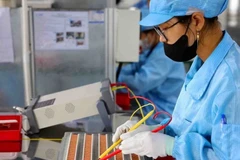
Ransomware attacks have caused significant damage to domestic businesses. (Photo: NCA)

Hanoi (VNS/VNA) — Only 11% of Vietnamese enterprises and organisations are adequately prepared to respond to cybersecurity incidents, according to data released by the National Cybersecurity Association (NCA).

While this marks an improvement from just 5% in 2024, the overall level of readiness remains critically low, experts said.

The statistics, based on a recent report from Cisco, reveal significant gaps in cybersecurity infrastructure across the country.

More than half of surveyed organisations (52.89%) still lack sufficient technological tools to handle cyber incidents, while 56.16% do not have dedicated cybersecurity personnel. These deficiencies remain a serious concern, especially as digital transformation accelerates and cyber threats become more complex and damaging.

In 2024, Vietnam recorded more than 659,000 cybersecurity incidents, affecting around 46.15% of public and private institutions. Despite the rising volume and severity of attacks, most businesses still lack the capability, processes or preparedness to respond effectively.

Recent attacks have further exposed the vulnerabilities of critical sectors. In November 2023, a ransomware attack encrypted an entire system within the energy sector. Throughout 2024, similar attacks targetted the securities firm VnDirect, resulting in system-wide encryption, VNPOST, which had 12 servers compromised and a hospital in Hanoi, where nine servers were locked down.

More recently, in April 2025, hackers stole data from three major State-run media agencies. A local bank also suffered a serious breach, with attackers transferring over 100 billion VND (approximately 3.9 million USD) to accounts under their control.

Deputy Director of the National Cybersecurity Centre under the Ministry of Public Security, Lieutenant Colonel, Tran Trung Hieu, noted that poor reporting habits and a lack of preparedness had hampered response efforts in many of these cases.

“We found that affected organisations often delayed reporting incidents, failed to maintain system logs or had disabled monitoring tools. This makes it difficult to trace the attack and contain the damage,” he said.

He added that many businesses lacked essential contingency plans, such as data back-ups or system isolation protocols, leading to passive and reactive responses during crises. Coordination between internal teams is also often fragmented, while leaders frequently underestimate the true impact of such breaches.
Experts stressed the importance of treating cybersecurity as a strategic issue rather than an afterthought.

“There is no system too small to be attacked. If it’s connected to the Internet, it can become a gateway for a major breach,” said a representative from CMC Corporation, referencing an attack on their own systems that caused a ten-hour disruption in April 2025.

Head of the Technology Research Committee at NCA Vu Ngoc Son said that business leaders must play an active role in enhancing cybersecurity preparedness.
“Cybersecurity is not something you can deal with after a breach. It must be planned early, integrated into your risk management strategy and supported from the top down,” he said.

He added that building an effective defence requires a combination of technologies, well-defined response procedures and regular drills, along with collaboration between businesses and cybersecurity experts.

The NCA also highlighted that the weakest link in most organisations remains human error. Many cybersecurity breaches stem from low levels of awareness and basic mistakes. Experts recommend that training and awareness-raising programmes should be conducted regularly to equip staff with essential cybersecurity knowledge and skills.

Beyond human training, organisations are encouraged to invest in integrated cybersecurity solutions that combine AI-powered monitoring, threat intelligence platforms and real-time analytics. These tools can help detect and respond to attacks early, before they cause widespread disruption.

Experts also advised organisations to establish clear incident response plans, define team responsibilities and maintain updated contact channels with relevant authorities.

“Preparedness includes having communication lines ready to notify law enforcement or cybersecurity experts immediately when an incident occurs,” Son said.

As cyber threats grow more sophisticated, experts warn that Vietnam's public and private sectors must act swiftly to close the readiness gap. Effective cybersecurity will be essential not only for protecting digital infrastructure but also for safeguarding the long-term development of the country’s digital economy./.

VNA

See more

An expert speaks at the International Conference on Semiconductors (ICOS) 2026 (Photo: VNA)

ICOS 2026 highlights pathways for Vietnam’s semiconductor development

This was the first international, specialised semiconductor conference held in central Vietnam and the first time the country hosted a large-scale academic forum dedicated exclusively to this sector. Organised in line with international standards, it featured plenary sessions, technical presentations and industry forums, reflecting major research trends shaping the semiconductor sector.

Resolution No.57: People should be put at centre of AI governance

Resolution No.57: People should be put at centre of AI governance

Assessing the role of AI, Minister of Science and Technology Nguyen Manh Hung emphasised that it is an “intellectual infrastructure.” More than an applied technology, AI is increasingly becoming a form of national infrastructure, comparable to electricity, telecommunications or the Internet.

In Vietnam, 5G technology infrastructure has begun to be widely deployed by domestic network operators (Photo: VNA)

5G technology expansion expected to boost Vietnam’s digital economy

The Ministry of Science and Technology reported that by 2025, 5G had been commercialised nationwide, covering more than 90% of the population. Viettel alone has deployed 30,000 5G base stations, achieving 90% outdoor coverage and 70% indoor coverage, exceeding its commitments to the Government.

At a display of UAVs (Photo: VNA)

HCM City pilots UAVs for delivery services

HCM City aims to promote UAV use in urban delivery - a promising field contributing to smart logistics and postal services for e-commerce, smart cities and high-tech public services, while fostering UAVs as a strategic technology sector underpinning the innovation ecosystem.

Viettel's virtual assistant for searching administrative units helps shorten time and simplify searches for people. (Photo: Viettel)

Viettel’s virtual assistant among Top 10 technology products

The accolade recognises the mastery of core technologies by the Viettel Artificial Intelligence and Data Services Centre (Viettel AI), while reaffirming the group’s capacity to successfully deploy “Make in Vietnam” artificial intelligence solutions in international markets.

Workers are operating a robotic wafer conveyor assembly line in the semiconductor industry. (Illustrative image. Photo VNA)

Innovation – Driver for new development phase

The draft action programme of the Party Central Committee to implement the Resolution of the 14th National Party Congress identifies the shift to a new growth model, economic restructuring, and accelerated industrialisation and modernisation, with science, technology, innovation and digital transformation as the core engines, as key tasks.

Participants at the 5th ASEAN Digital Ministers Meeting (ADGMIN) in Thailand. (Photo: VNA)

Hanoi to host 6th ASEAN Digital Ministers’ Meeting in January

Held annually on a rotating basis among ASEAN member states, the meeting plays a key role in shaping strategic orientations, formulating policies and promoting digital cooperation within ASEAN, while strengthening collaboration with partners and international organisations amid rapid digital and digital-economy transformation globally.

(Illustrative photo: Viettel)

Viettel records breakthrough in first 5G Advanced trial

The achievement, marked as Vietnam’s first 5G Advanced trial, was made possible by carrier aggregation (CA) technology, enabling mobile devices to operate across multiple frequency bands simultaneously instead of a single band.

A biotechnology laboratory of the International University at Vietnam National University-Ho Chi Minh City. (Photo: VNA)

Resolution 57: Role of intellectuals in advancing science and technology research

Prof. Dr. Tran Dai Lam, Director of the Institute of Materials Science at the Vietnam Academy of Science and Technology (VAST), emphasised that intellectuals should nurture national responsibility and ambition, be ready to take on challenges, evaluate research outcomes by international standards, and engage in collaboration across different sectors.

Professor Vu Minh Khuong, of the Lee Kuan Yew School of Public Policy (right), talks to a Vietnam News Agency correspondent in Singapore. (Photo: VNA)

Resolution 57 - catalyst for scientific and technological breakthroughs

The resolution also seeks to create stronger mechanisms to mobilise social and private resources and support an innovation ecosystem; link digital transformation in the public sector with the modernisation of national governance; and prioritise the development of elite human resources and internationally-standard research infrastructure.

Workers produce electronic components (Photo: VNA)

Science, technology drive Vietnam’s rising global profile: expert

Assoc. Prof. Le Duc Anh from Tokyo University held that for fast and sustainable development, Vietnam should prioritise science – technology and innovation as the main driver of productivity, focusing on sectors with high spillover effects such as semiconductors, AI, data, new energy and materials, biomedical technology, automation – robotics, and cybersecurity.