Finance Ministry discusses national credit rating upgrade with Moody’s Ratings

Moody’s Ratings recognised the relatively ample fiscal space, a solid debt repayment capacity, and a robust reform programme by the Vietnamese Government, saying these reforms will help improve institutional quality and strengthen the national creditworthiness.

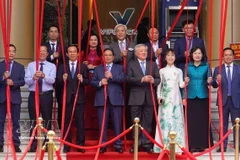
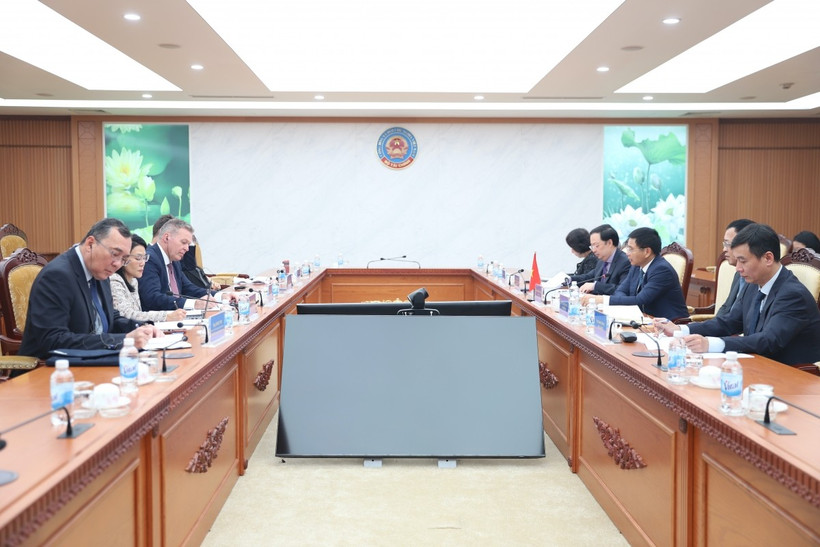
The meeting between Minister of Finance Nguyen Van Thang and President of Moody’s Ratings Michael West (Photo: tapchikinhtetaichinh.vn)

Hanoi (VNA) – Minister of Finance Nguyen Van Thang has held a meeting with Michael West, President of Moody’s Ratings, to discuss measures for improving Vietnam’s national credit rating, the Ministry of Finance (MoF) reported.

At the event, Thang underscored that in line with the Party and State’s policy on international integration and national prestige enhancement, the ministry, on behalf of the Government, has established and maintained cooperative relations with Moody’s since 2010.

To meet the requirements of a new development stage, the MoF has coordinated with relevant ministries and sectors to submit to the Government a scheme on improving the national credit rating through 2030, targeting a two-notch upgrade to Baa3 under Moody’s scale.

Regarding the domestic credit rating services market, the Government in 2024 promulgated a decree on credit rating services, creating a comprehensive legal foundation for the field. Five enterprises have so far been licensed to operate. The MoF is continuing to review and refine the legal framework, strengthen supervision, improve service quality, and promote communication efforts to encourage businesses and investors to use credit ratings in capital mobilisation and allocation, he noted.

Amid narrowing room for the monetary policy, the minister said the MoF is promoting the role of the fiscal policy, particularly through the development of the capital market, including stock and bond segments. Regulations governing corporate bond issuance, both public and private placements, are being aligned with international practices to facilitate medium- and long-term fundraising by financially sound enterprises with viable projects.

From 2026, private bond issuance is expected to become more vibrant and effective, serving as a crucial capital raising channel for the economy, Thang went on.

In September 2025, FTSE Russell upgraded Vietnam’s stock market from frontier to secondary emerging status. After 25 years of development, the market now features a full range of components, including stocks, bonds, derivatives, investment funds and new products.

This year's target is market capitalisation reaching at least 100% of GDP. In the first two months, capitalisation rose nearly 5% to over 84% of GDP, signalling positive momentum. Under the stock market development strategy to 2030, the market will be steered towards green and sustainable growth, and compliance with international standards.

The MoF is prioritising the development of the green bond market, encouraging the issuance of green government bonds, green local government bonds and green corporate bonds to mobilise resources for sustainable projects. Environmental, social and governance (ESG) standards are also being gradually applied to market operations, alongside the consideration of mechanisms to attract institutional and individual investors to green financial products, Thang added.

For his part, West expressed confidence in Vietnam’s long-term growth prospects, citing impressive GDP expansion, an active foreign policy, strong export competitiveness and stable FDI inflows.

Other members of the Moody’s Ratings delegation also recognised the relatively ample fiscal space, a solid debt repayment capacity, and a robust reform programme by the Vietnamese Government, saying these reforms will help improve institutional quality and strengthen the national creditworthiness.

Moody’s pledged continued support for Vietnam in developing its domestic capital and debt markets, perfecting infrastructure bond rating methodologies, building a second-party opinion framework for sustainable bonds aligned with Vietnam’s green taxonomy and international practices, and enhancing training and knowledge-sharing activities.

The agency suggested considering mandatory credit ratings for each private bond issuance to reflect the risk profile of individual debt instruments. It also recommended adjusting some regulations on conflicts of interest to ensure independence and transparency in rating activities.

Concluding the meeting, Thang affirmed that the MoF will fully take on board Moody’s recommendations and continue refining policies in line with international standards to ensure effective risk management and foster a transparent, safe and sustainable capital market.

He expressed his belief that cooperation between the MoF and Moody’s will be reinforced, practically contributing to the efficient mobilisation and allocation of resources for Vietnam's socio-economic development./.

VNA
See more

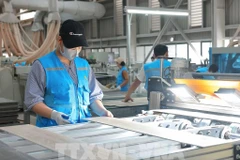
Inside Bach Dang shipbuilding factory (Photo: VNA)

Vietnam's industry spearheads transition to circular economy

The circular economy is no longer just a policy choice. It has become an inevitable trend for delivering sustainable and green growth, sharpening competitiveness at home and abroad, and meeting Vietnam’s net-zero emissions target by 2050. It is now a prerequisite to sustain long-term economic expansion, particularly in industrial production and supporting industries.

Algerian officials, representatives of foreign embassies, and numerous global oil and gas companies attend the Bid Round. (Photo: VNA)

Vietnam joins int'l bidding for oil and gas exploration in Algeria

Currently, PVEP is involved in oil exploitation at Blocks 433a and 416b of the Bir Seba field in the Hassi Messaoud area, Ouargla province, located more than 600 km south of Algiers. The project stands as one of Petrovietnam’s most successful overseas ventures, demonstrating the operational capacity and technical expertise of Vietnamese engineers on the global stage.

A customer is making payment via QR code at a coffee shop. The Ministry of Finance has proposed new regulations on taxable revenue thresholds for household businesses. (Photo: VNA)

Finance ministry eyes flexible tax thresholds

In a draft law amending several articles of the laws on personal income tax, corporate income tax and value-added tax, Vietnam's finance ministry proposed scrapping the fixed revenue threshold of 500 million VND. Instead, it suggested the threshold be set by the Government based on prevailing economic conditions.

Part of the Vung Ang II Thermal Power Plant. (Photo: VNA)

Vung Ang II thermal power plant inaugurated in Ha Tinh

With a total investment of 2.2 billion USD, the Vung Ang II Thermal Power Plant is developed under a build-operate-transfer (BOT) model and has a designed capacity of 1,200 MW, comprising two turbines. The plant is expected to play a key role in ensuring stable electricity supply for the central region and neighbouring areas, thereby facilitating the development of industries, agriculture and services.

Aircraft at the Noi Bai International Airport in Hanoi. (Photo: VNA)

Vietnam seeks stable jet fuel supplies from China amid Middle East disruptions

On the basis of the long-standing friendship and cooperation between Vietnam and China, as well as close ties between their aviation authorities, the Civil Aviation Authority of Vietnam has asked the Civil Aviation Administration of China to direct relevant fuel suppliers to ensure sufficient and stable supplies for Vietnam.

Illustrative photo (Photo: Xinua/VNA)

Remittances to Ho Chi Minh City decline in Q1 amid global headwinds

Data from the State Bank of Vietnam (SBV)'s Region 2 branch showed that remittances transferred through credit institutions and economic organisations in Ho Chi Minh City exceeded 2 billion USD in the January–March period, down 15.6% from the previous quarter and 16.9% year-on-year.

The shipments are unloaded at the airport. (Photo: VNA broadcasts)

Nearly 100 tonnes of Vietnamese fruits, vegetables airlifted to UAE

Vietnamese fresh produce and processed foods are increasingly recognised for their quality, with items such as cashew nuts, coffee and spices gaining popularity among Middle East consumers. In 2025, Vietnam’s farm produce exports to the UAE exceeded 445 million USD, up nearly 24% year-on-year.

The World Coffee Heritage Forum officially opens at the World Coffee Museum in Dak Lak province, with eyes on UNESCO recognition for Vietnamese coffee culture. (Photo: VNA)

World Coffee Heritage Forum opens in Dak Lak

Dak Lak is known as the 'capital' of Vietnamese coffee, with rich, fertile basalt red soil ideal for agriculture. The coffee provides livelihoods for thousands of locals and has developed a unique cultural space, closely tied to the socioeconomic life, customs and identity of local communities.

Chili peppers are on the list of essential goods in Indonesia (Photo: VNA)

Indonesia reduces imports of strategic food commodities

In 2026, Indonesia is expected to have approximately 12 million tonnes of rice carried over from the previous year, supported by annual production of around 34.7 million tonnes. With projected consumption of 31.1 million tonnes, national rice reserves could reach approximately 16 million tonnes by the end of the year.

Hanoi’s roadmap to implement low-emission zones from July is providing a strong boost to the electric two-wheeler market (Photo: VNA)

Low-emission zone roadmap drives electric two-wheeler boom in Hanoi

From July 1, Hanoi will introduce time-based or area-based restrictions on petrol-powered motorcycles within Ring Road 1, with plans to expand coverage across the entire zone by 2028 and extend to areas within Ring Road 3 by 2030. The policy is expected to reshape travel habits for millions of urban residents.