PM pushes more affordable housing options for middle class

The PM stressed that having a home is a fundamental right for every citizen, and everyone deserves equal, transparent and fair access to housing that fits their paycheck and matches the country's economic reality.

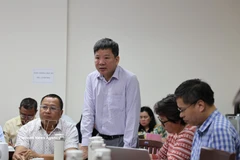
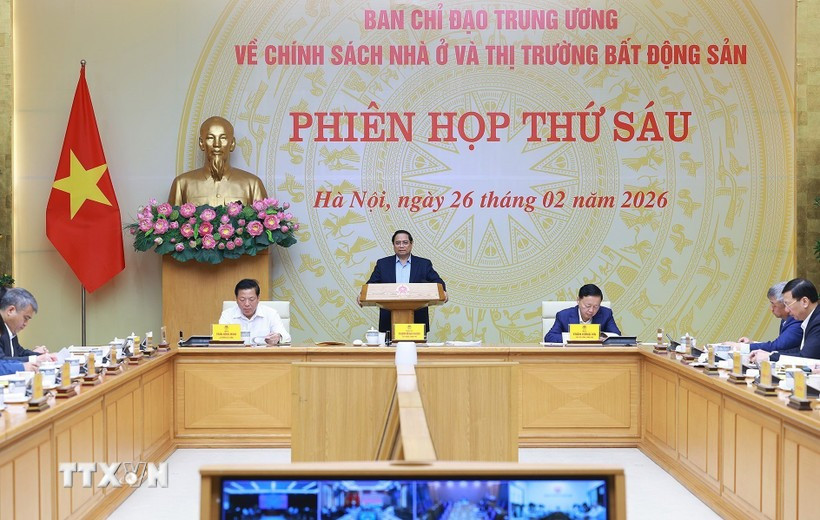
PM Pham Minh Chinh speaks at the sixth session of the Central Steering Committee for Housing and Real Estate Market Policies on February 26. (Photo: VNA)

Hanoi (VNA) – Prime Minister Pham Minh Chinh has ordered the Central Steering Committee for Housing and Real Estate Market Policies, along with local authorities, to explore ideas to expand housing options for middle-income earners and other social groups, all while ensuring every citizen has equal access to housing.

PM Chinh, who chairs the committee, made the call while presiding over its sixth session in Hanoi on February 26. It ran hybrid-style, linking up live with officials in 34 cities and provinces.

He stressed that having a home is a fundamental right for every citizen. Everyone deserves equal, transparent and fair access to housing that fits their paycheck and matches the country's economic reality. Policies must strike a balance of interests among the state, citizens and developers.

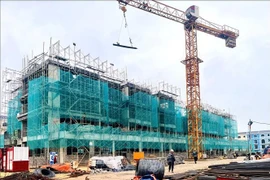
Housing development, he said, must cover a broad spectrum, from commercial projects to subsidised social units. No matter the type, relevant infrastructure must be adequate, connected, comprehensive and inclusive, rather than selectively accessible.

According to him, the Government issued strong directives and policies last year to break barriers and boost housing last year, especially in the social segment. As a result, over 100,000 social housing units were completed nationwide, putting Vietnam on pace to hit one million by 2028, two years ahead of the initial timeline. Still, fresh pressures are piling up, especially from middle-income workers earning roughly 20 million VND (about 770 USD) a month who are getting priced out.

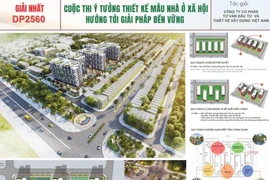
Officials were tasked with deliberating policies to free up more land reserves for commercial projects that actually cost what middle-class buyers can afford, expedite land-use and construction planning, and push transit-oriented urban development (TOD) models to optimise land use and cut traffic jams.

He also demanded cheap loans and other credit breaks to get those mid-range commercial projects off the ground and help citizens finally buy their own place.

The ultimate goal is to ramp up supply across housing segments, drive prices down and make sure anyone who needs a house can get one fairly and openly, while stamping out the shady deals and negative practices, the PM said.

He urged fast action and told officials to roll out practical policies right now./.
VNA

See more

A train of Metro Line No. 1 passes Saigon Bridge in Ho Chi Minh City. (Photo: VNA)

Infrastructure breakthroughs help Ho Chi Minh City to promote economic locomotive

At a conference reviewing socio-economic tasks for 2026, Chairman of the municipal People’s Committee Nguyen Van Duoc said the city will focus on three strategic breakthroughs – institutions, infrastructure and human resources – with public investment playing a leading role. Authorities are determined to fully disburse the allocated public investment capital.

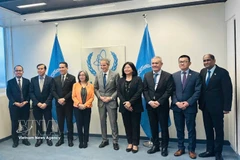
Director General of the International Atomic Energy Agency (IAEA) Rafael Grossi (centre) poses for a group photo with ambassadors and heads of missions of ASEAN countries in Vienna. (Photo: VNA)

ASEAN, IAEA strengthen cooperation in peaceful use of nuclear energy

Director General of the International Atomic Energy Agency (IAEA) Rafael Grossi commended the effective, substantive and steadily expanding cooperation between the IAEA and ASEAN, particularly in technical cooperation, the peaceful use of nuclear energy, and support for the development priorities of each member state.

Vietnam’s tilapia export turnover to the US surges 173% year-on-year in 2025 (Source: VASEP)

Vietnamese tilapia eye opportunities to make breakthrough

To sustain growth in 2026 across major markets such as the US, the Middle East and the European Union (EU), Vietnamese tilapia products must meet stringent requirements, ranging from flesh quality and food safety to certifications for sustainable farming and production, including GlobalGAP, BAP and ASC. This calls for a fully standardised production chain, from broodstock and farming to processing.

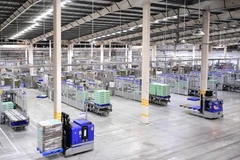
A Vinamilk factory (Photo: Vinamilk)

Strategy promotes sustainable growth of dairy processing industry

The strategy aims to build a sustainably developed dairy processing industry with a complete value chain, from dairy herd development and increased raw milk output to high value-added processed products. The industry is expected to largely meet rising domestic demand while integrating more deeply into regional and global dairy value and supply chains.

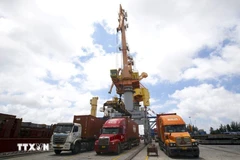
Trucks carrying export goods at Tan Vu Port in Hai Phong city (Photo: VNA)

Vietnam among France’s five most promising export markets: Bpifrance

The strongest prospects for French firms lie in higher value-added products and solutions, including processed food, equipment for hi-tech agriculture, corporate digital solutions and healthcare. Vietnam is also considered an important link in the Southeast Asian value chain, opening broader access to the ASEAN market.

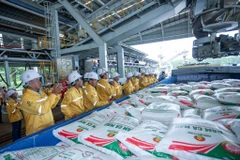
Workers load fertiliser onto a vessel for export by Petrovietnam Ca Mau Fertiliser Corporation (PVCFC). (Photo: Petrovietnam)

Vietnamese firm successfully exports first 40,000 tonnes of fertiliser to US

Beyond opening access to a market with substantial consumption capacity, the presence of Ca Mau fertiliser in the US – known for its stringent technical, environmental and traceability standards – is seen as an affirmation of the credibility and quality of Vietnamese products amid increasingly rigorous global requirements.