Hanoi (VNS/VNA) - Facing many difficulties due to declining market demands, new tariff policies and geopolitical uncertainties in the global market, a government target of 2 million enterprises operating in the economy by 2030 has become a big challenge, experts have said.
A report of the Ministry of Finance showed the country had about 940,078 operating enterprises as of early this year, of which nearly 98% were small- and medium-sized enterprises (SOEs). Thus, to have 2 million enterprises by 2030, the country needs to have nearly 1.1 million new enterprises within the next five years.
According to economist Tran Hoang Ngan, Vietnam sees an increase of only 30,000 to 40,000 enterprises a year on average. Therefore, it is very tough for the country to have 2 million enterprises in five years.
Ngan believed there must be special solutions on improving the business environment and encouraging business households to transform to enterprises.
"We can achieve the goal if we have policies to support business households to transform to enterprises. At the same time, we must also improve and expand larger-scale enterprises", Ngan said.
Sharing the same view, Dau Anh Tuan, Deputy General Secretary of the Vietnam Chamber of Commerce and Industry, said that the country currently had about 5.2 million business households, many of which having annual revenue as high as that of medium-sized private enterprises.
If only one-third of the business households are changed to enterprises, the goal of having more than 1 million new enterprises in the next five years could be feasible.
Experts say that as the rate of enterprises withdrawing from the market has often been more than 70% in recent years, it is necessary to have incentive policies to help newly-established enterprises and SMEs to operate and develop in the market.
National Assembly deputy Tran Thi Van believed that compared to supporting policies on credit, land access, human resource training and administrative procedure reform, incentives on tax exemption and reduction has a quick and direct impact as they do not have to go through many procedures, helping start-ups and SMEs overcome the initial difficult period and improve their competitiveness.
Solutions
To realise the ambitious goal of having 2 million enterprises, Minister of Finance Nguyen Van Thang has emphasised some key solutions.
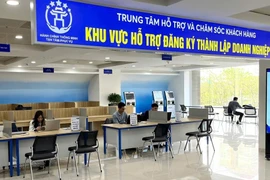
Firstly, the Ministry of Finance is committed to creating a transparent, fair and favourable business environment. Barriers to market entry and compliance costs will be removed through substantial reductions in administrative procedures and reforms of business conditions, according to the minister.
“Digital transformation in State management will also be promoted to create optimal conditions for businesses to start up and operate, helping to reduce costs and increase confidence in the policy system,” Thang said.
From July 1, 2025, all administrative procedures and public services will be provided on the National Public Service Portal, creating a truly ‘one-stop’ system, allowing businesses to conduct all transactions without having to travel to many agencies.
Secondly, a breakthrough solution is to promote the transformation of business households to enterprises, taking advantage of the potential of more than 5 million business households currently.
The Ministry of Finance is reviewing and perfecting policies to narrow the gap between business households and enterprises in terms of management, finance and accounting.
Support policies include exemption of corporate income tax for the first three years of operation, exemption of business license tax, and provision of digital platforms and free accounting software to improve management capacity, according to Thang.
These policies have been included in the Government's Resolution with the goal of encouraging business households to transform into enterprises voluntarily and sustainably.
This not only helps increase the number of enterprises, but also contributes to the transparency of economic activities, expands the formal economic sector, and facilitates small businesses' access to resources such as capital, technology and markets.
Besides, Thang said, the Government needed to focus on improving the competitiveness of enterprises, especially in the context of increasingly fierce global competition. Accordingly, the Ministry of Finance proposed to prioritise supporting enterprises in terms of land, capital, market, technology and digital transformation.
“Bottlenecks such as high logistics costs, lack of an ecosystem supporting digital transformation in the industry, and low labour productivity will be removed through specific policies,” Thang said.
The resilience and adaptability of enterprises to economic shocks also needed to be focused on. Programmes to support startups, training, and market connections would be widely implemented, especially in localities with potential for private economic development, Thang said, adding that the Ministry of Finance would coordinate with ministries, branches, and business associations to ensure that the policies reach the right businesses, bringing high implementation efficiency.
The minister affirmed that the private economic sector had been identified as the most important driver of the economy, especially when traditional growth drivers such as investment, consumption, and export were under great pressure.
The strong development of the private sector would strengthen the confidence of people and businesses in the economic prospects, while creating a solid foundation for the 2026-2030 development period with the target of double-digit growth.
Policies to support private enterprises would not only focus on increasing quantity but also aim to improve quality, helping enterprises participate more deeply in the global supply chain, take advantage of free trade agreements, and contribute positively to the State budget.
However, Thang noted, a close coordination between ministries, branches, and localities was necessary to ensure that these policies would be effectively implemented, creating a truly favourable business environment for enterprises./.
VNA