Hanoi (VNA) – Vietnam’s export sector is at a pivotal juncture, confronting both fierce price competition and a new global “rule of the game” centred on green growth and sustainable development.
Within this context, the logistics industry, long regarded as the economy’s lifeline, is facing two significant pressures: logistics costs equivalent to 16–20% of GDP, nearly double the global average of 11.6%, and growing requirements to reduce transport-related carbon emissions.
Experts stressed that hidden within these challenges are strategic opportunities.
The shift toward green logistics, once seen as a costly undertaking, is now becoming an unavoidable pathway to simultaneously reduce expenses and enhance the competitiveness of Vietnamese goods in international markets.
Ian Liew, Strategy and Sustainability Director at Singapore’s YCH Group, which is investing 300 million USD in the Vietnam SuperPort™ in Vinh Phuc province, attributed high logistics costs to an inefficient and fragmented transport system.
Nguyen Huy Hoang, Head of Strategy and Policy at the Academy of Construction Strategy and Cadres Training under the Ministry of Construction, noted that the objectives of Strategy 318 on transport services were largely unmet due to heavy dependence on road transport, while rail and inland waterway infrastructure remained underutilised.
This imbalance has inflated costs and increased environmental impacts.
According to Tran Tien Dung, Vice Chairman of the Vietnam Logistics Business Association (VLA), the development of green logistics is an inevitable direction that directly strengthens enterprise competitiveness.
Domestic policy requirements and international market pressures are shaping the momentum.
Vietnam has issued a comprehensive legal framework, including the 2020 Environmental Protection Law, Decree No. 06/2022/ND-CP, and the Nationally Determined Contributions (NDC) Strategy 2022.
It requires greenhouse gas inventories and outlining a roadmap for carbon markets.
Meanwhile, major import markets such as the EU and the US are adopting carbon tariffs, compelling exporters to disclose emissions across supply chains, including logistics.This dual pressure creates a clear challenge: reducing logistics costs while meeting green standards.
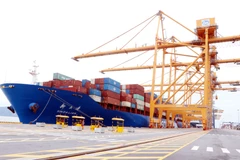
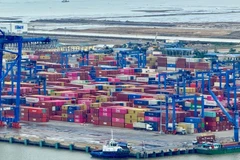
Paradoxically, experts argue that the solution lies precisely in greening logistics.Although road transport remains overloaded and costly, Vietnam has a significant yet underutilised advantage: its extensive coastline of 3,260 km and 41,900 km of rivers that are ideal for inland and coastal waterway transport.Dung emphasised that shifting to waterborne transport is not simply an alternative but a superior option, capable of reducing carbon emissions by more than 70% compared to road transport and cutting operational costs.
A case in point is Macstar Group’s coastal container route linking Hai Phong, Thanh Hoa, Ha Tinh, and Da Nang, slashing emissions by over 75% while reducing logistics costs by 10–15%.
To harness this potential, infrastructure development is essential. VLA has recommended that the government prioritise upgrading inland ports, wharves, and navigation channels, while introducing green credit mechanisms and waiving infrastructure fees for waterway shipments until 2030 to encourage modal shifts.The Ministry of Construction is currently drafting a new transport development strategy for 2025–2035 to address the shortcomings of Strategy 318.
Hoang noted that key objectives include modern multi-modal infrastructure development, transparent regulations, and accelerated digital transformation. Major international investments underway show confidence in Vietnam’s aspiration to become a regional logistics hub.
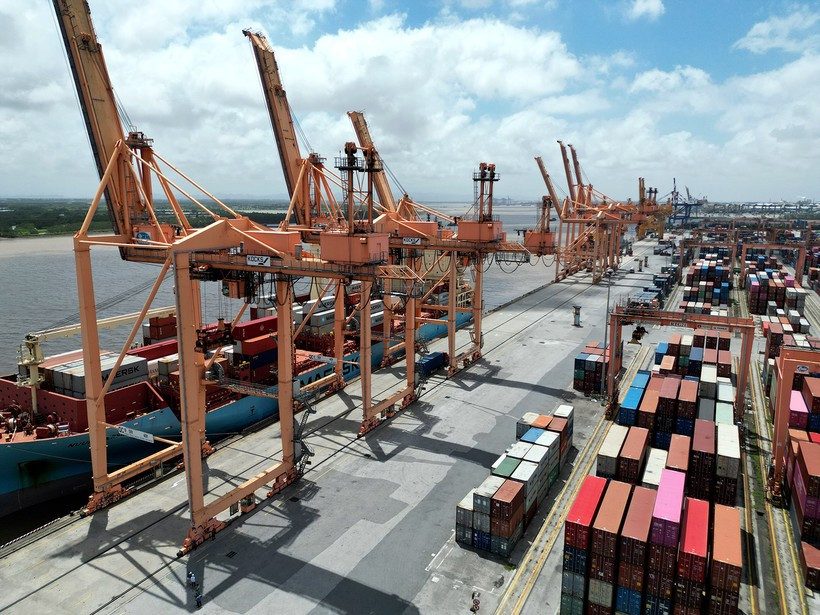
According to Liew, Vietnam’s strategic location, competitive costs, and young workforce give it strong advantages. The Vietnam SuperPort™ in Vinh Phuc aims to become Southeast Asia’s first multi-modal logistics hub integrating road, rail, air, and maritime systems, and the region’s first net-zero logistics centre under the SGConnect™ initiative linking China, ASEAN, Europe, and the US.Liew underscored the importance of public–private partnerships (PPP) and supportive tax and land policies to replicate such models nationwide.Technological innovation and skilled human resources are equally vital.
Arup, YCH’s partner, has demonstrated the use of big data, virtual reality (VR), and augmented reality (AR) in global transport projects, and is assisting Vietnam in planning the 2,870-ha smart, green Long Beach Can Gio urban area.Arup highlighted that integrated infrastructure, digital platforms, and cross-sector collaboration form the backbone of net-zero logistics.
Vietnam’s export-driven economy is entering a new era where competitiveness hinges not on low costs but on the efficiency and sustainability of supply chains.
Green logistics is emerging as a decisive competitive lever. By accelerating the shift to inland and coastal shipping, capitalising on natural advantages can cut emissions by up to 70% and costs by 15%. It can also attract global investment into multi-modal net-zero ports through PPPs.
Vietnam is well-positioned to resolve its longstanding “16% of GDP” logistics bottleneck and strengthen its role as a regional logistics powerhouse./.