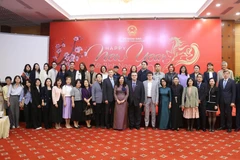
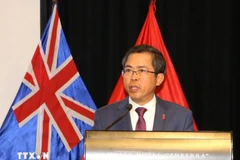
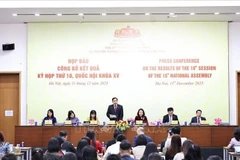
Representatives of the United Nations, Governments of piloting countriesand donors arrived at the Hanoi Statement which charts a clear wayforward the “Delivering as One” initiative.
The Hanoi Statement,issued at a senior-level international conference on the UN’s DaOinitiative in Hanoi on June 16, reaffirms that the old way of doingbusiness is no longer an option and calls upon the UN system toinstitute business and management systems that enhance efficiency andeffectiveness in programme countries.
The Statement also calls onthe donors to provide multi-year predictable unearmarked funding toprogramme countries to make the Delivering as One approach in pilotcountries credible and also relevant and applicable to all other UNmembers states in their future development activities.
The UnitedNations launched the “Delivering as One” pilot initiative in 2007 torespond to the challenges of changing world, and test how the UN familycould provide development assistance in a more coordinated and coherentway.
T he DaO approach has been piloted by eight countriesincluding Albania , Cape Verde , Pakistan , Mozambique , Rwanda ,Tanzania , Uruguay and Vietnam .
The Hanoiconference brought together more than 260 participants from countriesthat have adopted the DaO’s approach, as well as donors, several UNagencies, international organisations and diplomatic missions inVietnam./.
The Hanoi Statement,issued at a senior-level international conference on the UN’s DaOinitiative in Hanoi on June 16, reaffirms that the old way of doingbusiness is no longer an option and calls upon the UN system toinstitute business and management systems that enhance efficiency andeffectiveness in programme countries.
The Statement also calls onthe donors to provide multi-year predictable unearmarked funding toprogramme countries to make the Delivering as One approach in pilotcountries credible and also relevant and applicable to all other UNmembers states in their future development activities.
The UnitedNations launched the “Delivering as One” pilot initiative in 2007 torespond to the challenges of changing world, and test how the UN familycould provide development assistance in a more coordinated and coherentway.
T he DaO approach has been piloted by eight countriesincluding Albania , Cape Verde , Pakistan , Mozambique , Rwanda ,Tanzania , Uruguay and Vietnam .
The Hanoiconference brought together more than 260 participants from countriesthat have adopted the DaO’s approach, as well as donors, several UNagencies, international organisations and diplomatic missions inVietnam./.