Hanoi to formalise regulations on underground space development

The Hanoi People’s Council has approved a resolution outlining a list of underground work sites that are encouraged for investment and construction in the city.

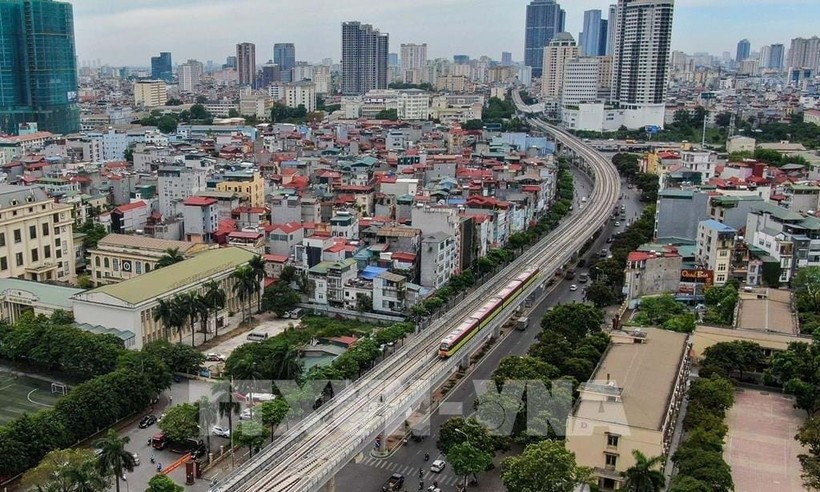
The use, development, and effective utilisation of underground space will contribute to addressing urban traffic issues. (Illustrative photo: VNA)

Hanoi (VNA) - The Hanoi People’s Council has approved a resolution outlining a list of underground work sites that are encouraged for investment and construction in the city. To enhance their efficiency, it is essential to promote these projects through specific preferential mechanisms and policies, as well as harmonious legal regulations.

Prioritising transportation, infrastructure

According to the newly issued resolution, the city will prioritise attracting investment in underground projects to serve the development of metro lines. This list includes investment projects for the construction of an underground metro line system comprising eight routes with a total length of 320.25 km and 191 stations, including 81.2 km of underground sections and 68 underground stations.

The city has also prioritised investment in projects such as road underpasses, and underground roads, parking lots, and underground technical infrastructure that supplies energy and serves public lighting. This list includes 85 projects, comprising five underpasses, 78 parking lots, and two public facilities.

Vice Chairman of the municipal People’s Committee Duong Duc Tuan said the issuance of this list concretises the 2024 Capital Law and the Politburo’s directives on Hanoi’s development by 2030 with a vision toward 2045.

According to the provisions of Article 19 of the 2024 Capital Law, underground space must be zoned by function for management, exploitation, and use. Land users within the city’s jurisdiction are allowed to use the subsurface vertically within the boundaries of their land plots, from the surface down to the depth limits prescribed by the Government in accordance with planning regulations.

Concerted, timely regulations needed

The practical development of Hanoi shows that the building of underground space has become an urgent requirement to enhance infrastructure capacity and urban quality of life. Dr. Dao Ngoc Nghiem, Vice Chairman of the Vietnam Urban Planning Association, said underground space is a key solution to save land resources, and help the city with urban renewal.

Dr. Nguyen Hong Tien, former Director of the Technical Infrastructure Department under the Ministry of Construction, said investment priorities and incentives for constructing underground works have been mentioned earlier.

Government Decree No. 39/2010/ND-CP outlines requirements for managing urban underground space, stipulating that cities must implement investment incentives for underground construction. However, since its introduction in 2010, this issue has not received the necessary attention, he said.

Legal regulations on underground work planning and management have begun to be defined more clearly and specifically, Tien said, adding that Hanoi’s issuance of a list of priority underground projects is both reasonable and timely.

However, experts note that after issuing the list, the city needs to further specify the preferential policies, support procedures, and timelines for investors to access these incentives. Additionally, to avoid potential obstacles, related legal regulations must be amended or replaced to ensure consistency, and the responsible agencies for implementation must be clearly defined.

In practice, the 2024 Capital Law introduces many new and superior provisions compared to existing mechanisms and policies. To concretise the regulations of this law, relevant units need to review and monitor the progress of implementing the delegated provisions to ensure coherence./.
VNA

See more

Efforts to safeguard religious values in digital age

Efforts to safeguard religious values in digital age

Digital transformation is changing not only how people work and communicate but also how they practice their faith. A Buddhist sermon can now attract tens of thousands of online viewers. A Protestant believer in a remote area can join a Bible study class via smartphone. Religious activities once closely tied to places of worship are increasingly taking place in cyberspace.

Delegates tour the facilities of the industrial innovation centre at Eastern International University in Binh Duong ward, Ho Chi Minh City (Photo: VNA)

Digital, AI competencies made mandatory for university graduates

Under Circular No. 54/2026/TT-BGDDT on higher education curricula, learning outcomes must be defined as measurable and assessable competencies, providing the basis for curriculum design, teaching, assessment, quality improvement, credit recognition and degree awarding.

Nguyen Thuy Hang, Director of the Writers Association Publishing House, is questioned at the security agency for investigation under the Hanoi Department of Public Security. (Photo published by VNA)

Publishers detained over alleged anti-State propanganda

The move was made as part of an expanded investigation into a criminal case involving Nguyen Thanh Nam, who is accused of “making, storing, distributing or spreading information, documents and items aimed at sabotaging the State of the Socialist Republic of Vietnam.”

Fishing boats at Quy Nhon Port of Gia Lai province (Photo: VNA)

Gia Lai digitises fishing fleet to strengthen fight against IUU fishing

Under Directive No. 16/CT-UBND, recently issued by the provincial People's Committee, combating IUU fishing has been identified as an urgent political priority requiring concentrated resources to address shortcomings in fishing fleet management, while holding agency heads and local leaders accountable for the results achieved.

The General Association of Vietnamese People in Laos, in coordination with Bang Long Pagoda, organises the “Mid-Autumn Festival Night” programme to celebrate the Mid-Autumn Festival. (Photo: VNA)

Vietnamese community organisation network completed across Laos

The official establishment of the Vietnamese Community Management Committee and the Vietnamese Association in Vientiane province on July 14 has completed the organisational network serving the Vietnamese community in all 18 provinces and centrally administered cities of Laos.

Party General Secretary and State President To Lam (centre, standing, first row) poses for a group photo with staff and invalids and sick soldiers at the Thuan Thanh Invalids Nursing Centre. (Photo: VNA)

Top leader calls for better care for invalids, revolutionary contributors

Party General Secretary and State President To Lam on July 15 affirmed that caring for revolutionary contributors is both a political responsibility and a moral obligation, calling for more comprehensive and timely policies to ensure that those who sacrificed for the nation receive the care and respect they deserve.

A sailboat carrying tourists cruises in the waters off Phu Quoc, An Giang province. (Photo: VNA)

Phu Quoc tightens inland waterway safety, traffic management

Operators of inland ports and terminals must carry out regular inspections, maintenance and repairs to ensure facilities remain safe and operational. They are also required to work with competent authorities and the Inland Waterway Port Authority to verify that vessels operating at ports and terminals meet all safety requirements.

Delegates visit the exhibition booths at the announcement ceremony of three strategic technology industry innovation networks on August 25, 2025. (Illustrative image. Source: VNA)

Attracting high-quality talent to strategic science, technology fields

Under the decree, students admitted to eligible programmes who meet entrance score requirements or are directly admitted, and rank among the top 30% of entrants, will be eligible for Government scholarships. The scholarships will be renewed annually based on academic performance and conduct.

Biological samples are collected from the remains of unidentified fallen soldiers at the Pho An Martyrs' Cemetery in Tra Cau ward, Quang Ngai province. (Photo: VNA)

Tireless efforts made to restore the names of fallen soldiers

Quang Ngai currently has 127 martyrs' cemeteries containing 37,689 graves, including 26 collective ones. Of these, 16,758 have complete information, 5,134 contain partial information, while 15,771 remain unidentified. Around 6,000 martyrs from the province have yet to have their remains located.