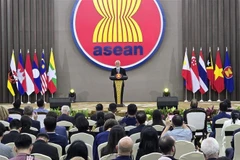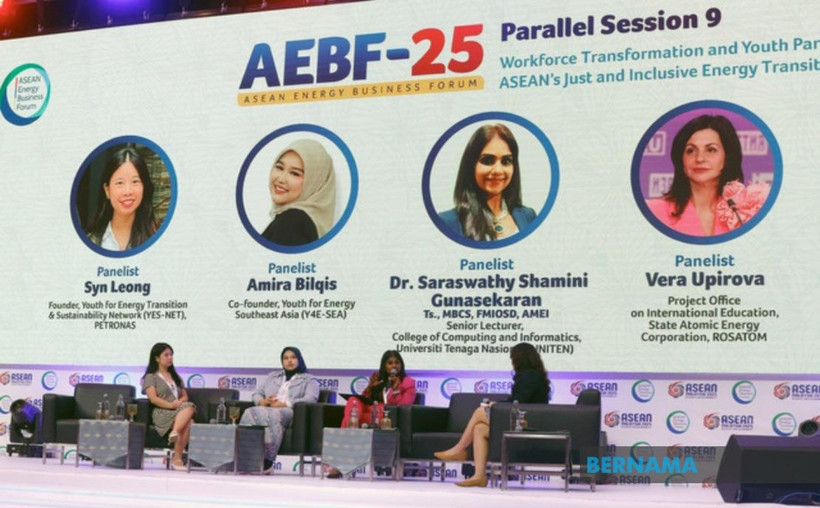
Kuala Lumpur (VNA) – Education and training play a crucial role in preparing both new and existing talent to support ASEAN efforts to achieve net zero emissions within the next 25 years, said experts to the ASEAN Energy Business Forum (AEBF-25) held in Kuala Lumpur, Malaysia.
Speaking at the Universiti Tenaga Nasional (UNITEN) senior lecturer Dr Saraswathy Shamini Gunasekaran said that people, alongside technology and infrastructure, form the three key enablers driving ASEAN’s energy transition.
She said at the Workforce Transformation and Youth Participation in ASEAN’s Just and Inclusive Energy Transition at the ASEAN Energy Business Forum 2025 (AEBF-25) on October 17 that it all boils down to education and training. Education will be targeted at young graduates, and when it comes to training, it’s all about reskilling and upskilling the current workforce. Therefore, the existing talent that is already in the energy industry won’t be forgotten.
She stressed that investing in human capital through continuous learning will be critical to ensuring that the workforce remains relevant and resilient in the face of technological disruption.
In the academic setting, Saraswathy said students are exposed to hands-on research and consultancy projects with industry partners, helping them understand that the energy transition is real and closely linked to climate resilience.
She noted that when young people witness the tangible effects of energy transition efforts, they tend to develop a stronger sense of responsibility and confidence to join the green workforce. Educational institutions such as UNITEN are said to encourage students to take part in national and international competitions that apply data analytics to enhance energy grid systems, helping them better prepare for future roles in the low-carbon economy.
Meanwhile, co-founder of Youth for Energy Southeast Asia (Y4E-SEA) Amira Bilqis said that youth play a significant role as they are among the largest users of social media and digital platforms, which are increasingly vital in advancing renewable energy initiatives.
She said youth are digitally skilled, and this expertise is crucial as the energy transition moves towards greater use of renewable energy and digital solutions. Their influence on social media also helps build public awareness and support for sustainability.
Young professionals and students are also leading grassroots movements across the region through organisations such as Reboot Philippines, Society of Renewable Energy Indonesia, Women in Energy, and About Energy Cambodia, which advocate for clean energy and conduct on-the-ground initiatives such as installing solar panels in rural areas, she added./.