HCM City (VNA) – Becamex IDC Corporation has proposed a high-speed railway linking Ho Chi Minh City, Cai Mep, Bau Bang, and Can Tho, with a view to realising a green growth vision across the southern region.
East – West rail corridor with international reach
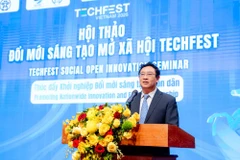
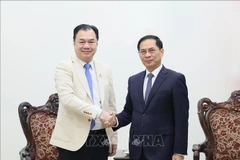
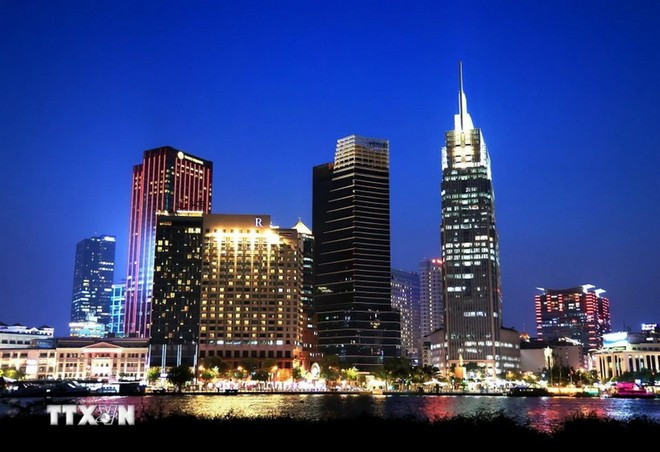
Nguyen Van Hung, Chairman of Becamex, said that following the merger of HCM City with Binh Duong and Ba Ria – Vung Tau, the new HCM City now boasts great potential to strengthen regional connectivity across roads, waterways, and, in the future, railways. To accelerate such projects, he suggested a clear mechanism in which the State handles site clearance while enterprises undertake construction and operation.
Becamex has proposed two strategic railway lines, the Bau Bang – Cai Mep high-speed route and the HCM City – Can Tho line, aiming to develop a green logistics backbone for the region.
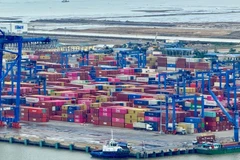
The Bau Bang – An Binh – Cai Mep line, spanning 127km, will have an estimated investment of nearly 153 trillion VND (5.8 billion USD), with a design speed of 160km/h for passenger trains and 120km/h for freight ones. It will directly connect industrial zones in Binh Duong and Dong Nai with the Cai Mep – Thi Vai deep-water port cluster, enhancing maritime transport efficiency.
The HCM City – Can Tho line, 174km long with a first-phase investment exceeding 173.6 trillion VND, will operate at 200km/h for passenger trains and 160km/h for freight trains. It will serve as a vital link transporting goods and farm produce from the Mekong Delta to industrial hubs and international seaports.
Together, these lines will form a modern and interconnected rail network linking seaports, industrial zones, and major urban centres. Once operational, the projects could save over 2.2 billion USD in annual logistics costs, transforming HCM City and the southern region into a green, smart, and sustainable transport hub.
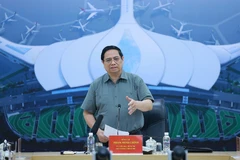
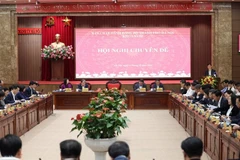
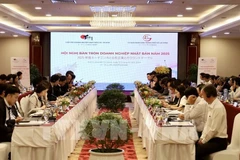
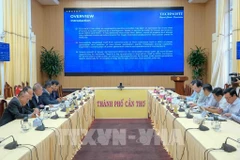
During a working session on Becamex’s proposed high-speed railway linking HCM City downtown to Cai Mep – Bau Bang – Can Tho, Nguyen Van Duoc, Chairman of the municipal People’s Committee, praised the initiative, noting that the city will facilitate research and coordinate with Dong Nai province to ensure seamless investment.
Vision of a connected, breakthrough city
Dr Huynh Thanh Dien from Nguyen Tat Thanh University said the railway linking industrial parks with seaports aligns with the vision of developing HCM City into a megacity with three pillars — industry, finance, and seaports. It will not only enhance transport efficiency but also optimise the production – logistics – export chain, attract FDI, and position the city as a global hub of new value chains.
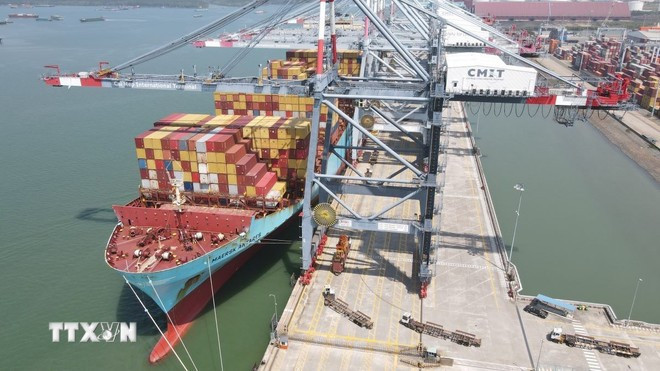
A high-speed line from Bau Bang to Cai Mep, he noted, will benefit both residents and businesses — providing faster and more convenient travel while allowing goods to reach mother ships directly, avoiding congestion and extra costs.
The proposed railway, combined with four adjacent free trade zones (FTZs) — Cai Mep Ha, Can Gio, Bau Bang, and An Binh, could form the backbone of the southern metropolis.
However, Dien cautioned against spreading investment across all four FTZs, arguing that concentrating resources on one or two strategically located zones near deep-water ports and large logistics centres will result in greater spillover effects and an outstanding competitive edge. Overexpansion could dilute resources, weaken infrastructure, and cause internal competition among FTZs instead of synergy.
Dr Nguyen Van Tan from Lac Hong University described the concept of a mega HCM City with interconnected industrial, financial, and port centres as “a living vision made tangible through the trans-regional railway.” The line, he said, will not only transport goods but also connect ideas, capital, and technology.
He called for an inter-regional planning approach, integrated logistics infrastructure, simplified procedures, and strong green commitments to turn this ambition into a symbol of connectivity and innovation.
Tan stated that Becamex's 6 billion USD proposal for the Bau Bang – Cai Mep railway is both ambitious and well-grounded, considering the close proximity of the four FTZs. The railway will directly connect factories, industrial zones, and seaports, which will reduce transportation times, lower costs, and enhance export competitiveness.
However, he warned that the project’s success hinges on sustainable financing, a transparent public – private partnership mechanism, site clearance, port – rail – warehouse integration, an efficient operating plan, and strict environmental safeguards, especially in ecologically sensitive areas such as Can Gio.
If implemented in phases with investment incentives for FTZs, a modern logistics coordinating system, and green standards, the project could become a transformative driver, turning southern Vietnam into a fast, cost-efficient, and competitive export corridor while promoting local economic growth./.